3 months ago
173
3 months ago
173
Cheryle Dreaver first heard her mother discus what she had endured as a child in a Winnipeg courtroom in 2008.
Ivy Dreaver was one of tens of thousands of Indigenous people in Canada invited by the federal government to testify about their experiences of sexual, physical and mental abuse in the country’s residential school system.
“At that time … I didn’t know those things had happened to her until that very day,” said Dreaver. “I was in shock … there was a lot of abuse.”
About 38,000 former students came forward to detail the mistreatment they were subjected to in what was later described as a policy of “cultural genocide”. Those hearings culminated in the largest class-action lawsuit in Canadian history and marked an important moment in the country’s reckoning over its colonial legacy.
But two decades later, all documents stemming from the hearings – including first-hand accounts of widespread, systemic harm and even the deaths of Indigenous children – are scheduled to be destroyed.
The deadline next year was set nearly a decade ago, but First Nation communities, academics and advocates say the federal government has made minimal efforts to inform survivors their files face destruction.
“The responsibility of reaching out to these survivors … is something the federal government should be taking on,” said Heather George, the executive director of the Woodland Cultural Centre, an Indigenous-owned education facility in southern Ontario that has worked to raise awareness about the looming date of 19 September 2027.
“It’s a consistent pattern that we’ve seen with the federal government in terms of stepping back from their obligations,” she said.
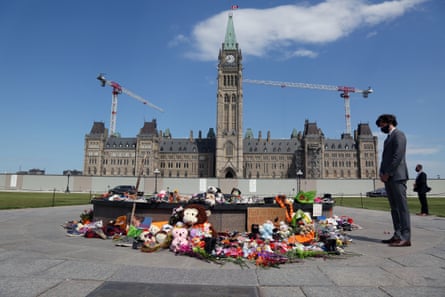
Canada’s supreme court ruled in 2017 that the testimonies must be expunged after 10 years, arguing that claimants expected confidentiality when they agreed to testify.
Survivors and their families now have until 19 September 2027 to request the preservation of their documents. Only former students can request the files themselves, which means if a survivor has since died, their documents are guaranteed to be destroyed.
Between the late 19th century and the 1990s, more than 150,000 Indigenous children were forced to attend Christian residential schools that sought to “eliminate” First Nations people as a distinct group.
Incarcerated children were subject to routine physical mistreatment, starvation and neglect, along with rampant sexual abuse, according to survivors and evidence gathered by a governmental truth and reconciliation commission.
After a cascade of lawsuits from former students, the federal government established a settlement in 2006 for those who came forward with their claims.
Ivy attended the Prince Albert school in Saskatchewan from grades one to six in the 1960s. In her testimony, she described being viciously beaten if she spoke her native language, Cree. She was humiliated in front of other children if she wet the bed and she described how a priest sexually abused her at age eight, isolating her under the guise of giving her piano lessons.
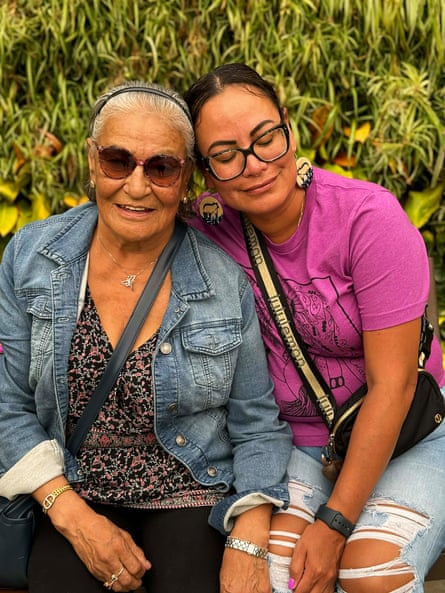
Dreaver only realised her mother’s evidence to the court was due to be destroyed last year, and rushed to keep the files safe.
Kimberly Murray, the former executive director of the Truth and Reconciliation Commission, said the agency fought for the records to be retained.
“There were ways for us to protect those records and the confidentiality of those records without destroying them,” she said. But the supreme court ruling was final.
Now a law professor at Queen’s University in Ontario, Murray said destroying files that could contain evidence of genocide is against international law.
But when survivors testified, they were not asked what they would like to do with their records, nor was the government planning to use their evidence to further investigate crimes committed at the schools, said Murray.
“It wasn’t their mandate,” she said. “They were a compensation scheme.”
Connie Walker, a journalist from Okanese First Nation in Saskatchewan, said the impending document destruction underscores how difficult it is to access information on crimes at residential schools and how much more still needs to be uncovered.
In her investigation of her father’s time at St Michael’s residential school in Saskatchewan, Walker says she found more than 220 allegations of sexual abuse against 16 priests, 13 nuns and 15 staff members over a 65-year period.
“It was shocking – the scale of abuse at a single school that was not notorious,” she said.
Walker is now attempting to build a new national archive to compile as much testimony as possible.
With approximately 18 months until the destruction date, the federal government has said “materials are being prepared to help raise awareness of the upcoming 19 September 2027 deadline”.
But a spokesperson for Canada’s Ministry for Crown-Indigenous Relations and Northern Affairs said the government cannot ignore the “final orders” of the supreme court.
As an adult, Ivy Dreaver worked hard to treat her children well – in defiance of what she had lived through at residential school, her daughter said.
“My mom was always gentle to us. She’s very soft spoken; she hardly ever yelled at us because of the shame she experienced,” said Cheryle.
Ivy, now 68, is the central matriarch of their family, said Cheryle. She wants her story to be shared to encourage others to retain their files.
“It’s really important to have [the files] … There’s people that want to know. I want to be able to go back and tell my children and my grandchildren about my mom,” she said.