3 months ago
126
3 months ago
126
The best oysters of my life arrive on a polystyrene tray, eaten elbow-to-elbow with strangers at a table littered with empty shells and damp paper napkins. We huddle beneath a tarpaulin, sheltering from the fine spray of rain rattling on the roof, the wind whipping around the hulking CalMac ferry moored metres away, and the beady-eyed scavenging gulls.
“Have you tried this? You have to,” says a woman who has driven from Glasgow just to eat here, pressing a rollmop herring into my hand. I take a bite, the thick skin giving way to sweet and salty flesh, juices running down my chin. Elegant dining this is not, but all the better for it. This is Oban Seafood Hut, tucked beside the ferry terminal for boats heading into the Sound of Mull. Diners shuffle around a shared table, listening for order numbers, with plates piled high with langoustines, crab and oysters. It’s cash only. In the back room, a team of women butter thick slices of soft white bread for crab sandwiches, wrapping them in clingfilm without ceremony, to be sold within minutes.
Often on Scotland’s west coast, it’s the least assuming places that are worth seeking out. The hotel down the road may have a wholesaler on speed-dial, while a shack in a car park is serving seafood brought ashore just hours before. Though west coast seafood is rightly lauded across the world, it’s here, eaten metres from the water, that it tastes the best. For years Scotland’s best seafood went directly to top restaurants in major cities, but now more of it stays local. Whether enjoyed in a shack, a windswept croft or cosy dining room, there’s a commitment to getting the freshest fish and shellfish to the most people, in a way that honours the produce, people and landscape.
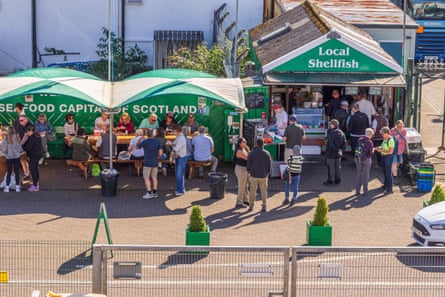
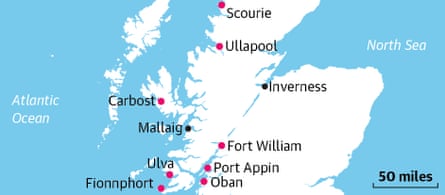
And a new generation of cooks is making the most of local produce, cooking it simply and letting the quality speak for itself. In a small car park in Scourie, a village strung along the road between Lochinver and Durness, is Crofter’s Kitchen. Grant Mercer was previously head chef at the nearby Kylesku hotel, but became convinced local seafood shouldn’t be reserved for fine dining. With his wife, Heather, he opened the modest shack on their working croft by the beautiful sandy beach, and started cooking it for everyone. The ethos is a 30-mile menu, built entirely around what is landed locally, so it changes constantly, “sometimes daily, sometimes mid-afternoon if the catch dictates it”, Heather says. The house special is hand-dived scallops from around Handa Island, about a mile from the kitchen, served with chorizo risotto and chilli black pudding. No white tablecloths required.
In Ullapool, Kirsty Scobie and Fenella Renwick started The Seafood Shack trailer above the harbour, determined to keep more of the local catch in the town. Both from fishing families, their close-knit supplier connections guarantee the best of the day’s catch, and the menus are built around it. Think lobster macaroni cheese, crab claw salad and haddock tacos. After years of cooking through Highland weather, they are finally building a permanent restaurant on the same site. Whether this means the season (usually April-October) will be extended, we’ll have to wait and see.
I also love the Creel Seafood Bar in Fionnphort, on Mull, beside the Iona ferry. I confess I skipped touring Iona Abbey to make sure I didn’t miss last orders, but the langoustine and chips were worth it.
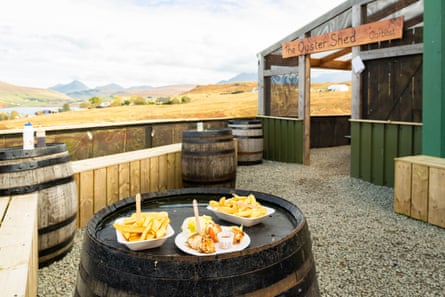
Same name, different island, The Creel in Elgol on Skye sells freshly cooked cold seafood from their horsebox near Elgol beach, ideal if you’ve booked a wildlife tour nearby. The “Elgolian” squat lobster rolls are the best seller, for very good reason. It’s a wild spot, making opening hours very weather dependent, so check their social media first. The Oyster Shed at Carbost, also on Skye, is another gem. Run by an oyster farmer, it’s a simple setup with picnic table seating and the quality is sky-high.
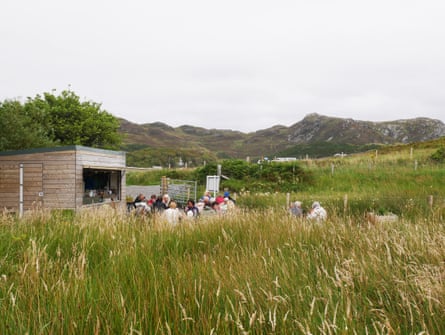
On the mainland, Blas na Mara Seafood Shack in Fort William is a brilliant addition to the town, and the “lunchbox” with Loch Linnhe langoustines, mackerel paté, salad and oatcakes makes a very special picnic.
Growing up in the Lochaber region, to me Crannog was the definition of fancy. When it opened in Fort William in 1989, it stood as a rare beacon of fine dining in the Highlands. Lochaber should always have been a gastronomic haven, its west coast and sea lochs producing Europe’s finest seafood. It wasn’t. Instead, refrigerated lorries thundered through the villages, carrying Mallaig’s catch south without stopping. Fisher Finlay Finlayson helped change that, transforming a bait shed on Fort William pier into a distinctive red-roofed restaurant. The ethos was simple: serve the freshest seafood possible. It’s where I had my first oyster, saw lobster served and discovered the quiet magic of restaurants – setting a standard for the Highlands, and for me.
Today the original lochside restaurant is storm-battered and awaiting repairs to the town pier, so it has relocated to the safe haven of Garrison West on the High Street. Here, chef Philip Carnegie runs a tight ship, with beloved staples like mussels, oysters and Cullen skink still in place. Portions are hearty, and they need to be: often diners arrive after a day on the hill or celebrating the end of the West Highland Way. Try the Mallaig cod with mussels, and always check the specials board.
Another favourite is The Pierhouse hotel by the Lismore ferry in Port Appin, which offers a welcome refuge, with cosy fireplaces and warm service. The menu tells you who caught your supper and from which nearby loch. The best tables overlook the pier, where you may see the catch arriving. Order fresh Loch Leven rope-grown mussels cooked in cider, Loch Creran oysters, or push the boat out and share The Pierhouse platter.
Loch Leven Seafood Cafe (on the north shore) is a perfect casual pit-stop if you’re heading west, or after a day in Glencoe. Freshly cooked and simply served, there’s often more unusual seafood here, such as fresh razor clams and surf clams with garlic butter. The shellfish soup with aioli is superb.
Some meals require more of a trek. Until last year, Gareth Cole ran Café Canna, raising the profile of food on the eponymous pint-sized island, and giving it a forager’s twist with dishes such as dulse seaweed croquettes and kelp miso ramen.
He has now moved on to a new culinary adventure on the Isle of Coll (a 2hr 40min ferry ride from Oban) that promises to be worth the journey. The Urchin is named after one of Cole’s favourite ingredients. “There is an unbeatable larder on this island,” he says. He has recently started a brewery too. The Boathouse on Ulva is also worth travelling for – it requires a ferry to Mull then a tiny passenger boat to Ulva, but the seafood, welcome and views make up for the journey.
As a food and travel writer I’m lucky to have eaten all over the world, but it’s here, where I grew up, I’ve had my best meals. After years eating my way around the Highlands and Islands, it’s a delight to have discovered so many more places – and to see more creative chefs succeeding.
Back at Oban Seafood Hut, I watch a creel of live langoustines being hauled out of a small boat and sent straight to the kitchen. Perhaps I’ll stay just a little longer …