2 months ago
117
2 months ago
117
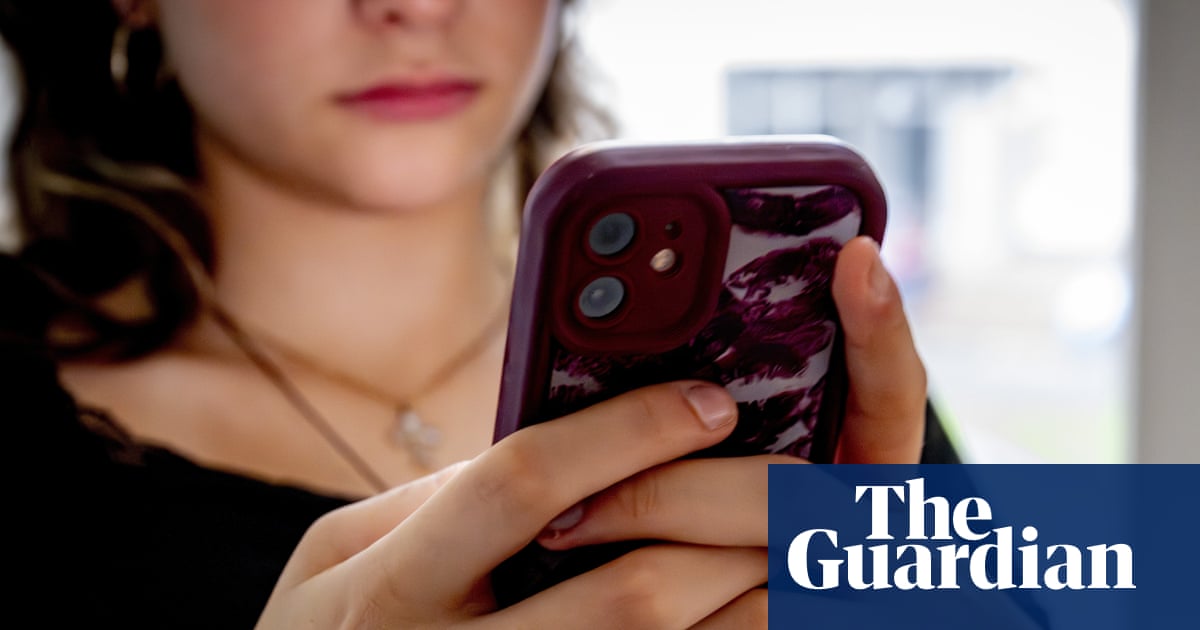
‘People have to start going 90s,” according to the content creator Mike Sheffer. In other words: leave your phone at home. “In the 90s no one had cellphones,” Sheffer explains, helpfully, on a reel I saw on Instagram, in which he describes how he and his friends do this, using it as a challenge to be in the moment and invite serendipity. “Things just happen,” he says. “There’s a different energy.”
Ah yes, the serendipitous 90s energy of arranging to meet someone “under the clock at M&S” and hanging around for 40 minutes when they didn’t show, of trudging dangerous miles home late at night thanks to transport fails (several comments on Sheffer’s reel highlighted the safety angle), or of forgetting your keys and spending hours locked out (I think I spent most of 1990-1994 sitting, bored witless, on the doorstep).
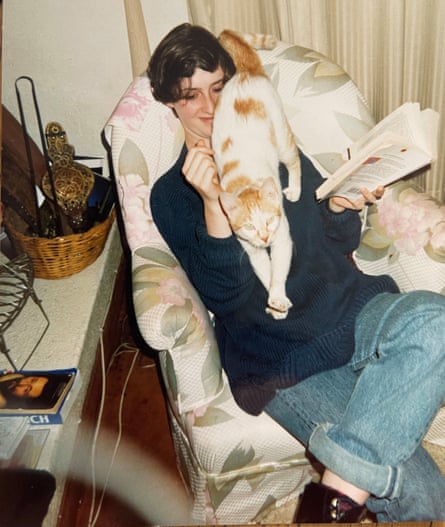
I’m not mocking (I can’t mock anyone’s desire to disconnect; I sometimes anxiously look for my phone while actually holding my phone). I’m just interested that the 90s have become so aspirational. There’s also a social media trend doing the rounds that asks: “Mum (or Dad), what were you like in the 90s?”, prompting gen Xers from Snoop Dogg to Drew Barrymore, Jamie Oliver and countless civilians to post photo montages of a time when they were cool, free and unworried by their cholesterol.
I don’t buy this as authentic gen Z curiosity – it feels more like a “What did you do in the war, Grandad?” prompt to fuel self-indulgent gen X engagement. But young people apparently really do want to “go 90s”, feeling they missed out on a golden age of analogue freedom. It’s been brewing for a while: in 2023, a survey found 60% of American gen Z adults “wished they could return to a time before everyone was ‘plugged in’”.
You can see this nostalgia for a time they didn’t know as a depressing indication of how unpalatable the future looks, but a counterargument says it might be future-facing. “Perhaps they are productively focusing their nostalgia on a technological era before they were alive,” theorised the social psychologist Dr Clay Routledge in the New York Times, citing research that indicated gen Z were “mining the past to enrich their present lives – especially by fostering a greater appreciation for offline living”.
And if so, good on them. But can they ever know how it felt? Surely that should be gen X’s job. Obviously, it wasn’t exclusively “our” time, but we have a sense of ownership over the decade when we became fully formed adults. In 1990, I was doing my GCSEs; in 1999, I was in full-time employment and trying to get pregnant. So: what was it like? I hoped I could offer some pointers, but it turns out that apart from getting locked out a lot, I have no idea.
I don’t remember the 90s. Not because I partied like it was 1999 (I didn’t party at all, regrettably), but because I’m a confused, hormonally depleted husk, addled by overexposure to a digital culture my analogue brain struggles to process. I need a diary reminder to put on deodorant; obviously I have no idea what 1992 was like. I was there, but the whole decade is a murky cultural, consumption and emotional soup. Did Pret exist? When did we get mobile phones and start texting? How much did a pint cost? When did Portishead’s Dummy come out? I would have to Google all of that, and it still wouldn’t tell me how it felt. (How about Google? I recall being asked to “research” something using AltaVista at a summer job and being utterly baffled by the concept.)
Ah well. Isn’t memory just a story you tell yourself, anyway? I’ve concluded that “the 90s” has become an imaginative construct, and that means it can be as much gen Z’s as ours. So good luck to kids vibe-mining our forgotten youth for “going 90s” inspo: Mandela and the macarena; CDs and landlines; discovering stuff without algorithmic prompting; things just happening; having the freedom to screw up unobserved. Maybe my peers who take their omega-3s more assiduously would disagree, but I reckon at this point, if you remember the 90s, you weren’t there.