7 hours ago
22
7 hours ago
22
Europe’s strategic predicament is ever clearer, and ever darker. The continent is at war, which is being fought militarily in Ukraine, but is escalating rapidly across Europe through hybrid attacks. Germany’s disclosure that it blames Russia for the explosion at Leipzig airport; a Russian drone strike on a train near the Ukraine-Poland border; an Italian jet shooting down a Russian drone over Lithuania; flares fired from a Russian warship at a Danish helicopter – all within the space of a couple of weeks – tell a coherent story. Whether because Russia is bogged down and unable to advance in Ukraine, or because it believes the US will not come to Europe’s rescue, Vladimir Putin’s regime is ever more bent on escalating its aggression in Europe.
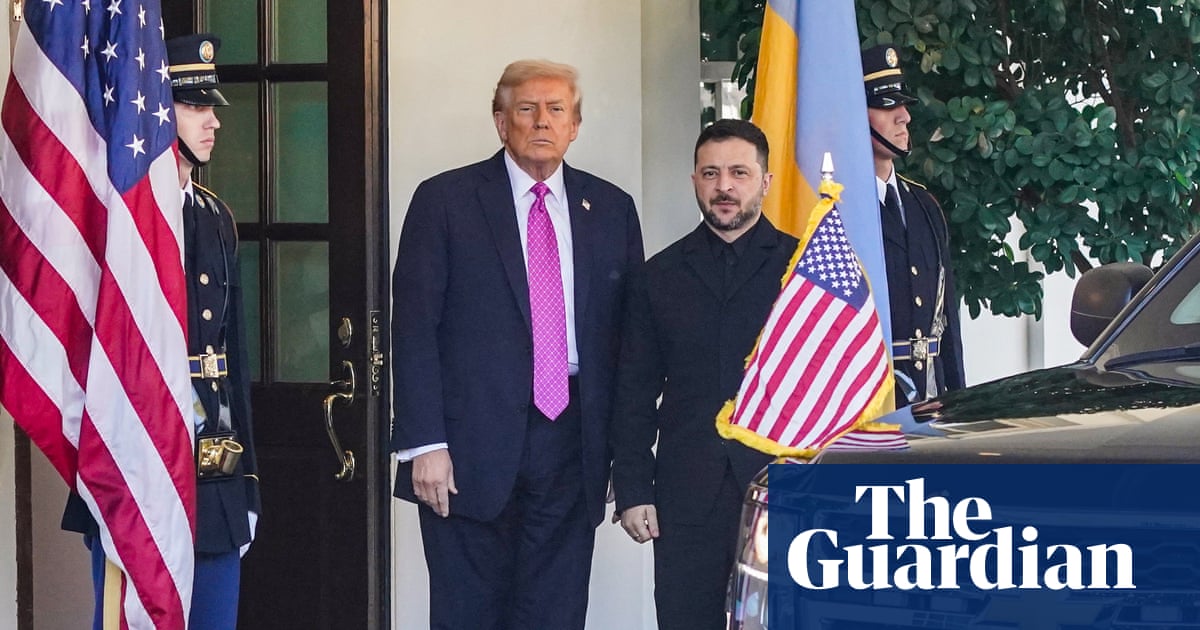
Putin’s calculus is not irrational. Trump never misses a chance to lash out at Europe – the latest example being his threats of further tariffs on the EU if Brussels proceeds to offer Canada “associate membership”. Europeans have grown numb to Trump’s insults and threats, but these threats do underline his deep antipathy, suggesting that if a Russian attack warranted a response, Trump might look the other way. The US certainly can’t be relied on to have Europe’s back.
This is the context in which Ursula von der Leyen caused surprise last week by proposing associate membership of the EU for Canada. To bolster Europe’s defences, the European Commission president also wants a “European security council”, and a mutual solidarity mechanism to respond to hybrid attacks.
While they have distinct rationales, these ideas fit into the same strategic logic: in a world of predatory powers, the “rest of the west” must huddle together.
The threats are not only external. Along with Putin’s Russia and Maga America, the rise of the far right in Europe completes a triangle of threats. The far right is a threat to liberal democracy. But by instigating internal division and pushing for disintegration, it also supports the divide-and-rule designs of predatory external powers, representing a challenge to Europe’s independence and sovereignty. It has taken the earthquake of the AfD’s successes in German regional elections for von der Leyen to acknowledge openly that Europe’s threats are also homegrown. Better late than never.
Faced with this unprecedented convergence of threats from three sides, leaders are scrambling for a response. Nato has what it takes to defend Europe against Russia. But if its majority shareholder – the US – is unwilling to step in, the question of its plans, structures and capacities is moot. If a hybrid attack on a European country caused civilian casualties, would Nato be bypassed if Washington signalled its unwillingness to act? Collective defence would not even be invoked if the anticipated result were the US’s betrayal of its European allies.
This is where von der Leyen’s emergency protocol comes in, filling the gap between the high-water mark of mutual assistance – article 42.7 of the EU’s founding treaty, which covers armed aggression – and nothing at all. The attacked state would activate the protocol, an emergency European Council would convene, and the commission and EU high representative would propose responses, including evacuation and medical support, stockpiling and energy security, economic coercion, military mobility and more. The mechanism could extend to like-minded non-EU partners, starting with Canada, Norway, the UK and Ukraine. The proposal to offer Canada associate membership, while still undefined, can be read in this light as well.
On paper, it all makes sense. In practice, it is hard to see such a mechanism operating seamlessly, let alone rapidly, given the EU’s organisational complexities, its slowness to act and its internal divisions.
Hence the proposal for a European security council, consisting of those countries willing and able to contribute to the defence of Europe, without the US if need be. Some of these countries would be EU members, but not all – again, Canada, the UK, Ukraine and possibly Turkey.
Both the problem and the solution are clear. To protect itself against predatory powers, what remains of the west must cooperate ever more closely. But the existing multilateral organisations – Nato and the EU – are unfit for purpose. Nato will remain anchored to the US, while the EU is slow and cumbersome, built for peacetime. Its membership, while large, is not wide enough, excluding key players in the wider European space.
after newsletter promotion
Developing alternative forms of EU membership could be of interest not just to Canada, but to the UK, too. The idea was first raised by Berlin for Ukraine, in fact, but Kyiv turned down the offer, seeing it as second-class. Ukraine deserves full EU membership, but if a substantial associate membership is on the table in the short term, it should take that, while continuing to press for more.
The rise of far-right nationalism means that reaching consensus within the EU will become harder, not easier – which is precisely where the proposal for a smaller, more agile European security council comes in, provided far-right governments do not simultaneously come to power across major European countries.
Von der Leyen’s security proposals are sensible and urgently needed. The potential pitfall lies not in the message, but in the messenger. In her years at the helm of the commission she has grown a reputation for centralising power and overstepping boundaries, irking other EU officials in Brussels as well as European capitals. When it comes to security and defence especially, sovereignty is jealously guarded by the EU’s nation state governments. It would be tragic if European governments ended up killing off a set of good ideas because of Europe’s institutional turf wars. Rearranging the deck chairs on the Titanic is the last thing Europe and its partners need right now.
-
Nathalie Tocci is a Guardian Europe columnist