1 month ago
60
1 month ago
60
For the latest issue of the Guardian Long Read magazine, the brief for the cover was simple: something that evokes the pleasure of summer reading.
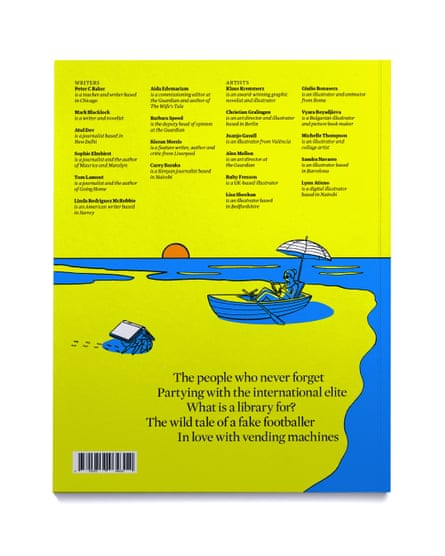
“With these magazines, there’s always a front-and-back reveal,” explains Chris Clarke, who has art directed all four issues of the magazine, which collates some of our finest long-form journalism. “For this summer issue, we lean into the joy of undistracted reading: on the front, a woman sits in a boat, reading, as the tide comes in. On the back, she is still there, still reading, except the tide has gone out and the boat is beached on the sand.”
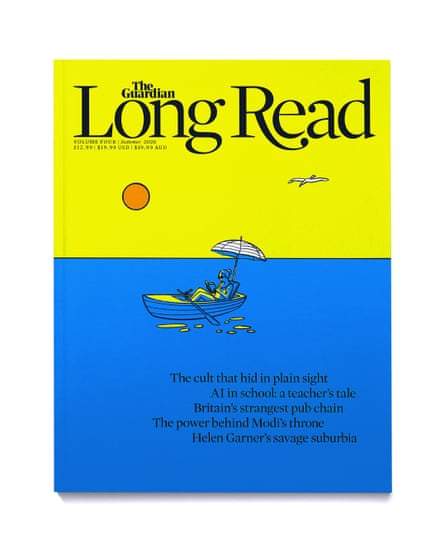
The imagery evokes how a long read can be an immersive experience. You dive in. You feel the pull of the story. You get swept along. You definitely don’t ask an AI chatbot to start spitting out sip-sized summaries.
The cover illustration also positions the summer issue as a perfect beach read. “We tried to make it look like something you’d want to take on holiday with you on the plane or the train,” says David Wolf, the Guardian’s Long Read editor.
The beach read vibe highlights how some of our Long Reads can be as gripping as any page-turner you pick up at the airport. The craft that goes into making them compelling begins long before the writing stage. “When a journalist suggests an idea for a piece, we sometimes have to tell them that it sounds more like a subject than a story,” says David. “Whereas we’re looking for stories that have, at their core, a substantial, intellectually interesting or important subject. So, for instance, it should be a narrative with one, or a small number of, main characters, and a starting point and an end point. It should have conflict, scenes, maybe some twists – all the things you would associate with movies or novels. But of course, the pieces need to be scrupulously accurate as well.”
When a writer submits a first draft, the first part of the editing process involves asking those same fundamental questions again, before any sentence-by-sentence work can begin. “Sometimes in an initial draft, the beat-by-beat of what happens is gripping, but you step back and ask: what did it add up to? Why does it matter? Other times, it has a lot of substance but not enough movement or unexpected moments.”
It takes an average of five to six months and several more drafts before a Long Read is ready to publish. “Although it’s very common for it to be nine months to a year,” says David. “Sometimes we’ll ask the writer to build out a particular angle, which can mean going away and developing new sources to get new information.”
He highlights a deeply reported story in the new magazine about the beer baron Humphrey Smith, who died in June. It’s full of details that could only come from months of painstaking work and the cultivation of dozens of sources. “It also has quite an unusual ending, and we were five or six drafts in before we came up with the idea for a ‘Rosebud’ moment,” he says. “There are an infinite number of ways to tell a story and we’re trying to hit on the dream version – to make it the best thing out there on that topic. Something that will stand the test of time.”
That shared goal helps everyone involved persevere through what can be a gruelling editing process. “People often expect there’ll be more friction than there is,” says David. “But writers generally find it exciting to have someone scrutinise their work and take it really seriously. Every sentence will be put under pressure. We try to anticipate our readers’ queries or puzzlements, and we’re always asking, are we being fair? Are we looking at it from every possible angle?”
One challenge is to keep rereading a piece as a reader would, with fresh eyes. “When I feel as if I’ve read it too many times, I share it with Clare Longrigg and Yohann Koshy, the other editors on the desk. It’s great to discuss it with other people who are really smart and will bring their own perspective to it. The other thing I do is, I print out a hard copy and make a note of the parts of the story that I’m gulping down and the parts where I’m having to drag myself through it – if I’m having that experience that suggests something needs fixing.”
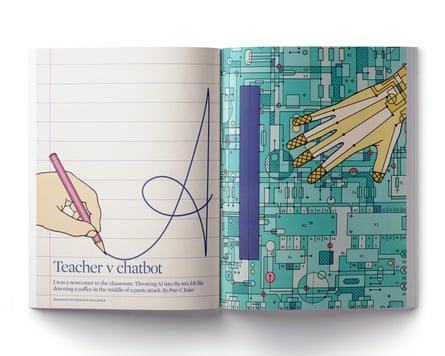
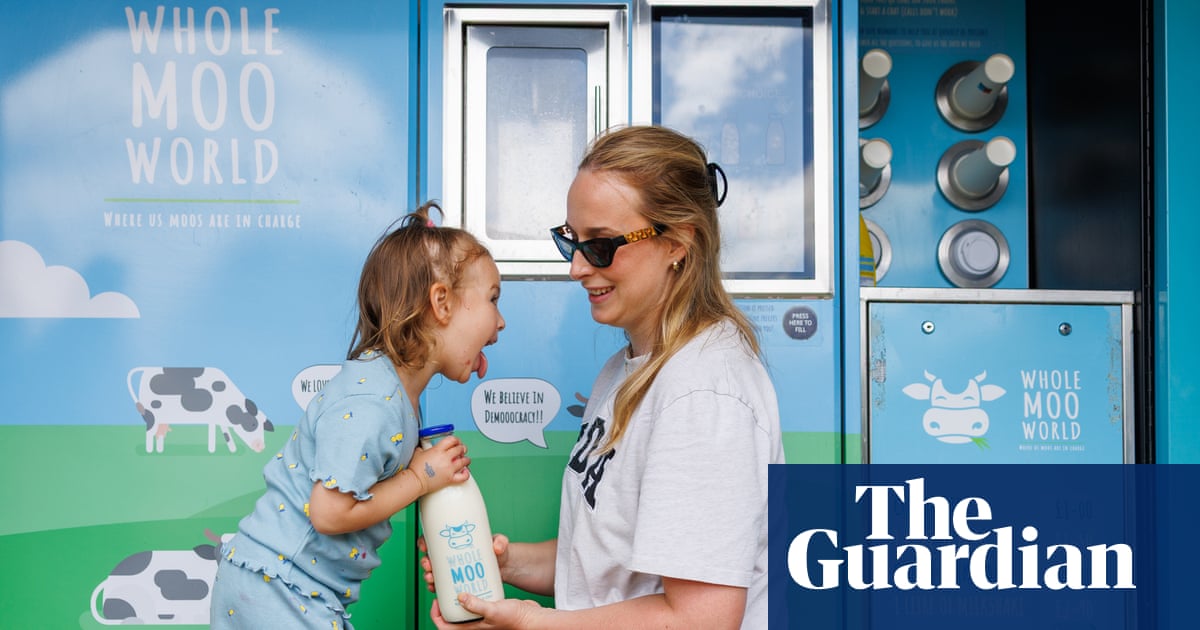
The obsessive attention to detail isn’t just about accuracy and journalistic integrity: it also makes for stories that genuinely stay with you. For instance, the new issue contains a fascinating Long Read about vending machines by Tom Lamont. “I absolutely love pieces like this that get into incredible detail about how an industry that’s in front of our noses the whole time actually works,” says David. The previous issue of the magazine contained an equally memorable story about the paper towel and hand dryer industries. “Ostensibly, those two stories are fun, light subjects. But the writers who took them on are absolutely brilliant, and they reported those stories with as much care and attention to detail as they would a so-called serious story. Fun stories are often the hardest to do - you need a writer who will fully embrace it and take it seriously in an almost pathological way.”
Like all the stories in the magazine, Tom Lamont’s vending machine article also looks stunning. When it was first published online and in the newspaper in 2022, it was accompanied by photographs of vending machines from around the world. For this summer’s magazine version, illustrator Lisa Sheehan has produced bespoke images of vending machines with the headline and snippets from the article emblazoned on crisp packets.
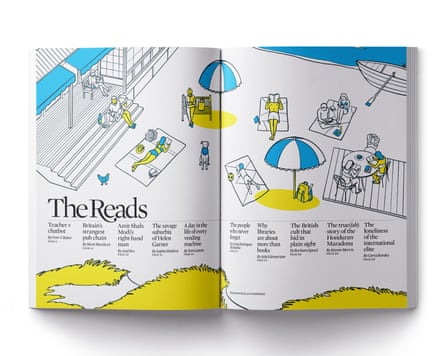
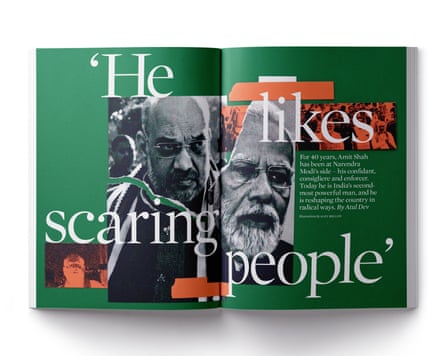
Republishing Long Reads in the magazine gives the design team a chance to reimagine how to visually present them – with a larger canvas and more time to work on them. Chris, who is the Guardian’s editorial creative director and worked with art director Suzanne Lemon on this issue, explains how the designers approach things differently in print: “Often, the visual element commissioned for a Long Read digitally works exactly as it needs to in that space. On a website, its difference is what helps it stand out among everything around it. With the magazine it becomes much more about flow, pace and rhythm; how all of these stories sit together, and how one piece leads into the next.”
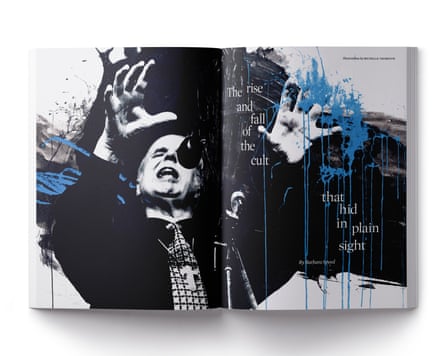
As with the front and back covers, the original artwork for each story is a crucial aspect of the care that goes into each issue. “We take the subject really seriously. The writer takes the subject really seriously. So then the reader takes the subject really seriously. And the designers are doing the same,” says David.
“The hope,” says Chris, “is to stop the reader with large, punctuated moments, but never at the expense of the read. Everything surrounding the magazine has been built for the pleasure of reading.”
-
The summer issue of the Long Read magazine is out now. Click here to order