3 hours ago
10
3 hours ago
10
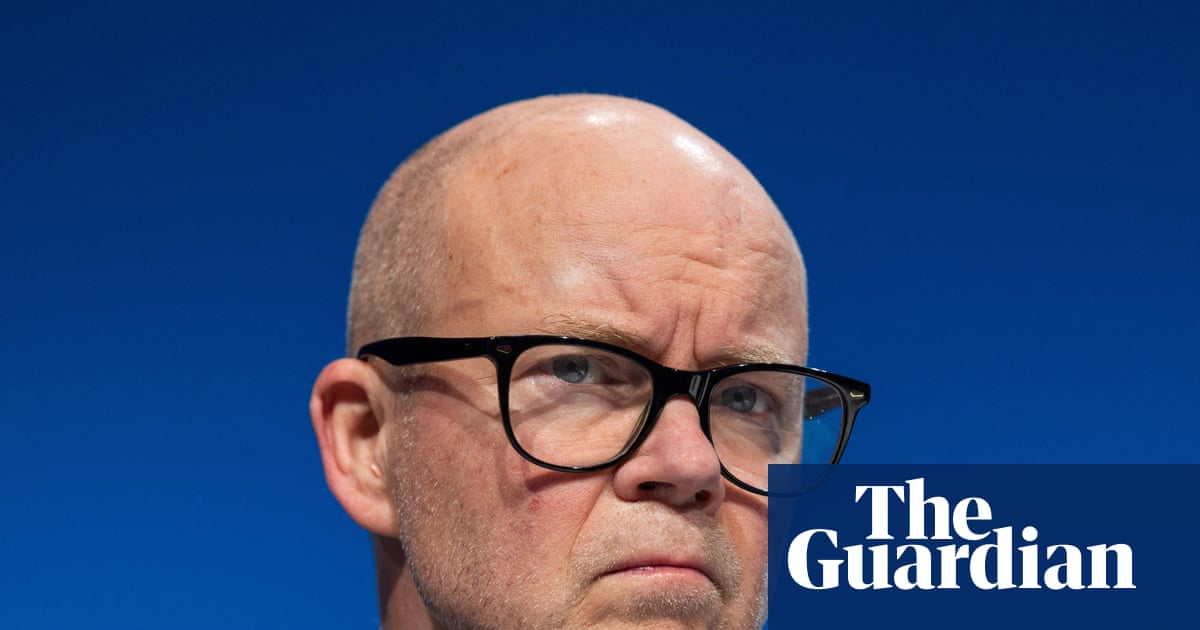
Just about every parliament in modern times has thrown up MPs who change parties, but there have been very few such as John Horam, Lord Horam, who represented three parties in the Commons and furthermore served as a government minister for two of them.
Horam, who has died aged 87, never reached cabinet rank but was a junior minister in James Callaghan’s Labour administration in the late 1970s and, after a peregrination with the Social Democratic party in the 80s, subsequently served in the Conservative government of John Major in the 90s.
Winston Churchill, who entered parliament in the early 1900s as a Conservative, switched to the Liberals and then, 20 years later, became a Tory again, said: “Anyone can rat but it takes a certain amount of ingenuity to re-rat.” Horam deployed a different Churchillian phrase: “It is better to change your mind than be wrong all the time.” However, it did not stop him being greeted by the Labour leftwinger Dennis Skinner as a “dirty double-rat” when Horam rose to speak in his latest incarnation.
Horam was born in Preston, Lancashire, the son of Catherine (nee Harkness), who ran a dress shop and a newsagent’s at various times, and Sydney Horam, a fitter with Leyland motors. He was educated at the fee-paying Silcoates school in Wakefield, where he became head boy, and studied economics at St Catharine’s College, Cambridge, before joining the marketing department of Rowntree’s chocolate factory in York, where he played a small part in developing the After Eight mint in the early 1960s.
He subsequently worked as a journalist for the Financial Times and the Economist before founding the Commodities Research Unit (now the CRU Group) in London, with a colleague, Robert Perlman, supplying data to mining companies.
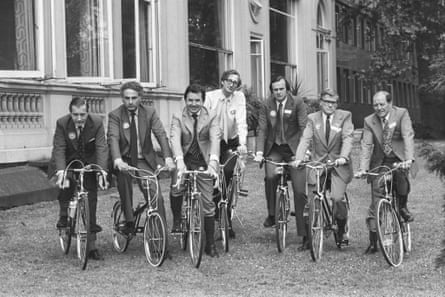
Horam had joined Labour at the age of 15 after hearing a speech by Hugh Gaitskell, who would become the party leader in 1955, though if there was a common strand in his politics it was as an economic free marketeer and opponent of incomes policy on the party’s rightwing. As a young MP, elected first for Gateshead West in 1970, he was actually a Tribunite anti-Common Market candidate, positions that he would change with time. While he was later in favour of the European Union, he became a supporter of capital punishment, and an opponent of divorce law reform and lowering the homosexual age of consent.
In a reshuffle in 1976, Callaghan appointed Horam a junior minister in the Department for Transport, serving under Bill Rodgers, who would become one of the leaders of the breakaway SDP. There he began piloting legislation through the Commons to make seatbelts compulsory (a measure lost in the calling of the 1979 general election that brought Margaret Thatcher to power) and presided over the widening of a stretch of the M1.
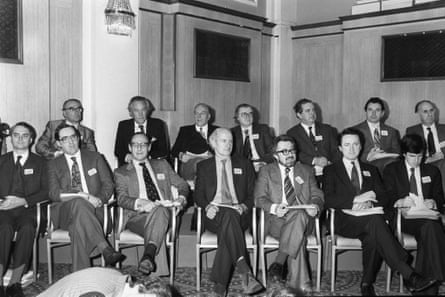
After the election defeat, Horam, like others on the right of the party, grew increasingly disenchanted with Labour’s leftward drift and, while he served in Denis Healey’s shadow Treasury team, he left the frontbench after Michael Foot became leader. He was the first MP to join the Gang of Four’s Council for Social Democracy in January 1981 and was one of the first 13 to join the SDP two months later. His constituency was abolished in a parliamentary reorganisation and when he fought Newcastle Central in the 1983 election came only third.
By the mid-80s, Horam was continuing his political journey. The SDP, he declared, was becoming increasingly like a mark 2 Labour party: higher spending, higher taxation and an incomes policy, “a botched job – Labour without the loonies”.
The Tories beckoned and, after discreet talks with Thatcher and Norman Tebbit, the party chairman, in March 1987, drawn by their “sensible and realistic economic strategy which was showing signs of success”, Horam announced he was joining them. David Owen, the SDP leader, said he was sad but relaxed about the defection. Although it was too late to find a seat for that year’s general election, Horam was back in 1992 as MP for the Conservative suburban London constituency of Orpington.
In 1995, Major appointed him junior minister for public services and science, and eight months later moved him to the Department of Health. Still contrary, he had spoken out against the imposition of VAT on fuel and joined early Tory opponents of the euro.
The Tories’ defeat in 1997 ended his ministerial career and he subsequently served as chairman of the Commons’ environmental audit committee, as a member of the foreign affairs select committee and on the backbenchers’ 1922 Committee. He retired from the Commons at the 2010 general election and was given a peerage three years later.
Horam was married twice, in 1977 to Iris Crawley and, after their divorce, in 1987 to Judith Jackson, a former Guardian and Sunday Times motoring correspondent. She survives him, together with her two sons, Lincoln and Fraser, from an earlier relationship.