3 months ago
182
3 months ago
182
Julie Newmar is showing me her secret garden: an oasis of greenery around her house in Brentwood, Los Angeles, that is crammed with trees, flowers, sculptures and labyrinthine paths. It feels like a little piece of old-school Hollywood, untouched by the world outside. “Here, try one,” Newmar says as she leans over from her mobility scooter and picks me a blueberry from a bush. “Isn’t that nice?” It’s a well-maintained jungle of begonias, jasmine, geraniums, fruit trees, and above all, roses. She has 90 varieties, she says, including one named after her. “That one’s Marilyn Monroe,” she says, pointing out a creamy pink one. “Doesn’t it look like her flesh?” Monroe’s former house is just up the road, she mentions. Newmar has lived here for decades with her son, John, who has Down’s syndrome. They spend a lot of time out here.
“I would say my life is about beauty,” Newmar says. “I want to be a beautiful old woman; beauty in the garden; beauty in your behaviour, in your treatment of others. Because we all know that life’s a circle. All this stuff comes back. And in my 90s now, one has evolved. Big things happen now and they’re more in the metaphysical, they’re in the ‘what can I do for others?’ Because I’ve already done it for myself.”
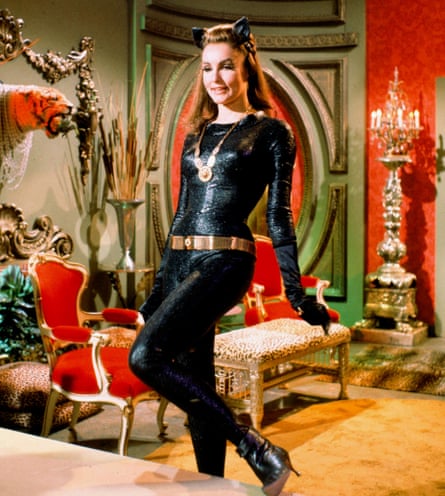
Newmar’s career as an actor wound down about 40 years ago, but today, at least, she retains a touch of the grande dame. Her bearing is regal, her platinum hair bouffant, her movements still elegantly feline, as they were in the role that made her name: the original Catwoman in the 1960s Batman TV series. She retains a fanbase, too: from comics fans to Hollywood nostalgists, but also the queer and drag communities who have come to revere her as an icon and an ally, not least after the 1995 movie To Wong Foo, Thanks for Everything! Julie Newmar. She has a small cameo in it, but her presence is largely totemic: Patrick Swayze’s drag queen spots a signed photo of her on a restaurant wall and declares: “She is the perfect, the ultimate … Oh! Try to describe her and not use the word ‘statuesque’.”
Newmar was so statuesque that nobody quite knew what to do with her when she began her career: long legs, tiny waist, flowing hair, taller than most men. She was also formidably talented: a trained dancer in ballet and other styles, an accomplished pianist, athletic, academic and cultured. Her father was an engineering professor and American football coach, her Swedish-French mother a fashion designer.
She has a one-word explanation for why she became a performer: “Mother! My mother was in the Ziegfeld Follies. Eddie Cantor said she had the most beautiful legs in the Follies.” But her mother’s stage career was cut short by a car accident in 1920. “She gave me all that she didn’t have in her life and it worked out, it was good. I loved it.”
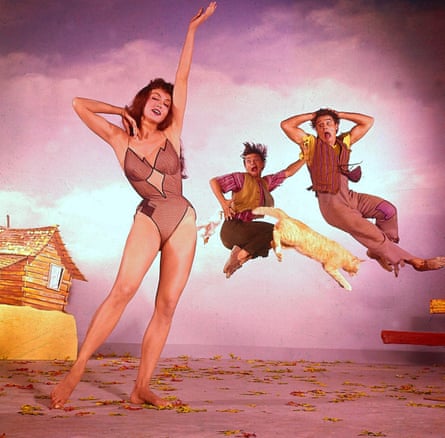
Dancing was Newmar’s first love, she says, and her ticket into the movies. In the forgotten Antony and Cleopatra drama Serpent of the Nile, for example, she plays an Egyptian dancer, her body painted entirely in gold. “I was about 18 years old and I did my own choreography,” she recalls. She went to the Los Angeles library and studied vases from the era to get the positions right. She had a breakthrough of sorts in 1954 as one of the “brides” in the smash-hit musical Seven Brides for Seven Brothers, although unfortunately she was partnered with Jeff Richards, a former baseball player who couldn’t really dance; Newmar was thus relegated to the background.
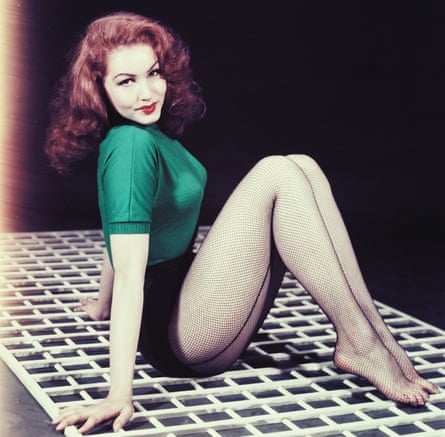
As an actor, her roles often said more about the male-dominated industry than her talents. She was routinely cast as a seductress or an object of desire, lusted after by men and usually wearing fewer clothes than them. In the Broadway and movie versions of the musical Li’l Abner, based on the popular comic strip, she played Stupefyin’ Jones, a woman so beautiful that she stuns men into statue-like immobility. In the short-lived 60s sitcom My Living Doll, she played a robot trained to be “the perfect woman” by a man. Even in her appearance in The Monkees sitcom in 1967, she plays the goddess-like “April Conquest”, for whose affections all four band members compete.
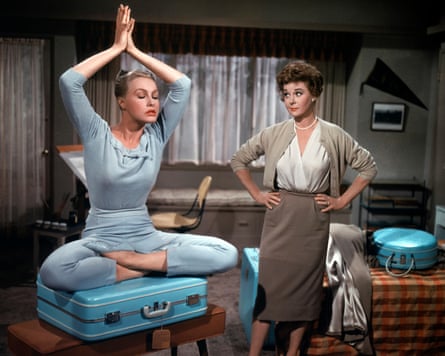
Newmar’s attributes were used to slightly better effect in the 1961 film The Marriage-Go-Round, a progressive-for-its-time “sex comedy”. She plays an independent-minded young Swedish woman who comes to stay with an American academic and his wife, then decides she wants to have his baby and raise it by herself. “I’m younger, prettier, stronger, bigger and more intelligent than you,” she tells his aggrieved wife.
She won a Tony for her performance in the stage version in 1959 (opposite Charles Boyer and Claudette Colbert), although the movie adaptation (with James Mason and Susan Hayward) was less successful. Male theatregoers were apparently drawn to the play by the notorious scene in which Newmar wears nothing but a towel, which they hoped might slip off. “I’m sitting on a banquette,” she recalls, “and every time I come on stage the banquette is further and further downstage, which means my back is turned to the audience more and more and more, so the towel got lower and lower.”
When I say to Newmar that she was often cast as an “ideal woman”, she softly replies: “They’re not wrong about that. Go on.”
Or an object of desire …
“Indeed I am,” she purrs. “I am that purely and simply.”
But was it frustrating that a lot of those roles were two-dimensional?
“Yes and no. Of course, being almost 6ft tall, even back then, you had to walk like this …” She stoops her shoulders and lowers her head. “I once got to dance with Fred Astaire [in the 1953 musical The Band Wagon]. I just did a pirouette with him, but in a long skirt with bent knees, because he’s 5ft 8in, or something like that. Yes, I think it was difficult to cast me, because of my … differences. I’m not ordinary enough.”
In 1966, she finally found the role that played to her extraordinariness. She was living in New York and her younger brother was visiting from Harvard with some friends. “We were about to go out to dinner. Then I got this call asking me … Catwoman? … Batman? … Never heard of it. My brother overheard. ‘Batman!’ he said. ‘We stop all our studies and watch that every Wednesday … Hey, sister, out the door, get on the plane, get the script, do it.’”
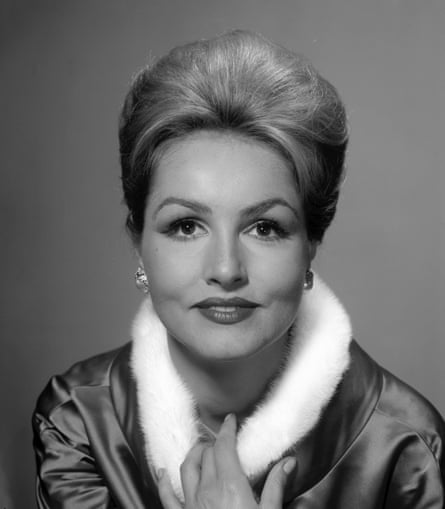
Newmar made the character her own, setting the template for a long line of successors, from Eartha Kitt to Michelle Pfeiffer and Anne Hathaway. Her dancer’s experience helped with the feline mannerisms: “I adopted two cats in order to watch their physical behaviour.” She even made her own adjustments to the costume, lowering the belt to the hips to accentuate her waist and taking it in until “it was like liquorice poured over the body; it fit that well.”
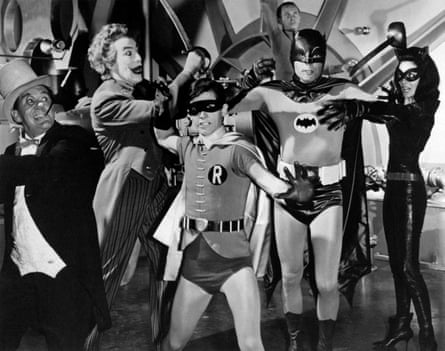
Newmar’s Catwoman brought an undeniable sexiness to a supposedly wholesome family show, what with her languorous, playful sensuality, her suggestive lines (“Felix, you can brush my pussy willows before you leave”) and the palpable frisson she created with Adam West’s Batman, who often wavers between apprehending her for her crimes and succumbing to her charms – until Robin comes along and breaks the spell.
Many speculated that they were romantically involved in real life, but she denies it. “I didn’t have any la-di-da with Adam West. People would like to think so.” She credits the writers and cast for the show’s success – “I’m just the fluff” – but she clearly fuelled the fantasies of many an impressionable viewer. They still adore her to this day. “You should see the letters I get, and the emails, oh my God!” she says. She returned to do voice parts for a Batman animated series in the 00s, attends autograph signings and regularly posts Catwoman images on her social media. “I got 5,000 likes in 10 minutes the other day,” she tells me proudly. “It’s a blessed feeling to have that connection, that people remember you in that way.”
She must have received a lot of male attention over her career, I venture.
“Luckily, I liked it,” she says. “It was good. I’m … not the first in line in the #MeToo class.”
What does that mean?
“I love men too much. I understand them. And the heads of studios, yes, they break a door down and they do this or they do that … that’s how they act. You think you’re gonna change things? Not a whole lot … And you know what? It works. It works beautifully because men are very good to women.”
When I ask what she thinks about the entertainment industry being run by men, she replies: “It should be. They do it best.”
Men were clearly good to her, even if many people would dispute her views. She talks enthusiastically about encounters with them: James Mason, Hugh Hefner, Salvador Dalí, Omar Sharif, Swayze, the list goes on. She doesn’t love all men, mind you; a couple of times she refers with disdain to “that bimbo in the White House”. Newmar starred in a film with Donald Trump, the truly dreadful 1989 “comedy” Ghosts Can’t Do It, although she says she never met him.
Newmar can point to occasions in her life when she has been let down by men, though. She had a string of romantic relationships, but didn’t get married until she was 44, to J Holt Smith, a Texan lawyer seven years her junior. Unbeknown to her at the time, they were moving in different directions. He was attracted by her celebrity glamour; she wanted to be a wife and a mother. She wanted to be “ordinary”, she says. They quarrelled. Her first pregnancy ended in a traumatic miscarriage. By the time John was born a year later, in 1981, her marriage was just about over and she was left to raise him alone.
Newmar didn’t know anything about Down’s syndrome when John was born, she says, nor was wider society particularly knowledgable about it. The doctors gave her the option of sending John to a care home, but she never considered it. “No, no, no. This is too important,” she replied.
Whatever hardships Newmar may have experienced as a single mother, she downplays it now. “We made it work. So John had a lovely, lovely life.” Even when John developed meningitis and lost his hearing, at three, she seemingly took it in her stride: “I signed up to learn sign language at night school, so that I could speak to him in a way that would help his understanding of life.”
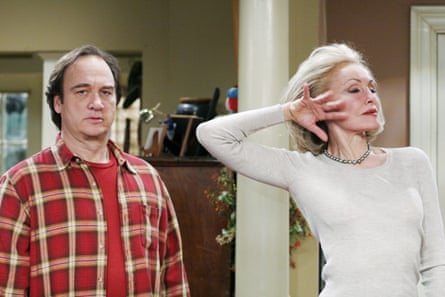
Away from the glamour, Newmar has always just got on with it, it seems. When her performing career wound down, she studied real estate management and managed her family’s appreciable property portfolio in LA – she still owns two other properties in the neighbourhood. In the 1970s, she filed trademarks for her own underwear designs under the brand name “Nudemar”. “They make your derriere look like an apple rather than a ham sandwich,” she said at the time.
“The first half of my life was all right brain: the artist, the creative, the imagination,” she says. “And in the second half, I’ve become like my father, left brain: how do you pay these bills?” She stays connected with the real world, she says. She reads the news, she is on Facebook and Instagram, “I watch YouTube, because it’s so au courant.” But she has no views about modern Hollywood. “I’m not involved in it. I am only an observer, so I can’t comment.”
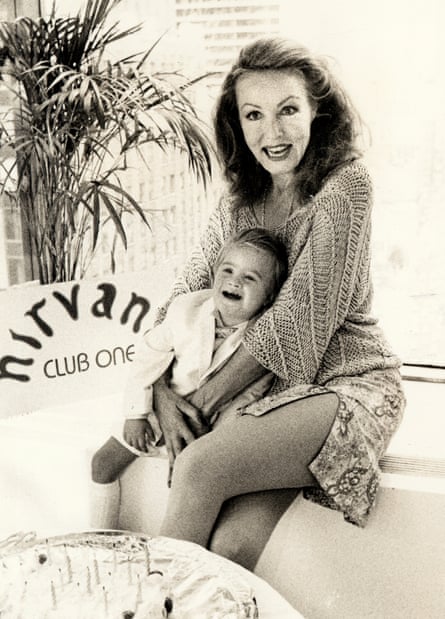
John is not here. “I found someone who is deaf to take him out and about during the day, and then they have a special group of disabled people that self-organise that they can be with during the daytime.”
Does she think about what might happen in the future, especially in the context of care for John?
“Again, I don’t worry about it,” she says. “Money-wise, it’s taken care of. I kind of feel that his life and my life are joined together. However we make the so-called exit from Earth, we’ll be in a … the word ‘pacific’ comes up. You see, Heaven is a place where we don’t have these worries.”
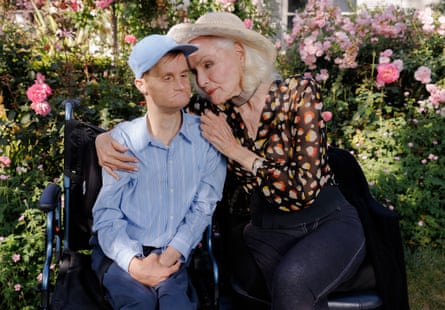
Newmar was raised a Christian Scientist, she explains. It’s a dwindling branch of the religion with no ordained clergy or formal rituals; it is more preoccupied with metaphysical concerns and is often sceptical of medial science. “It’s an enormously good basis for anyone who wants to live a powerful life, either in show business or anything.” Her mother was a Christian Scientist, she says, as were many showbiz figures of the era, including Ginger Rogers, Joan Crawford, Elizabeth Taylor and Monroe. Newmar’s is a mix of spiritual beliefs, it seems, including Buddhism. She also believes extraterrestrials are among us and will reveal their presence very soon. “There’s nothing to fear; they’re protecting us.”
This goes some way to explaining her untouched – some might say blithe – attitude towards life. “I don’t take a problem and turn it into a worry; that would be a very negative loss of energy. If we stay in worry, we are damaging ourselves … I’ve always lived by the law: never criticise another, never belittle another, never attack another.”
As with her garden, Newmar would rather see the beauty in life. She admits she is lucky to have been able to live like that. “I once heard a story about a great actor who didn’t play heroes, he only played villains, and he was great and absolutely adored. And they said: ‘Why are you so good?’ He said: ‘Because I find the joy in all these things.’ That’s me! I find the joy. That is what I do!”