2 months ago
124
2 months ago
124
The Norwegian monarchy is in crisis. Not because its future queen is gravely ill, nor even because her son has this week been convicted of serious crimes, but because the institution’s greatest asset – public trust – has been eroded by a series of self-inflicted mistakes.
Yesterday, it was announced that Norway’s crown princess, Mette-Marit, underwent a successful lung transplant after reports of a dramatic deterioration of her pulmonary fibrosis. That initial news prompted an outpouring of sympathy and even a surge in organ donor registrations. Without jumping the queue, she was matched with a compatible set of lungs less than two weeks after being placed on the list.
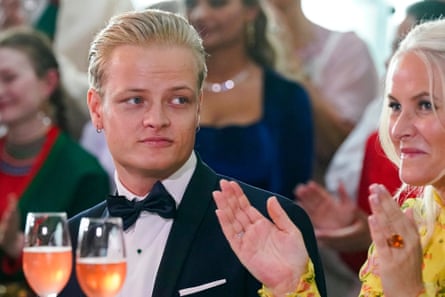
But the other two issues have elicited a very different public response. First, there are the actions of her son, Marius Borg Høiby. As a child, he stood on the palace balcony with the royal family, waving at the 30,000 children marching by on Norway’s constitution day. This year, he’s been standing trial, accused of 40 offences, including rape, threats and bodily harm. On Monday, Høiby was convicted of 34 of the 40 offences in the original indictment, including domestic abuse and two counts of rape, and sentenced to four years in prison. His lawyers immediately lodged an appeal. The palace had no comment on the outcome.
The second issue is entirely self-inflicted: Mette-Marit’s past contact with Jeffrey Epstein, and her reluctance to fully account for it. A drip of revelations shattered her initial description of a few casual encounters; released emails unveiled what looked more like a close friendship, including visits to Epstein’s Palm Beach house, shopping trips, personal advice and discussions of literature – including Nabokov’s Lolita – as well as a now-infamous 2011 exchange in which she wrote: “Googled u after last email. Agree didn’t look too good :).”
As more details emerged, public pressure mounted. After weeks of silence, in March the crown princess and Crown Prince Haakon gave a 20-minute interview to the public broadcaster NRK, with questions provided in advance. Mette-Marit expressed deep regret, saying she had been manipulated by Epstein, and ended contact in 2014 after realising he was a “bad guy”.
She revealed that she had witnessed him blackmailing others, and told of an incident at his Florida home that left her feeling unsafe, but declined to elaborate. She contended she was unaware of his sex crimes, and only ever saw him in the company of adults. She could not account for the smiley face email, saying she did not recall it.
Her regret deserves to be taken at face value, since everything indicates that she was more of a chess piece than a player in Epstein’s game, but her vague answers satisfied neither the public (68% found them insufficient) nor most commentators. Mette-Marit has not been available for more questions, Haakon only reluctantly answering a few. The king commented that the couple had covered the issue satisfactorily, saying his daughter-in-law hadn’t broken any laws.
For royals who once possessed a keen instinct for the public mood, it appears to have deserted them. The institution has never been less popular, with one in three Norwegians now believing King Harald V, 89, should be the country’s last monarch.
Norway is not a natural fit for a monarchy; it abolished nobility in its 1814 constitution, and its people are not comfortable with being anyone’s subjects, valuing equality and humility over tradition and grandeur. Still, an overwhelming majority – 79% – voted for monarchy over a republic, when the country divorced from Sweden in 1905. The government put its weight behind the monarchy, afraid of the political implications of becoming a republic in a Europe that, at the time, had very few.
But the Norwegian royals understood the brief, and delivered. King Haakon VII, imported from Denmark, dedicated himself to the nation and became a symbol of defiance during the second world war. His son, King Olav V, was beloved, famously taking the tram through Oslo during the 1973 oil crisis. The current monarch, Harald, grew to become as popular in his own right, and Crown Prince Haakon has long been seen as an intelligent, decent man fit to follow in their footsteps.
They embraced inclusivity, defining themselves as the people’s royals, from King Haakon VII declaring he was “the communists’ king, too”, to later generations’ unambiguous support for immigrants and LGBTQ+ citizens.
Even the choices of spouses without a drop of blue blood – including Mette-Marit, a single mother with a history of hard partying – were admired by most. Putting love over convention, it made the monarchy seem less elitist, more like a modern fairytale. Mette-Marit grew into the role, too, winning over critics and receiving the acceptance and esteem of the public.
How things change. This year, the crown princess has seen several of the humanitarian and cultural organisations she has previously supported cut ties with her. What used to be considered a great honour is now a potential liability. In online spaces, the mood has turned toxic, with people accusing the crown princess of being an accessory to both Epstein’s crimes and those of her son, dismissing her medical issues as a PR stunt, or insisting that she must have received her lungs so quickly at the expense of a commoner. There are no grounds for such accusations, but the palace’s misleading initial narrative and continuing reluctance to be transparent has provided a perfect breeding ground for conspiracy theories.
For all this, Norway isn’t getting a president any time soon. The few republicans in parliament, mostly on the left, routinely propose the abolition of the monarchy. They do so as a matter of principle, since the outcome is always the same: this year the proposal received 26 votes, with 141 against.
Even now, two out of three Norwegians still support the monarchy, but its unassailable position is gone. Its reputation as being “of the people” may never recover, in an age of anti-elitist populism. Mingling with Epstein reminded many that the royal family, however carefully they cultivated an image of ordinariness, belong to a global elite.
Norwegians sincerely hope Mette-Marit recovers successfully. Whether her health will ever permit a full return to public life remains to be seen. But while the Epstein issue is “on pause”, the palace’s task of rebuilding trust after such serious missteps remains – there are many questions still unanswered.
In a March poll, almost half of those surveyed saw Mette-Marit as unfit to become queen. The mood may have shifted since. But unlike in 1905, the population won’t be consulted on that, since a monarchy follows the archaic logic of bloodlines, not democracy. But the legitimacy of Norway’s royal family rests less on constitutional law than on public trust and affection. Once squandered, these qualities are not easy to recover.
-
Magnus Nome, based in Oslo, is a journalist, writer and co-creator of award-winning TV series in Norway