2 months ago
147
2 months ago
147
Markuss Hussle wants his online students to understand one thing: he knows how to make money. There is no subtlety involved. He gives an hour-long presentation in one video, sitting next to his silver Lamborghini. In another, he splices his money-making tips with footage of a ski weekend with his friends in Courchevel, in the French Alps, including shots of private jets, helicopters and a girlfriend in a fur coat. He claims the trip cost $100,000 (£75,000). He shows off his watches and his swimming pool and talks about how his mother worked three jobs as a cleaner until he “retired her” and bought her a home by the sea.
If you were not paying close attention to the spreadsheets and presentations interspersed with the motivational lifestyle content, you might guess he was offering guidance on how to trade shares or invest in cryptocurrency. There are a lot of performance graphs and much discussion of account management, optimisation, scaling, working smart and tripling profits.
“It is one of the quickest and easiest ways to make money online,” he promises viewers, adding: “Follow me or you’ll stay broke.” The business model, he says – reclining on a white sofa, by a glass table that incorporates bundles of $100 bills in its design – is “embarrassingly simple”.
Hussle, 27, describes himself as an OnlyFans manager. Others view him as an e-pimp, although he rejects this description as “cringe”. He says he makes his money by taking a 50% cut of the earnings of women who sell videos of themselves performing provocative or explicit content on the website OnlyFans. Hussle, whose real name is Markuss Kohs, runs a digital marketing agency that encourages men to buy clips of the women he manages removing their clothes.
“The lonelier men get, the more money I make. And men have never been lonelier than right now,” he writes in promotional material for his parallel business, which offers online training, advising newcomers to the industry on how they can set up their own OnlyFans management firms. His coaching programme costs $8,000 and, judging by the recorded Q&A sessions, it is targeted at young men, some of whom appear to have recently left school.
“All right, boys,” the videos begin, before he tells his students how they too could buy a $350,000 customised supercar or spend $150,000 on a holiday in Cape Town if they just dedicate themselves to the challenge of pushing women to perform better on camera. “We are potentially like the brains behind the beauty,” he says.
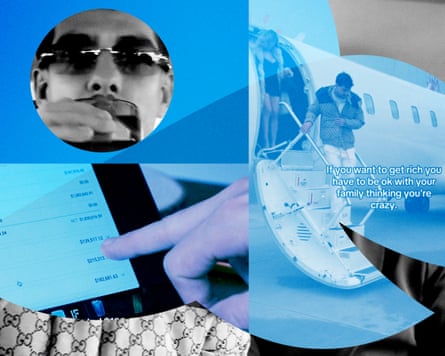
Mostly, he avoids talking in clear terms about what the women – to whom he refers euphemistically as clients or content creators – are expected to do on camera to generate all this income. On one podcast, he was asked whether he would let his hypothetical daughter open an OnlyFans account. “Absolutely not,” he replied.
Hussle is part of an ecosystem that has rapidly grown up around OnlyFans. The London-based adult content site directly employs only 42 people, but generated $7.2bn in revenue from its 377 million account holders in 2024.
Since its launch in 2016, OnlyFans has promoted itself as a fun, harmless platform that allows creators, mostly women, to earn money by posting nude or semi-nude videos and photographs of themselves on the site. The creators’ “fans” subscribe to their content, message them and pay extra for personalised clips. Founded by a family in Essex, the company has been heralded in the media as one of Britain’s biggest tech success stories and as the country’s most powerful social media site.
More recently, in the face of rising criticism, the site’s supporters have switched to defending it as a commendably safe platform where its 4.6 million creators – a large proportion of whom are filming pornography – can earn money from the security of their own homes, without being exploited or bullied by coercive intermediaries or sleazy studio directors. The company takes 20% of earnings and the rest goes to the creator, with a handful of the platform’s most high-profile stars having made tens of millions of dollars from posting provocative content. British creators such as Bonnie Blue and Lily Phillips have said they see themselves as feminists who are working to achieve financial independence. Other successful OnlyFans performers use words such as “empowering” and “liberating” to describe their work.
This narrative insists that the invention of OnlyFans has radically shifted power dynamics in the pornography industry, handing control decisively to women. But it is increasingly clear that a new breed of middlemen have raced to take a cut of the $25bn paid out to creators since the firm launched. A BBC investigation broadcast this week, OnlyFans: Inside the Machine, revealed that some OnlyFans managers have used violence to intimidate women into compliance with their requests. One woman told the BBC that her arrangement with her management agency ended with her being thrown down the stairs and strangled by two masked men; another described being pressed to produce highly explicit content when she wanted to post only pictures of herself in her underwear.
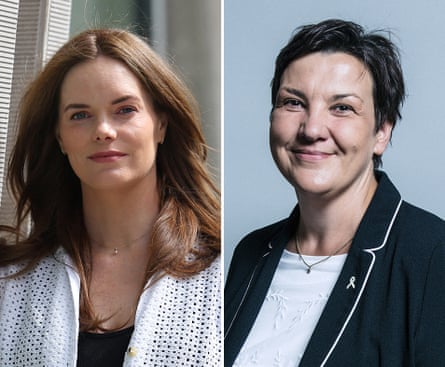
After reviewing the documentary’s findings, the Labour MP Tonia Antoniazzi, the chair of the all‑party parliamentary group on commercial sexual exploitation, and Eleanor Lyons, the independent anti-slavery commissioner, called for a parliamentary inquiry into OnlyFans to examine the company’s processes and effectiveness at identifying indicators of trafficking, sexual exploitation, coercive control and violence. “Platforms which profit from monetised sexual content must be subject to stronger safeguards,” they wrote in a joint statement.
The OnlyFans management industry includes a wide range of operators, from talent management firms in Los Angeles to small-time operators, sometimes men who have given up their day jobs to try to generate maximum revenues from their wife’s or girlfriend’s account.
At one extreme, there is Andrew Tate. The British-US national has been charged with rape, human trafficking and other offences in Romania and faces criminal charges in Britain including rape, actual bodily harm and human trafficking, as well as a civil case brought by four women. He previously ran Hustlers University, charging $49.99 a month for courses that offered, among other things, OnlyFans management tips. “The reason women need a man to do OnlyFans is the same reason a woman needs a man to do anything – because they’re incompetent and they’re very, very lazy and stupid,” Tate observed during one of his classes.
Hussle’s OnlyFans management style appears to be more respectful and his approach does not involve coercion. The Guardian is not aware of any allegations of misconduct made against his operation. He declined a request to be interviewed and did not answer emailed questions, but transcripts from 249 of his instructional videos on YouTube reveal his approach to the work.
First, he tells his students, they need to find a woman to represent. This should not be too difficult, he promises: aspirant OnlyFans managers should simply message women they already know from school, college or university and see if they want to work on the platform. “If she’s like: ‘Oh no! I would never do that,’ all right, cool – like, who gives a fuck? There are like 8 billion people in this world, nobody cares, you just move on to the next one.”
He suggests looking for women who have uploaded plenty of revealing images on their social media. “If they’re already posting bikini photos left, right and centre on Instagram for free, these girls can make money on OF.” Getting women to sign contracts will also be straightforward, he says, because managers will typically be “dealing with girls who are your age, 18 to 25, girls who you maybe even went to university with” who aren’t “business savvy” and “don’t really ask hard questions … It’s gonna be pretty easy for you to start.”
Advertising their services is also going to be a breeze, he promises. Doing “marketing to make a girl that is half-naked go viral with social media – it’s not really fucking rocket science, right? Attractive girls always get attention.”
His own language is quite careful, but he laughs when another manager he interviews for his YouTube show says the world they operate in is “a big group of … dudes pimping out girls and making money”. He interviews two women from Ireland who started posting on OnlyFans when they were teenagers; one of them was still at school when she turned 18, opened an account and began filming content in her bedroom. She talks about the secrecy involved in doing the work, hiding upstairs from her parents, the disapproval expressed by her family. Meanwhile, the men he interviews talk about money, cigars, supercars and trips to Marbella.
Hussle notes that most OnlyFans managers never have to show their faces. This is something men can do anonymously, holding themselves a few steps away from the stigmatised industry. The women who sign up as creators don’t have that privilege. If a potential model says she does not want to show her face on camera, that should be a red flag, Hussle tells students. “If she’s anxious of her friends or family finding out – which I understand – maybe she’s not 100% on it,” he says. “In an ideal world, the ideal client shouldn’t be worried about whether they want to do it or not.” Women often have doubts about doing this work, but once their earnings hit $10,000 a month, their hesitations tend to disappear, he claims.
“For a model to have a top earnings potential, they need to be open to doing fully explicit content,” he tells his students. It is one of the few clear references to the precise nature of the work he is managing. “The bigger creators are the ones that are doing like full-on pornos, full sex tapes.”
As the industry comes under greater scrutiny, even the best‑known performers are beginning to raise concerns about the exploitative nature of the OnlyFans management sector. It appears to reproduce, in digital form, a familiar pattern of men making money from selling women’s services.
Ari Kytsya, 25, began posting content on OnlyFans when she was 22 and became one of the site’s highest earners. When she was just 18, she says, long before she had considered pornography as a way of making money, she began getting messages on Instagram from men offering to manage an OnlyFans account for her. They were promising “they can make me this much money, saying: ‘You can go on trips, it’ll be so fun and great, and you’re going to be famous, and I’ll help you,’” she says.
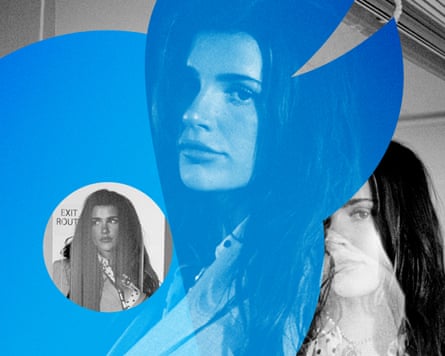
She decided to sign up only when Covid disrupted her studies at a Canadian university. But the management approaches had made her aware at a very young age of the opportunities offered by online sex work. She still gets about half a dozen approaches a day from management outfits.
“It is something we should be worried about,” says Kytsya. “Almost every girl that I’ve talked to in the industry has had an experience – whether it’s being stuck in a contract that they can’t leave or having management taking advantage of them, or scamming them, or forcing them to do something.”
Penny East, the chief executive of the women’s rights charity the Fawcett Society, is uneasy at the proliferation of the management industry. “What’s surreal is how they talk as if they could be marketing a new drinks product – speaking in marketing jargon about analytics and conversions and audience engagement. And yet what they’re talking about is quite explicit pornography,” she says. “It is deeply troubling to see the normalisation of OnlyFans management companies. Men teaching other men how to market, sell and profit from women’s bodies is not progress.”
In 2023, towards the tail end of Covid, Victoria Sinis began working for an Australian OnlyFans management firm as the sector ballooned. More and more women were at home, growing short of money and looking for new sources of income; more and more men were working remotely and able to watch pornography from the privacy of their home. Part of Sinis’s job was to find new women to enter the industry.
“The recruitment process is really simple,” she says, over the phone from Melbourne. “You scour the internet, TikTok and Instagram, looking for girls that fit a certain criteria. Are they already posting provocative content? If they are, that’s telling you that either they already have an OnlyFans or they’re more likely to do something like OnlyFans. From there, you assess: how old do they look? Because the younger they look, the more money they make. Then we’d message: ‘Hey, I saw your Instagram! I love your vibe! Have you ever considered OnlyFans?”
Sinis says the agency would hire big houses where they filmed content and threw lavish parties to help persuade women to sign up. According to Sinis, staff often created false narratives for the models: women who were 20 would be advertised as “barely legal” 18-year-olds, because this was what made most money; a woman who had never played sport might be rebranded as a volleyball‑playing college girl.
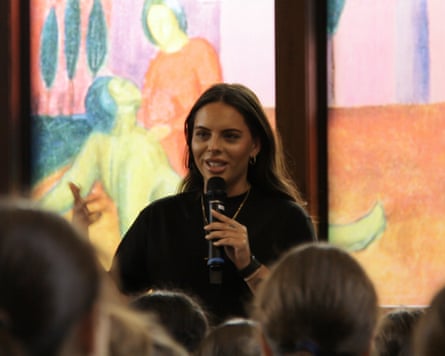
After a few months in the job, Sinis began to worry that she was encouraging people into an industry they may not otherwise have considered. She says she was disturbed that the models signed up by the agency were regularly trawling dating apps to match up with men who would agree to have sex with them on camera. “We’re lying to these girls when we tell them that this is the pinnacle of success, that it’s the epitome of empowerment,” she says. “It’s not; it’s the porn industry. It’s exploiting, it’s grooming, it’s predatory. Telling you that your greatest asset in the world is to get naked and sell yourself online – I saw the mental-health consequences.”
Many of the women she met through the agency came from low-income, vulnerable backgrounds, she says. While creators usually started out with a clear sense of what they were willing to do online, Sinis says there was relentless pressure for them to do more.
“The girls prepared to do the most degrading acts were the most glorified on OnlyFans,” says Sinis. “Any boundaries they may have had when starting out were soon broken down. There was too much competition for them to say no. Everything they thought they wouldn’t do, they ended up doing it. It destroyed their self-confidence.”
Sinis left the agency, became a Christian and now gives presentations educating people about the sector. She says parents should be aware that girls in their late teens may be receiving approaches from agencies via their TikTok and Instagram accounts. “It’s so hard for people to understand that pimping and grooming and even trafficking is all digital now. I think we’re still in the very early days of people understanding it,” Sinis says.
Some women are happy to secure a contract with an OnlyFans management company. If a manager is good at their job, they will know how to attract more paying customers; for successful performers, who have a lot of followers already, managers take on responsibility for “chatting” – sending flirtatious messages back and forth to fans, encouraging them to make extra payments on the promise of more explicit content. The manager will either assume the performer’s identity or outsource this work to “chatters” in lower-income economies, often the Philippines or Nigeria, so that the chatting – and those extra payments – can continue 24/7.
Management companies have mushroomed across Europe and North America. Junior staff working for two OnlyFans management firms in LA and New York told me about the unease they felt when watching their male bosses target vulnerable young women. In LA, Rita (not her real name) said her employer would recruit successful performers by offering to help them transition from being a sex worker to mainstream modelling work.
“He would promise non-OnlyFans opportunities, which feels really sparkly to a girl who is thinking about how to get out of the OnlyFans space,” she says. This was particularly appealing to women who wanted to start families, or who were worried about the sustainability of their careers. “He was a master manipulator. He would say: ‘Wow, you’re gonna be a star. I’m gonna put you in this room and introduce you to this person.’ It’s unethical, because we knew there weren’t going to be any paid brand deals or television opportunities.”
In New York, at another agency, a junior employee described watching the agency’s owner pressure women to film what is known euphemistically as “boy-girl content” (having sex on camera). “There would be this spiral of pushing the girls to do more and more stuff because the last thing didn’t really end up increasing their earnings. It got really bizarre really quickly. He’d say: ‘Maybe it’s because you’re not doing enough kink videos.’ Sometimes he would tell me to talk to her and tell her: ‘If you really want to make it in this industry, you have to do XYZ.’ Or he would contact her directly and yell at her. Either way, she’d be pressured into doing this stuff.”
Clara (not her real name) says she opened an OnlyFans account in 2021, when she was 19. Her university classes had gone online, due to Covid, and she was living in Miami with time on her hands. She is well educated, comes from a middle-class family and had no pressing need to make money from the site. However, she had an uneasy relationship with her parents and viewed them as controlling; she was anxious to make her own money so that she could be independent. She says she was mesmerised by the huge sums promised by the managers who constantly messaged her. “Their main form of attack is Instagram DMs,” she says on a video call.
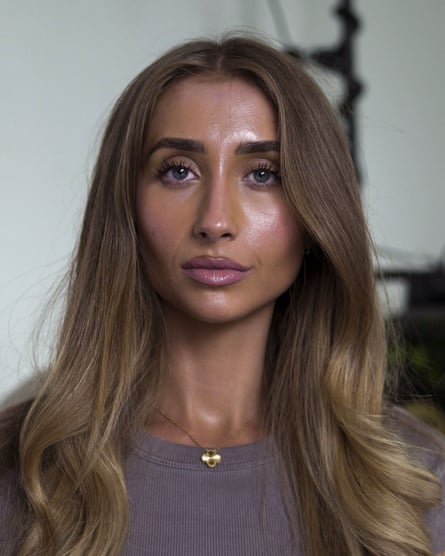
Clara quit after six months: “I was just uncomfortable.” She is not soliciting sympathy for her choices, but wants to educate people about the industry. “All the managers are young and super fun. They’re like: ‘We’re gonna make so much money! It’s going to be so fun! You’re going to be so good!’ Once you start having issues with them, that’s when their true colours start to come out.”
A year later, she was still being bombarded by daily messages from managers. “There were a lot of start and stop points because I was very hesitant to join,” she says, reflecting on her decision to quit the site a couple of times. “I think I was so young that I was just trying to override my own intuition.” When she chose to reactivate her account for a third time, her new manager told her she would need to do “boy-girl content” in order to get the contract. “He wanted that, because it makes more money, so I did make tapes with somebody. It was not something that I wanted to do – it was causing me anxiety and I put my foot down the next time he asked – but, of course, it’s already out there. It’s too late now. So that’s probably the worst thing.”
She says now that she views the relentlessly chirpy encouragement from management firms as a form of grooming. “They’re selling you a dream, a lifestyle: you’ll be able to travel, you’ll be able to buy things, it won’t matter what people say about you because you’ll be so rich. And I was able to do these things, but at what cost?”
Clara is among the more successful OnlyFans content creators. She thinks she generated about $2m from the site over five years, of which she took home $400,000 after the site’s cut and her management fees. She left the platform at the end of 2025 to take up a more conventional brand management role and has since come to a clearer understanding of the ways in which the industry can be exploitative.
“I don’t find selling explicit content on the internet empowering,” she says. Early on, her parents had to pay $4,000 to help extract her from a contract with a management company. “It is kind of pimp behaviour. It’s not like people are being forced on to the platform against their will – at least, in my experience. It’s more like: now that I’ve done this, I can’t leave. Managers are very greedy: they always want your money and if you try to leave them they threaten to sue you, or they do sue you, or they threaten to post all your content somewhere else and make money off of you.”
Sole-trader OnlyFans managers who aren’t part of a larger agency often join informal online networks, swapping tips with each other on Reddit or on vast Telegram messaging boards. Data analysts from the Netherlands have been analysing one of the largest Telegram OnlyFans managers’ groups, scrutinising conversations between more than 10,000 members over the past three years, documenting how female OnlyFans performers appear to be being bought and sold on the site.
Chris de Meijer, an online safety consultant for DataExpert and one of the analysts of the group, says: “They talk about models like it’s a product, a thing you can sell and buy.” He estimates that the group is 95% male, with members mostly aged between 18 and 30. Much of the discussion centres on the mechanics of becoming an OnlyFans manager: “They’re asking each other: how do I get my models, where do I find chatters? People respond: I’ve got an account, I’ve got a model.”
Documents examined by DataExpert reveal details of the women being traded. One message reads: “Hello gents, got a sweet little model from Switzerland you might be interested in … current price $1999 OBO [or best offer], 15 day warranty period”. Another begins: “What’s up gentlemen, I have a lovely young Russian lady I want to offer to you. She has agreed to take 30%. She’s 22 y/o, very responsive, and has already provided us with quite a bit of content.”
Members of the group advise each other on how to treat performers who want to part ways with their manager, with some discussing whether it is best to call in lawyers or threaten violence. De Meijer notes that managers usually hold copies of the women’s passports – because OnlyFans needs them for ID verification – and know the logins for their social media. “Handling all this information makes it a grey area, which might very well become quite dangerous,” he says.
But he also suspects some of the participants in the forums switched to selling instruction courses on how to succeed in this sector because they were not making money in the core business. “A lot of those agents are starting to sell training courses. That is probably not because their modelling agency is going so well. They need to earn money from other ways and they start eventually selling training to the next one, and to the next one, so it looks like a pyramid scheme.” (There is no suggestion that Hussle is involved in such a scheme.)
An OnlyFans spokesperson says the site “was designed to empower creators to control and monetise their content” and stresses that the platform takes the “safety of our users seriously”. The spokesperson continues: “While some creators choose to work with third parties to help manage their online presence, OnlyFans does not endorse or have relationships with management agencies, and cannot review or influence any contractual agreements creators choose to enter into outside the platform as we are not party to them. If anyone raises a concern about a creator’s account, we will immediately restrict the account, conduct an investigation and take action to ensure the creator is in control of their OnlyFans account.”
Melinda Tankard Reist, the founder of Collective Shout, an Australian grassroots activist group that campaigns against the sexualisation of girls, says governments should do more to regulate the sector. She is worried by the way the industry is “normalising women as transactions, as commodified products for commercial, sexual exchange. It teaches young people that this is what women are for.”
In his videos, Hussle says he shares Tate’s belief that men should be breadwinners, while women are there to “build a beautiful family”, look after the children and “clean the house”. He says these views are standard in Latvia, the country he grew up in until he was nine, when he moved with his parents to a council estate in Suffolk, England. He posts videos from his home in Dubai, criticising women’s driving skills, including the way his girlfriend parks his silver Rolls-Royce.
It’s hard to know how much of the lavish lifestyle footage he posts is genuine. Sometimes it pushes the frontiers of absurdity so far that it feels like satire. He tells novices to take pictures of themselves in front of expensive cars in a dealership, or in the lobby of an expensive hotel, to project a high‑status appearance. This makes it hard to interpret the many pictures he posts of himself standing next to luxury cars.
His LinkedIn page says he attended the University of Cambridge, but elsewhere he boasts about achieving success without a university education. He talks about his hard upbringing and stresses that childhood poverty is a superpower because it makes you hungry for success. He is impressively committed to making a go of his life.
Promoting OnlyFans performers was not his first choice of career. His earlier, more conventional entrepreneurial efforts – launching a social-media marketing agency in Essex and helping law firms boost their online presence – appear to have been disrupted by the pandemic, like the lives of so many of the women who began posting on OnlyFans during Covid. He turned to the adult industry as a plan B.
He knows that women may be suspicious of the men who offer to manage them and tells his male students that paying women to pretend they are in charge of the business may be a good way to reassure future clients. He discusses whether it makes sense to pay women to record fake testimonials and concludes that it is worth a try.
During interviews with male podcasters, he defends his profession, pointing out that the work is not illegal and expressing bemusement that it attracts disapproval compared with “real problems in the world” such as governments that are “spending hundreds of millions of dollars on weapons of mass destruction”.
His views on the industry are evolving. In more recent clips, he says he is against encouraging new women to start working in the sector in case they come to regret the decision. He stresses that it is easier to work with women who already have OnlyFans experience and that he simply wants to help them make more money from their work.
Success in this world is fed by loneliness, “the death of real dating, and the fact that men will happily pay $200 for an AI voice note from a girl who doesn’t know their name”, he writes on X, encouraging people to sign up for his courses.
“The loneliness epidemic isn’t my fault, but it is my income,” says Hussle. “Men were spending this money long before I showed up. They’ll be spending it long after. I just learned how to stand in the middle and collect.”