2 months ago
90
2 months ago
90
What are 'red' and 'blue' blocs in Danish politics and why Lars Løkke Rasmussen emerges as kingmaker?
Miranda Bryant
in Copenhagen
Usually Danish political coalitions are formed of “red” and “blue” blocs.
The red, left-wing parties being the Social Democrats (Socialdemokratiet), the Danish Social Liberal Party (Radikale Venstre), Green Left (Socialistisk Folkeparti or SF) and the Red-Green Alliance (Enhedslisten), and the blue, right-wing parties being Venstre (Denmark’s Liberal party), the Danish People’s Party (Dansk Folkeparti), the Conservative People’s Party (Det Konservative Folkeparti), Liberal Alliance and Nye Borgerlige (New Right).
But after the last election, in 2022, the Social Democrats, the then newly formed centre-right Moderates and conservative Denmark’s Liberal Party broke with convention to form a centrist government.
This time around, most of the red bloc are hoping for a traditional red coalition to put forward a strong left-wing agenda.
But with the polls looking so tight, the Moderates are expected to play a decisive “kingmaker” role in negotiations depending on who they are willing to go into partnership with.
And at the 11th hour, Moderates leader Lars Løkke Rasmussen, has appointed himself “royal investigator” – the role that is usually held by the person who goes on to become PM and who looks into whether a government can be formed.
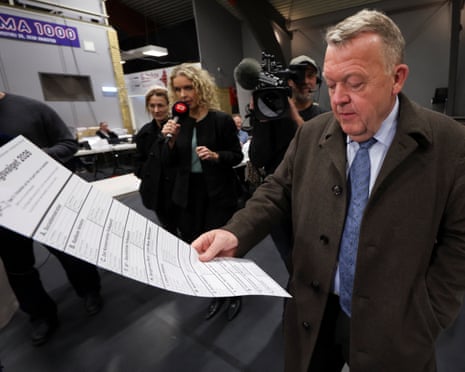
Rasmussen, who has twice been Denmark’s prime minister and is currently the foreign minister, told Politiken in an interview published last night:
“I am not a candidate for prime minister, but I would like to be the one who negotiates a government basis for a government across the middle. Not to form a government, but to investigate whether a government basis can be created. Therefore, I am announcing myself as a royal investigator if we in the Moderates have the decisive votes.”
Key events Show key events only Please turn on JavaScript to use this feature
Far-right party hopes to win votes with paying for petrol
Miranda Bryant
in Copenhagen
The far-right Danish People’s Party (DPP) is attempting to win over voters by paying for their petrol.
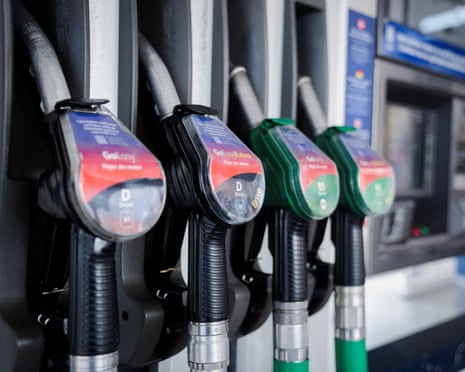
For three hours this morning, the petrol station Go’on lowered its petrol prices by 3.35 DKK and diesel prices by 2.25 DKK in a campaign funded by the party, leading to queues in several places in Denmark.
But Go’on CEO Mick Kjær told DR that there was an upper limit to the deal (although he declined to say what the agreed limit was), with the company paying anything above that.
The DPP has made fuel prices a central issue in their election campaign.
Kjær denied publicly supporting the party, telling the broadcaster:
“We would like to contribute to the debate about fuel prices, but we do not really have a desire to be party political.”
US in talks with Denmark over greater military access to Greenland
Meanwhile, the Danish media picked up the recent comments by US Air Force Gen Gregory Guillot who told US lawmakers that the US and Denmark were negotiating broader US access to military bases on Greenland.

“What we have now is access to Pituffik airbase, which is at the northern part of Greenland, which gives us some of the fighter and tanker capability and a lot of space capability, but we don’t have a permanent presence for [special operation forces] and then we don’t have a permanent presence for some of the maritime capabilities that I need,” Guillot told US senators.
In his comments, originally made late last week, but only picked up by the Danish press today, Guillot said that the talks with Denmark were “very productive” and responding to “very real” need on the US part.
He said that Denmark was “very, very supportive” of expanding the access under the 1951 defence agreement with the US.
Voting under way in Greenland with two seats in Danish parliament up for grabs
And the voting is now under way in Greenland too, which is three hours behind Copenhagen.
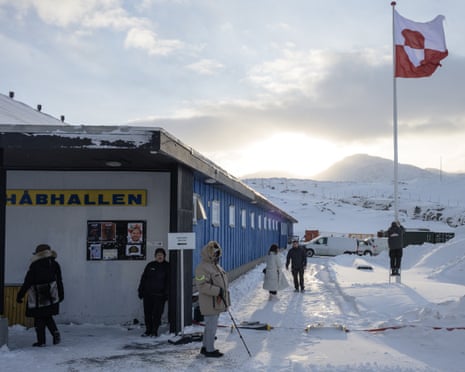
Understandably, there has been a lot of focus on the semiautonomous territory in recent months as US president Donald Trump repeatedly expressed his (not so subtle) interest in controlling it.
There are some 70 polling stations, and two seats in the Folketing are up for grabs, with both incumbents not standing for re-election, Greenlandic media outlet Sermitsiaq said.
Frederiksen also posted a photo from the campaign trail on her Facebook with a last-minute appeal to voters, asking them what’s important for them – and offering a call from her or someone from her party to discuss their concerns.
Allow Facebook content?
This article includes content provided by Facebook. We ask for your permission before anything is loaded, as they may be using cookies and other technologies. To view this content, click 'Allow and continue'.
PM Frederiksen out campaigning on election day
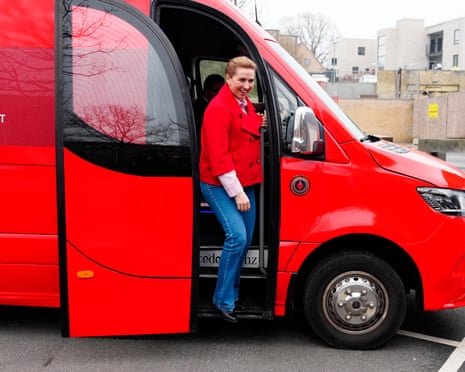
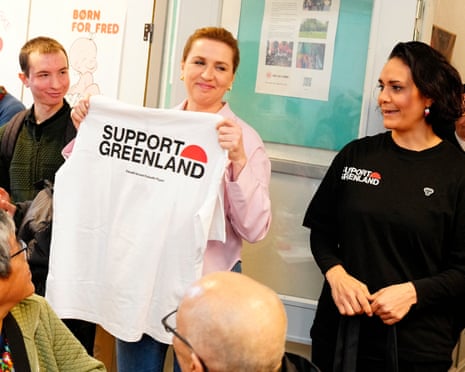
Meanwhile, Danish prime minister Mette Frederiksen is out campaigning this morning too and she is in Aalborg, meeting some Greenlandic voters.
What are 'red' and 'blue' blocs in Danish politics and why Lars Løkke Rasmussen emerges as kingmaker?
Miranda Bryant
in Copenhagen
Usually Danish political coalitions are formed of “red” and “blue” blocs.
The red, left-wing parties being the Social Democrats (Socialdemokratiet), the Danish Social Liberal Party (Radikale Venstre), Green Left (Socialistisk Folkeparti or SF) and the Red-Green Alliance (Enhedslisten), and the blue, right-wing parties being Venstre (Denmark’s Liberal party), the Danish People’s Party (Dansk Folkeparti), the Conservative People’s Party (Det Konservative Folkeparti), Liberal Alliance and Nye Borgerlige (New Right).
But after the last election, in 2022, the Social Democrats, the then newly formed centre-right Moderates and conservative Denmark’s Liberal Party broke with convention to form a centrist government.
This time around, most of the red bloc are hoping for a traditional red coalition to put forward a strong left-wing agenda.
But with the polls looking so tight, the Moderates are expected to play a decisive “kingmaker” role in negotiations depending on who they are willing to go into partnership with.
And at the 11th hour, Moderates leader Lars Løkke Rasmussen, has appointed himself “royal investigator” – the role that is usually held by the person who goes on to become PM and who looks into whether a government can be formed.
Rasmussen, who has twice been Denmark’s prime minister and is currently the foreign minister, told Politiken in an interview published last night:
“I am not a candidate for prime minister, but I would like to be the one who negotiates a government basis for a government across the middle. Not to form a government, but to investigate whether a government basis can be created. Therefore, I am announcing myself as a royal investigator if we in the Moderates have the decisive votes.”
Far right has slowed under Frederiksen – but at what cost? — analysis
Miranda Bryant
in Kokkedal
Mayasa Mandia, a recent graduate living in the small Danish town of Kokkedal, will be voting for the left in Tuesday’s general election – but it won’t be for Mette Frederiksen’s Social Democrats.
![‘We should be open to give asylum to [Iranians] the same way we open to give asylum to western people.’](https://i.guim.co.uk/img/media/5dec61b387016b7c47064121d7dd960ecd266a50/728_0_10928_8742/master/10928.jpg?width=465&dpr=1&s=none&crop=none)
The 23-year-old, a practising Muslim, says that under Frederiksen’s government far-right commentary has become normalised in the Danish mainstream. She has seen this, she says, at her own university, where there were discussions about banning prayers.
“There are more important issues to talk about than the skin tone of someone or whether or not they wear a scarf on their head and whether that scarf is reflective of our Danish values or not,” said Mandia.
But, under Frederiksen’s centrist coalition, anti-immigrant rhetoric and Islamophobia have become increasingly commonplace in Danish politics, she feels.
Unusually in a continent where far-right forces are making unprecedented inroads, polling for the anti-immigration Danish People’s party (DPP) is relatively low – the party is forecast to garner about 7.5% of the vote, with smaller parties of a similar bent predicted to pick up a further 9%. Many feel that is not because their ideas have been vanquished, but because they have been co-opted by Frederiksen’s centre-left.
The prime minister’s hardline immigration policies – she came into government in 2019 saying she wanted to cut asylum seeker numbers to zero – have attracted global attention and inspired similar approaches across Europe, including in Sweden and, more recently, the UK.
Domestically they have been stalling the growth of the far right, while at the same time pulling rightwing rhetoric and extremist ideas leftward into the mainstream, say analysts.
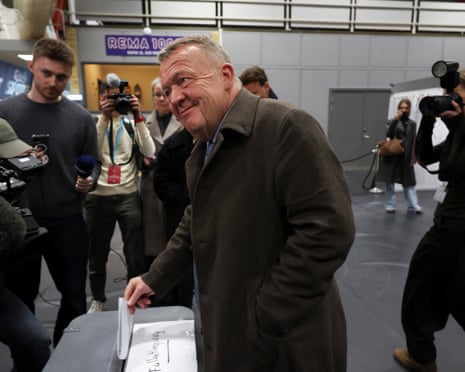
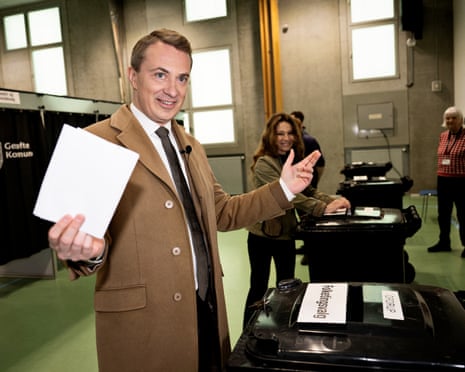
First party leaders vote in Denmark — in pictures
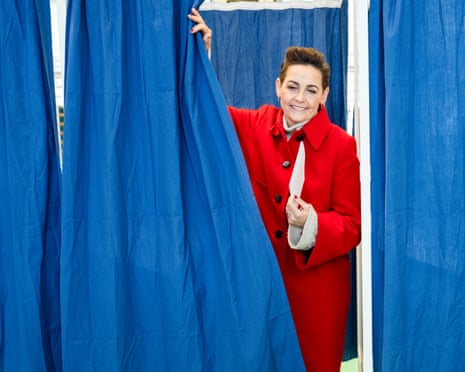
'So important what message we will send to Europe and world tonight'
Miranda Bryant
in Copenhagen
Good morning from Copenhagen where I have just bumped into Pelle Dragsted, the leader of Enhedslisten – the Red-Green Alliance – high-fiving and waving at passing commuters on bicycles. The recently elected Copenhagen Lord Mayor, Sisse Marie Welling, from the SF party also just cycled by.
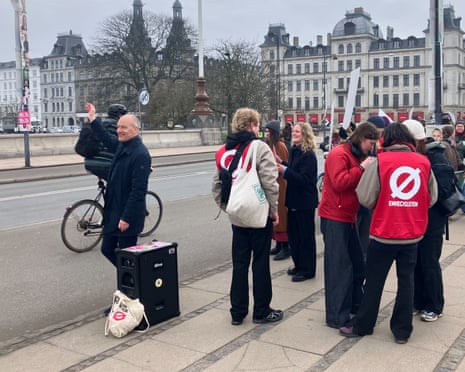
After a short but intense election period, Denmark goes to the polls today in what is expected to be a very tight election.
The Social Democrats’ Mette Frederiksen is largely predicted to remain prime minister, but it is not guaranteed – with the Moderates’ Lars Løkke Rasmussen expected to be in pole position to be a kingmaker in coalition talks.
The 12 leaders were debating on television late into the night last night.
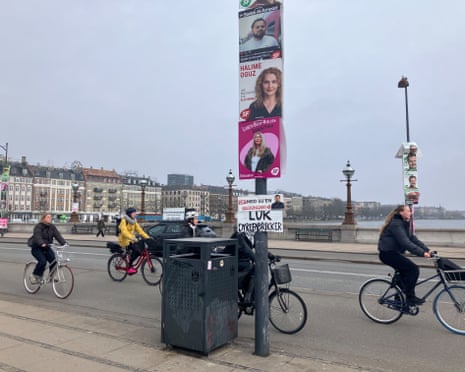
The election has been dominated by domestic issues like animal welfare, drinking water, further tightening immigration and the cost of living in front of the back drop of geopolitical issues – not least the crisis with the US in January when Donald Trump threatened to invade Greenland, which is part of the Danish kingdom.
Dragsted told me the election is “about Danish daily life of citizens but it’s also an election of what’s going on in the world.
“We have a clash of authoritarian forces one side and we are having a lot of important elections in coming years that will define the future of Europe. Our election is part of that clash.”
He added: “For me it’s so important what message we will send to Europe and the world tonight.”
Morning opening: Danes go to the polls

Jakub Krupa
After votes in France, Germany, Italy, Slovenia over the weekend, it’s now time for Denmark, as Danes go to the polls today amid the backdrop of (waves arms) everything, everywhere, all at once.
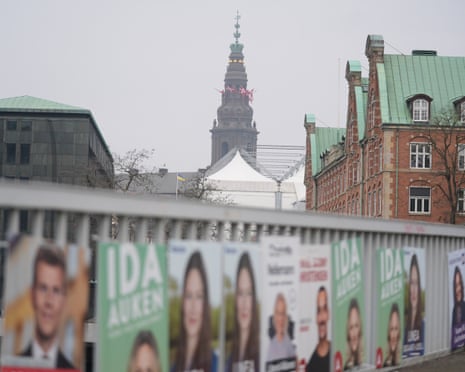
As our Nordic correspondent Miranda Bryant explains, the incumbent, Mette Frederiksen, has been widely predicted to continue as prime minister after the election.
Earlier this year, her party recorded a “Greenland bump” after dealing with US president Donald Trump’s threats aimed at the semiautonomous territory, but the campaign was dominated by domestic issues.
And it’s all very tight.
The last Verian poll, published on Monday, predicted that neither the red nor the blue bloc would be able to form a majority without the Moderates, putting the Moderates leader, Lars Løkke Rasmussen, in the position of kingmaker.
Miranda is on the ground in Copenhagen and she will keep us posted on the main stories and the colour of the election day in Denmark.
The polls close 8pm local time (7pm UK) and we will have exit polls and immediate reactions for you on the blog.
It’s Tuesday, 24 March 2026, it’s Jakub Krupa here, and this is Europe Live.
Good morning.