2 months ago
91
2 months ago
91
Hello and welcome to The Long Wave. It is now unmistakably post-holiday season, and in some parts of Africa, the last of the “Detty December” revellers are packing their bags. The few weeks of heavy partying that attract Black diaspora travellers from all over the world have been a fixture on the calendars of cities such as Lagos and Accra for almost a decade. But this year, it feels as if the darker sides of the festivities are encroaching on the year-end celebrations. Have we reached peak “Detty December”?
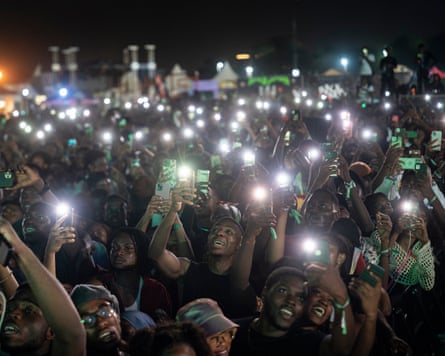
A party scene has taken off on the African coastlines. In less than a decade, an annual gathering, increasingly attracting members of the Black diaspora, grew large enough to gain its own name. “Detty December” is a tongue-in-cheek reference to the untrammelled fun, indulgence and even debauchery of the holiday party season. Festivals, concerts and club events, from Ghana and Nigeria to Kenya, receive an influx of local and global guests who now make a regular pilgrimage to beaches, bars, restaurants and nightclubs across Africa that are firmly south of, or on the equator, to enjoy boiling temperatures and blue skies, leaving behind the need to shelter and shiver through the northern winter.
But the phenomenon has been far from its best over the last two years. The size and speed of the growth of these celebrations have had an impact on local economies that’s not always net positive, and the temporary transactional nature of the festivals raises uncomfortable questions about how deep such new connections actually run.
A genuine homecoming
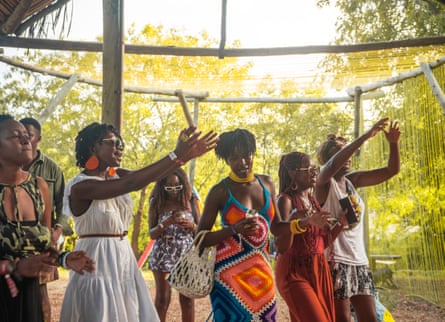
It’s easy to imagine Detty December as being invented in a corporate boardroom by ad executives looking to sell sandals or portable chargers. But what has made it so special for so many was its organic growth from a natural desire to return home. Christmas was that time. Initially, it was the simplest of homecomings, for those living and working abroad –playfully nicknamed in Nigeria as “IJBs” (I Just Got Back) – to meet up with family and friends they hadn’t seen all year.
It was also a chance for those of African origin to be among a Black majority. Mo Abdelrahman, who attended Beneath the Baobabs, a music festival in Kilifi in eastern Kenya, was part of a group of Black British travellers who have already been to the festival twice. They met, danced and dined with people from all over the world, but primarily from a global Black population, and mostly from Europe. “It’s just nice to be around other Black people. And in a Black majority country, even if it’s not yours. It just feels normal in a way you don’t get at home. You just feel a bit more easy in your skin, you’re not looking over your shoulder or feeling that you’re being watched.”
Afrobeats and open doors

From there, the curiosity of many across the diaspora who were not used to returning to the continent grew, helped in part by a few different factors converging at the same time. One of which was the rise of Afrobeats, a genre that made it cool, globally, to be west African. The biggest Afrobeats artists took advantage of the end-of-year influx by timing their concerts for the holiday period. Another factor came in 2019, when then Ghanaian president Nana Akufo-Addo declared it the Year of Return, to mark exactly 400 years since the first slave ships arrived in the US, in 1619. It was a rallying cry, he said, for our “brothers and sisters in what will become a birthright journey home for the global African family.” Any person of African descent was given the right to live in Ghana indefinitely under the country’s Right of Abode law. Hundreds of African-Caribbeans and African Americans have been granted citizenship since then.
Akufo-Addo placed a big “Welcome” sign over his country, an invitation that was warmly received as the Black Lives Matter movement took off – a time of racial reckoning when many started to see Africa as a possible refuge from the systemic racism they faced on a daily basis. Some came back to stay permanently, while others focused on hopping between Accra and Lagos in December. The focus at the time was all the potential upsides. And there have been many. But over the last two years, something has shifted.
Weaker ties
In January 2025, restaurants and event organisers across Lagos began reporting strange activity. Diasporans who had dined at their spots or bought their tickets over the previous month and were now safely back in their home towns were disputing charges with their banks and credit card companies. Their claim was that the money they had gladly spent to have a good time and show off during Detty December was the result of fraud. The chargebacks they managed to secure not only led to businesses suffering financial losses, but also had a considerable emotional impact on the broader ideals of how truly connected we are across the diaspora, if so many were so willing to scam their own for nothing more than a few main courses and a club night. It’s hard not to become sceptical about people’s true motivations and question whether we had all got caught up in the fuzzy feeling of a mythical family reunion when, in reality, the continent was just a reality break from the cities they actually took seriously.
On top of this, the assumption had long been that Detty December could bring economic prosperity, but now we’re forced to ask: for who? When the period was a genuine homecoming, prices were tailored for locals who didn’t earn in dollars or pounds. But since the recent rise in visitors making TikToks about how wonderfully cheap everything is in Africa, local, smart vendors have adjusted their pricing accordingly, leading to everything getting more expensive for everyone. “We like people coming here,” said Said Abdi, a hotel manager from Watamu, a small beach town close to Kilifi that absorbs the overspill from the festival. But “the prices of everything go up for everyone. Before you would see a lot of local families holidaying on the coast, now it’s all foreigners. For them, it’s cheap. They don’t eat at local restaurants or shop in our street stalls. The locals don’t really benefit. The foreigners have pushed out the people who would have spent money with the locals.”
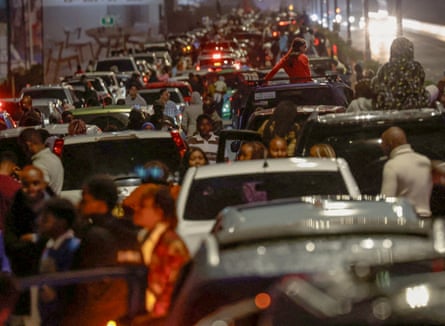
Put this alongside complaints about gridlock traffic in cities with infrastructure that was not built to be the global main character, to concerns over rude and entitled behaviour from tourists to the sort of staff – drivers, cooks, maids – they suddenly have access to on the continent, and something starts to feel unavoidably unsettling. Detty December is threatening to cause frictions in the diaspora that no amount of beach parties can fix.