2 months ago
76
2 months ago
76
In the small town of Chipaya, everything is dry. Only a few people walk along the sandy streets, and many houses look abandoned – some secured with a padlock. The wind is so strong that it forces you to close your eyes.
Chipaya lies on Bolivia’s Altiplano, 35 miles from the Chilean border. The vast plateau, nearly 4,000 metres above sea level, feels almost empty of people and animals, its solitude framed by snow-capped volcanoes. It raises the question: can anybody possibly live here?
“We are the first inhabitants of South America,” says Flora Mamani Felipe, Chipaya’s first female mayor. “We are an ancient culture, and we’re now in danger of extinction. There are no jobs; people are migrating to Chile.”
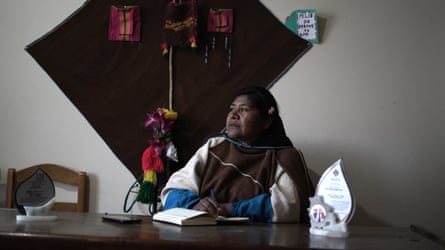
The Indigenous leader – whose full title is Langsni Pagh Mä Eph of the Uru Chipaya people – is sitting in her office next to the town’s central square. Even this part of Chipaya feels empty, its offices mostly deserted.
The Uru Chipaya are at risk of extinction as the climate crisis dries up their land and their way of life. Once known as the “people of water”, they have seen drought, rising salt levels and migration push their traditions to the brink.
The nearby Lake Poopó, once the second largest in Bolivia, has vanished and crops are failing. As a result, most of Chipaya’s 2,000 inhabitants have left for Chile to work. Local leaders say poverty, cultural erosion and health problems from salty water threaten those who remain.
Gabriel Moreno, an anthropologist at Bolivia’s Technical University of Oruro, says: “The Uru Chipaya are part of Bolivia’s cultural heritage. It’s one of the oldest Indigenous cultures in Latin America, dating back 3,000 to 4,000 years. And at the moment, there is a project intending to declare the Uru Chipaya as the oldest living culture in the world. It will be presented to Unesco in 2026.”
Moreno works on projects in Uru Chipaya territory, including cultivating the totora bulrush reed as alternative animal fodder – crucial during drought to reduce food insecurity and climate vulnerability.
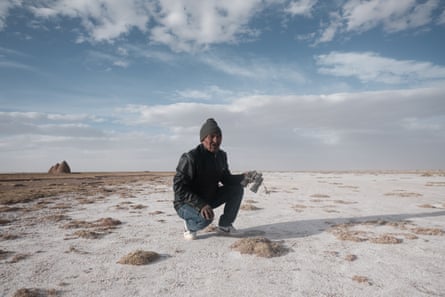
Severo Paredes Condori, 63, is Uru Chipaya like his ancestors – but perhaps his descendants will not be. Living conditions, he says, have grown harsher. “There are no jobs here, you can’t live here any more.”
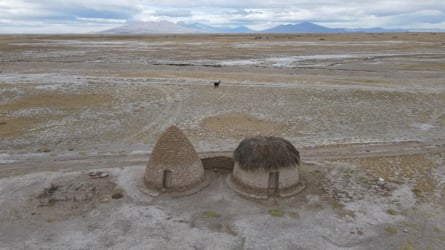
Each year, he adds, they wash the soil to reduce salinity so crops can grow – but the effect lasts only 12 months. “We can cultivate quinoa, but after a year comes the salt, and the ground gets white, and then it doesn’t fit for quinoa. Too much salt destroys the grass for the animals.”
Paredes lives in one of the round clay houses typical of the Uru Chipaya, about 30 minutes from town, and herds sheep. Once, people here cultivated quinoa and grass for livestock. Now, drought, floods, frost and ever-rising salt levels kill llamas and sheep and wipe out quinoa.
The challenge of salt extends far beyond Chipaya, says Mohammed Mofizur Rahman, an environmental researcher from Bangladesh based at the Potsdam Institute for Climate Impact Research in Germany. “This situation parallels the rice crop losses in the Asian mega-deltas, where high salinity in soil and water severely undermines agricultural productivity.”
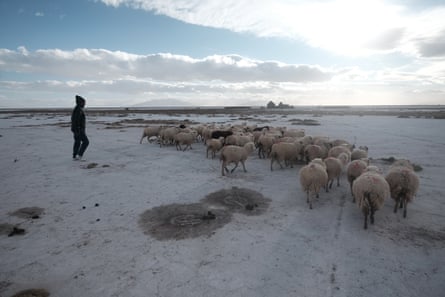
According to Chipaya mythology, the Uru Chipaya have always lived near water. Moreno says: “The Uru Chipaya have climate resilience. They know how to divert water from the Lauca River, an impressive example of ancestral water management engineering. It is not for nothing they were called the men of water.”
Yet the water is vanishing. The ground around Chipaya glows white, as if dusted with snow – a thin crust of salt that signals deeper trouble. Already saline, the soil is becoming even more salty.
Mamani says: “There are no birds any more. We used to fish for trout in this river, but there are no fish now. Climate change brings floods and droughts. We’re desperate.”
Most families have relatives in Chile and an estimated 60% of people in Chipaya hold Chilean nationality, according to Mamani. Migration brings cultural loss: people face discrimination or stop practising their rituals, speaking their language and wearing traditional clothing when they leave their territory.
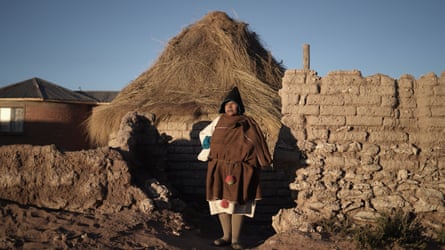
“There is a lot of migration to Chile,” says Mamani. “The children who study there no longer speak our language, only Spanish. My daughter also speaks very little now. The history of Uru Chipaya is sad.”
Paredes says: “I have grandchildren in Chile. They don’t even have a Bolivian identity card, just a Chilean one. I only see my son once a year. They are growing vegetables and earning money. Without work, one cannot live.”
Poverty has long been severe among the Uru Chipaya people and the country’s 2024 census shows 67.12% of Chipaya today are considered poor.
That Chipaya still exists is almost a miracle, says Moreno. “If it weren’t for school and college in Chipaya, the Uru Chipaya people and culture would disappear. Only elderly people are staying, and there are only children and teenagers because of the schools. They are the ones sustaining the population.”
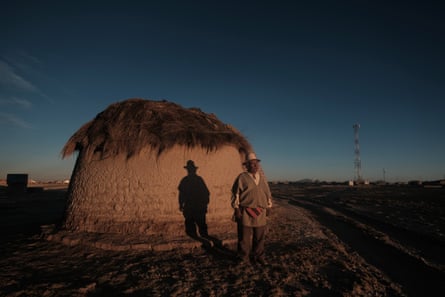
Sebastián Quispe Lázaro, 67, Chipaya’s tourism leader, has witnessed the change brought about by the climate crisis. “When I was a child, the sky was always blue this time of the year. Now we have all four seasons in one day. The weather has changed completely,” he says.
“With this frost, it’s damaging the grass; it has no vitamins left. Animals stay thin when they eat that grass. And in September and October, they die.”
He talks of the rituals that have allowed the Uru Chipaya people to coexist with this harsh environment for thousands of years – but rituals cannot halt salinity.
“Pastures are gone. With the humidity and the cold, the salt is coming out, burning the grass,” he says. “And I must use boiled water from a special well because the normal well is already salty. Too much salt causes diarrhoea in the animals, and they die.”
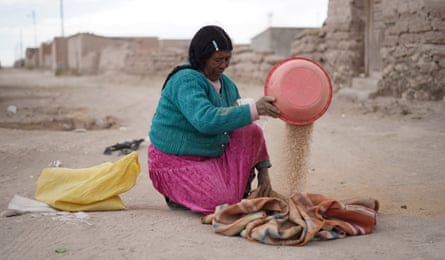
Humans suffer similar effects. Juan Condori, 42, has worked in health in Chipaya for 15 years. “There is quite a change in the diseases. Now people come a lot with diarrhoea and coughs,” he says.
Rahman adds: “Diarrhoea from consuming saline water is only the tip of the iceberg. Evidence from other parts of the world links high salinity to eclampsia and hypertension, which increase the risk of cardiovascular disease. Further investigation in Chipaya could reveal the full extent of these unknown health impacts.”
People’s diets are changing too, says Condori. “People used to harvest quinoa and eat it. But salt burns the quinoa. Now people buy pasta and rice in the city. They eat chicken and french fries and that stuff.”
For Moreno, rescuing this ancient culture is a matter of urgency. “The Uru Chipaya people have suffered cultural loss – oral memory, territory and sacred spaces,” he says. “We must protect their oral memory. We must strengthen the bond between elders and young people to work on this.”
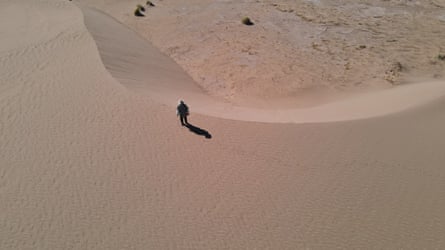
Many have already sold or slaughtered their animals to emigrate, but Paredes refused. “We didn’t want to finish our livestock,” he says. “That’s why we stayed.”
He expects to remain on his ancestors’ land until he dies, even though much of his family has left. “When I die, they will make a video call via WhatsApp from Chile – and others will take me to the cemetery in a wheelbarrow.”