3 months ago
178
3 months ago
178
As a child, I couldn’t wait to be an adult. I’d spend hours daydreaming about the future, my exciting life and what I’d do with all that autonomy, such as own exotic pets, paint my walls bright pink and stay up all night.
Now that I’m in my mid-30s, it’s fair to say that adulthood has somewhat lost its lustre. Nothing is wrong, exactly – I’ve even achieved some of my dreams, with a bright pink bathroom and two weird cats – but there’s still a sense of going through the motions, and my days being dully predictable: gym, work, cook, clean, collapse on to the sofa.
Often I struggle to say exactly what I’ve actually done in the preceding hours, beyond “computer”. Attempts to shake up my routine feel laboured and quickly fizzle out. These days I daydream about one day getting a dishwasher.
I know it’s not depression, having been there before. Instead, it feels more like life is lacking in juice, if not joy, and that open outlook and optimistic, playful energy that came so naturally in childhood. But is the loss of that spark inevitable – a part of growing up, a product of these turbulent times – or is it possible to get it back?
“That’s what my kids did for me,” says Austin Kleon, 42, author of Steal Like an Artist and other illustrated guides to creativity. Starting with his popular blog in the mid-2000s, Kleon has turned his do-it-yourself creative experiments into a career, demystifying art and making it accessible to all.
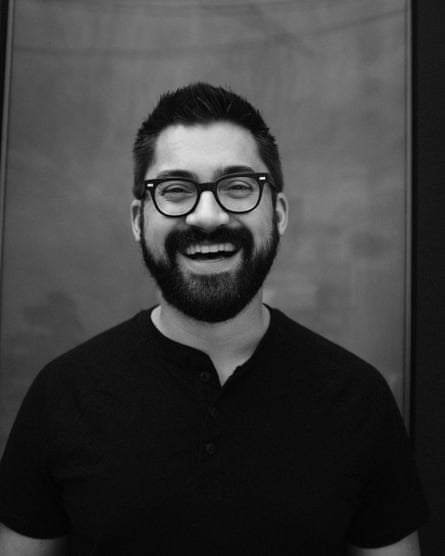
His first hit project was fashioning poetry from marked-up newspaper articles (“like if the CIA did haiku”, Kleon explains) and posting them to Tumblr. Later he gave a talk about creativity to college students that went viral. That led to the hugely successful Steal Like an Artist.
Now Kleon’s five books have been translated into over 30 languages, and sold more than 2m copies in English alone, and he shares inspiration, advice and creative prompts on his popular Substack newsletter.
To meet Kleon, you might think he never ran out of energy or ideas. He’s speaking with me now on a video call from his colourful, cluttered home studio in Austin, Texas, wearing an artist’s apron and with materials (including an old-school typewriter) within reach. But not long ago, he too had been in a slump. After more than a decade, he felt as if he’d lost touch with his motivation, he says. “You get to a point where you’re just like, ‘Why did I start doing this stuff?’” In part, these feelings stemmed from a “middle-aged place”, and a sense of “Well, now what?” Kleon admits.
What helped to get him out of his funk was apprenticing himself – to his young children.
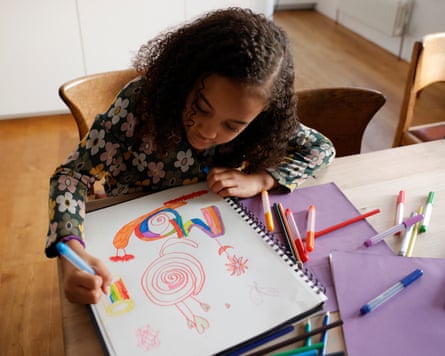
Kleon and his wife Meghan have two sons, Owen and Jules. Now they are 13 and 11, but even as toddlers Kleon says being around them “was more inspiring than any art school”. Their energy, fearlessness and lightness of touch highlighted what Kleon felt was missing from his own creative practice, as well as how to get it back.
“That’s what kids are really good at: they show you what it’s like to be a person that’s completely new to the world, and completely new to making things,” he says. “There’s no ‘Why?’ There’s just doing. Why? Because it’s fun, because it feels good, because we like it.”
What Kleon learned from playing “studio assistant” to his sons inspired his sixth book, Don’t Call It Art, which suggests exercises, prompts and approaches “to create like a kid again”. It was seven years in the making.
“Everything in the culture [of art] says kids are the antithesis of creative work,” he says. “I wanted a book that said, actually, they can be a great catalyst, an energy source that you can plug into. To me, it was as clear as day: the kids were supposed to teach me, ‘Hey, what were you before?’”
As the title suggests, the new book, like the rest of Kleon’s output, is really more about “making stuff, messing around and following your nose” than it is art, he says. Such a mindset, prioritising curiosity and play, can kickstart a virtuous cycle that flows into other areas of your life. He agrees to give me some tips.
Become a beginner
Kleon’s books frequently appear on the same shelf as Julia Cameron’s The Artist’s Way and similar works that blend creativity with self-help, but his approach is not so structured, nor so self-reflective. “I kind of got lumped in there,” he says. Instead of a step-by-step course, or an excavation of the soul, Kleon imagines his books as a creative “booster shot”. “My idea, or dream, is that you just devour them, and then you go do something.”
It reflects his own informal introduction to being creative. As a child in very rural Ohio, “literally in the middle of a cornfield”, Kleon did not grow up with access to art or artists, but found that writing stories, playing music and making things came naturally. He continued experimenting as he worked day jobs (among them web designer, reference librarian, copywriter). “For me, the definition of creativity is so broad: it’s just taking what’s in front of you, and turning it into something new.”
In hindsight, not knowing any better was crucial to helping Kleon on to his path, he says. Having started his blog, he filled it with non-digital content: hand-drawn, often rough-and-ready illustrations, sketches and mindmaps about books he’d read or talks he’d been to. Steal Like an Artist, his breakout book, is likewise a hodgepodge of ideas and advice. “Looking back, it probably shouldn’t exist,” Kleon says. “It feels like I really didn’t know what I was doing – and that’s why it’s so cool.”
My present stagnation, Kleon suggests, may be rooted in the weight of my adult awareness, and the expectation that I know what I’m doing. As he writes in Don’t Call It Art, that’s when “things start to get boring”.
My routine is certainly predictable, and though there is variety in my work, the process (that is to say, endless hours on Google Docs) is consistent and highly familiar. Kleon’s first challenge to me is to make myself a beginner again.
“Kids are in the exploring mode: their whole early life is all about learning, play, whatever,” he says. As we age, we increasingly trade exploring for exploiting our present expertise and knowledge, in life and work. But, he says, “The explore mode’s the fun part … You have to constantly be going back to that.”
Make time for play
Kleon prescribes for me “daily playtime”, somewhere free from digital distractions and equipped with pens, paper and craft supplies. “I want you to have toys,” he says. “Go sit there for 15, 20 minutes a day, and see what happens … Eventually you’ll get bored enough that you’ll think, ‘Maybe I’ll go ahead and make something.’”
I actually already have such a space: a small desk I put in my bedroom, imagining that I would sit there to journal each morning, perhaps with a herbal tea and a candle burning. I have never done this, not even once. Instead, the desk is covered with laundry and the occasional cat.
Kleon inspires me to clear it, at least, but – despite having a dedicated “play area”, and a directive to make use of it – I’m struck by my reluctance to actually give it a try, even for 15 minutes. Every day I find myself making excuses and putting it off. When I do eventually sit down to a blank sheet of paper and some felt tips, I make a mark – then am instantly compelled to throw it out and start again.
The exercise is sobering: is even a doodle beyond me? I feel self-conscious, as if I’m waiting for someone to tell me what to draw, and a bit silly.
That’s exactly how I should be feeling, Kleon says – the aim is to get comfortable with it. That’s partly why he wears his “ridiculous” apron when in his studio: to signal to his brain that it’s playtime, and ease the transition. “Something that makes you feel really silly is best.”
Make something with your hands
What helps me over my block is bypassing the blank page entirely. When I next return to the desk, I take a newspaper. Inspired by Kleon’s “blackout poems”, I take a permanent marker to a story about darts, covering up some words, leaving others exposed and transforming their sense.
You’d be hard pressed to call the result poetry, but the process is unexpectedly engrossing, even relaxing – I’m reminded of those adult colouring-in books – and a welcome break from how I usually experience words: on a screen.
Kleon isn’t surprised to hear his blackout poetry was more inviting than the blank page: the exercise grants “permission to be bad”, like collaging, he says. Such low-stakes scrappiness can be helpful if you feel stuck in life or work. Kleon brings up the familiar temptation to buy a new notebook: “People think they’ve got to find some special thing to use it for – no, you’ve got to fill it up really quickly.”
Having broken the seal, as it were, I find my later attempts at playtime much more relaxed and free. I spend an hour drawing a scene I saw on a temple wall while on holiday in Egypt, taking time with the lines and switching out my pens; I make a thank you card for a friend, using pictures cut out from a newspaper.
The biggest revelation is how good it feels to be making something, away from a screen. There’s a lot of focus on the deleterious effects of digital devices, but I hadn’t anticipated that a quiet, analogue activity would come as such a relief.
Twenty years after beginning his blog, Kleon is still prioritising handmade work, even as his career depends on the internet. “My whole career really is driven by my hatred of Microsoft Word,” he says.
To interview people for his Substack newsletter, he sends them a print questionnaire for them to fill out and return by post. It’s more time and labour-intensive than digital methods, but it can also be a break, Kleon says. “People say to me, ‘This was really fun, thank you – we didn’t have to email’.”
I’m reminded then of a few friends I owe messages to. I feel guilty about leaving them on read, but can’t face getting into a text back-and-forth. Kleon suggests I send them a handwritten letter, or even a mini-zine about what I’ve been up to. It doesn’t seem like such a rogue idea.
Find what you really, really like
It’s perhaps not surprising that Kleon’s advice on how to jump-start your lust for life steers away from technology. It’s not just the timesuck of mindless scrolling, and the fragmenting effect on our attention spans: there’s a fundamental sameness to the time we spend online.
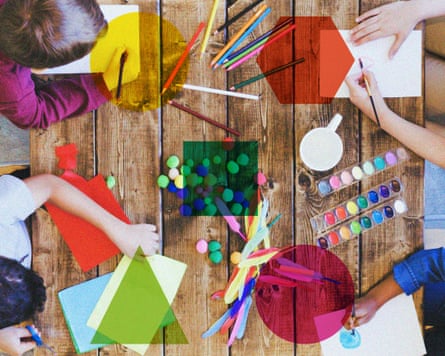
One way to come alive again is to attune to your individual taste and interests: to pinpoint with precision exactly what you like, follow your curiosity and invest in your passions. That’s another area where we can learn from kids, says Kleon: “No one’s necessarily telling them, ‘Hey, maybe you should ease up on the dinosaur stuff’, ‘Maybe you should stop watching Indiana Jones every day.’”
As a child, I remember taking up obsessions freely, learning about different types of seashells, reading every book by a single author. “What’s a weird thing that you could get into now?” Kleon asks.
For him, recently, it was owls: he installed an owl box outside his studio, tracked its residents and drew them in his diary. He had no outcome in mind, he says. “I was just doing it because I was into owls.”
Inspired by the fun I had copying out hieroglyphics, I decide to get into ancient Egypt: an appropriately childlike special interest, and a significant shake-up from my usual diet of breaking news, pop culture and contemporary fiction. It feels like discovering a room I didn’t know I had. Kleon’s right: when you’ve been zigging for so long, sometimes all you need to do is zag.
Be your own parent
My main takeaways from Kleon’s coaching are: 1) even tiny experiments and changes in routine can make a big difference, and 2) they are remarkably difficult to actually prioritise. I have more control over my time than most, yet I still struggled to play for even 15 minutes.
This is not uncommon, Kleon says. “People feel like they can’t allot the time for something that’s not going to have a return.” Lack of resources – money for materials, access to appropriate space, even simply energy levels – can also be barriers to exploring our creative childlike sides. But it’s important that we don’t let that stop us. “Play is not a frivolous thing: you need it, this is how you keep your spirit alive, it’s important.”
Being a dad also taught Kleon about the importance of meeting needs – his own, as much as his kids’. “Parents will do things for their children that they won’t do for themselves – they’ll go to the soccer field with their kids every Saturday and sit there because they know that it’s good for their kids’ development … With every parenting book I read, I thought, ‘Well, this is just human advice.’”
You don’t have to go so far as to have a conversation with your inner child or “reparent” them, Kleon says. But it can be helpful, if life is feeling heavy, to figure out what you need to put in place in order to be able to let go and have some fun. “No matter how old you are, you can do that in your life.”
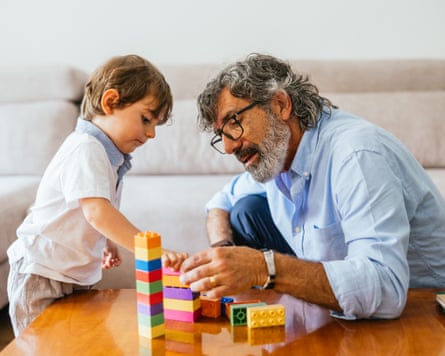
If you have children yourself, they can show you the way, Kleon says. “Hanging out with four-year-old Owen put me in touch with four-year-old Austin and, in a weird way, they got to play with each other.” But I don’t have to become a parent to access the benefits, he adds. I could volunteer to be a babysitter.
-
Don’t Call It Art by Austin Kleon (Penguin Books, £20) is out on 9 June. To support the Guardian, order your copy at guardianbookshop.com. Delivery charges may apply.
-
Do you have an opinion on the issues raised in this article? If you would like to submit a response of up to 300 words by email to be considered for publication in our letters section, please click here