3 months ago
155
3 months ago
155
Andy Burnham looks on the brink of returning to Westminster this weekend if polls showing he is heading for victory in the Makerfield byelection are to be believed. It is now clear his intention is to seek to replace Keir Starmer as prime minister as early as possible.
Talk in Westminster has turned to who could be part of setting the direction of a Burnham government. There are big questions over some of the key alliances – and whether Starmer would fight any challenge from Burnham, which could stall his advance on Downing Street. Here are the influential figures around the Greater Manchester mayor – and how they may fit in government.
1. The big jobs
The most pressing question is who Burnham would make his chancellor? The most obvious answer is Ed Miliband, the energy secretary, who has been a key champion of Burnham with the parliamentary party and shares the same desire for Labour to enact more radical change, from tax overhaul to public control of utilities.
But one area where the two men may clash is net zero, particularly Burnham’s instinct for reindustrialisation and Miliband’s opposition to further North Sea oil and gas licences.
But as much as his sceptics try to brief him out of the job, he remains the most plausible candidate. “I think the Labour party needs to stop worrying and learn to love Ed Miliband,” one Burnham backer said, noting the energy secretary’s reputation for standing up to Whitehall.
Shabana Mahmood, the home secretary, has also been touted as a potential chancellor – as has Wes Streeting – if Burnham should decide he needs to show a different side to the jittery bond markets. But it seems far more likely that Mahmood would stay in her current role – under certain conditions – and it is a post she would prefer to keep rather than head to No 11.
The key unknown is foreign secretary – a field where Burnham is underpowered. It could be a reward for a suitable ally, especially one who helps ensure the departure of Starmer.
That could be Streeting or the former defence secretary John Healey, with the right deal. It may be a place to move Rachel Reeves. The pair have previously been close, dating back to Burnham’s leadership run in 2015 where she introduced him on stage. There is another option on the lips of MPs, though highly unlikely, that the job could be offered to Starmer.
Louise Haigh (left) and Rachel Reeves with Burnham in 2024. Both women could form part of a Burnham government. Photograph: Danny Lawson/PA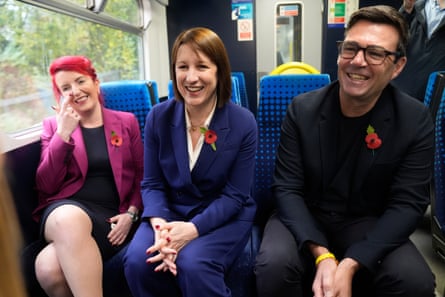
2. The key fixers, aides and enforcers
Louise Haigh, a former transport secretary, has become Burnham’s most influential organiser and sounding board over the course of the Makerfield byelection. Should he win, she would be expected to get a significant cabinet role in a Burnham administration, perhaps chief secretary to the prime minister or any other delivery-focused role. She also has sway over economic policy and has worked on detailed plans in her role at the Tribune group of Labour MPs.
Anneliese Midgley, the Knowsley MP who has been campaign chief in Makerfield, is also likely to get a big role in a Burnham administration. Miatta Fahnbulleh, the former communities minister, has been working on policy and is tipped for promotion, as is the Labour backbencher Yuan Yang.
On the policy side, Josh Simons – who gave up his seat in Makerfield for Burnham’s run – is widely expected to enter Downing Street alongside him. Burnham’s long-serving chief of staff, Kevin Lee, one of the longest-running and most loyal partnerships in politics, is highly likely to continue that role in No 10.
Others are working in the background on the policy side – Common Wealth’s Mat Lawrence, Mark McVitie, formerly of the Labour Growth group, and the economists Alfie Stirling and Hannah Peaker. Others who are working on electoral reform and strategy include Compass’s Neal Lawson and the Mainstream group organiser Luke Hurst. Grace Pritchard, a former Miliband adviser, has navigated comms for Burnham.
3. Who may stay put?
There are areas where it could make sense for Burnham to have a semblance of continuity. Lisa Nandy, who would be Burnham’s Wigan neighbour, would stay in cabinet though may get a promotion.
Defence is the key area where stability is important because of the turmoil of Healey’s resignation – especially if Dan Jarvis can turn around problems with the defence investment plan. Alternatives such as Al Carns may make more trouble for a new prime minister.
Nick Thomas-Symonds, though a longtime Starmer loyalist, would make sense to keep in post because of the importance of the trade negotiations with Europe. But his brief has included the stalled Hillsborough law, which Burnham will take the closest of interests in fixing and driving through.
Heidi Alexander, the transport secretary, has been one of those rare politicians who has been a key loyalist for Starmer but who also has a close relationship with Burnham.
Despite being loyal to Starmer, Heidi Alexander (centre) has a close relationship with Burnham. Photograph: Peter Byrne/Reuters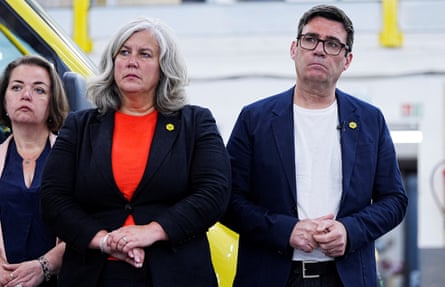
Bridget Phillipson, the education secretary who is popular with the parliamentary Labour party, would make the case to stay and deliver vital Send changes in England that have been delicately negotiated with MPs – though if Powell is influential there could be a difficult relationship because of the bitter deputy leadership battle between the two.