2 months ago
86
2 months ago
86
The year has started out in familiar fashion for Kalaallit – the people of Greenland. The US president has once again threatened to take control of the world’s biggest island, just like he did back in 2019 and in 2024/25. Yet it feels different this time.
This time it seems as if there are more concrete plans being shaped within the Trump administration to annex Greenland. Trump wants to “take” it “whether they like it or not”, as he stated at a recent White House press conference. And the only option he seems to be offering currently is to do it “either the nice way or the more difficult way” – whatever that means. These are obviously plans for the forceful theft of Indigenous land and a self-governing territory; they are loud threats against our democracy – threats that are coming directly from the US president, again and again, through the media. That is scary. And the Greenlandic people do not feel safe.
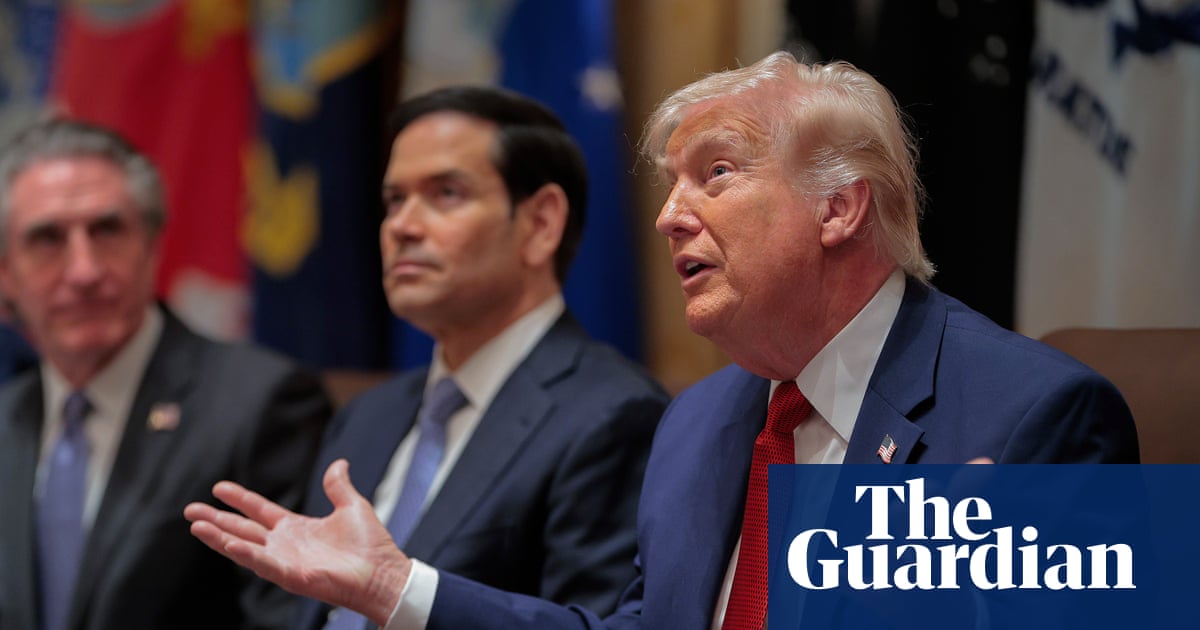
A diplomatic conversation finally took place on Wednesday. The foreign ministers of Greenland and Denmark, Vivian Motzfeldt and Lars Løkke Rasmussen, and the US secretary of state, Marco Rubio, met in Washington DC, with the US vice-president, JD Vance, as host. That’s the same JD Vance who tried to set up an official visit to Greenland with his wife in March last year, but was turned away by Kalaallit and ended up only visiting the US military base at Pituffik. The one who has been very vocal about his dissatisfaction with the EU and Denmark’s efforts in the Arctic. As you can imagine, this became the basis for a great deal of unease for Kalaallit, and everyone seemed to be holding their breath while waiting for some kind of clarity on what was in store for the future of Greenland as this historic meeting was happening.
After about an hour at the Eisenhower Executive Office Building, where the meeting was being held, the Greenlandic and Danish foreign ministers came out, lit a cigarette each, and had a chat before returning to the Danish embassy. It was an unexpected and surprisingly calming reaction that was noticed across the Kingdom of Denmark.
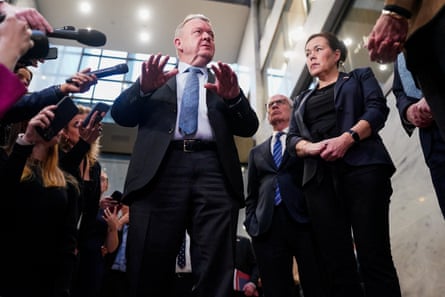
Later came the Greenlandic/Danish press conference, where Motzfeldt and Rasmussen announced that the US position hadn’t changed and that they had agreed to disagree. It was not a very satisfying statement. However, they also said that it had been agreed to establish a high-level working group to try to find a solution and accommodate some of the concerns the US president had expressed, regarding Arctic security. They added that they had also seized this opportunity to go against the untrue narratives about the Kingdom of Denmark that the US has been pushing lately, and Motzfeldt had once again stated that Greenland does not want to become part of the US, but that this was a good opportunity to strengthen cooperation as allies. And I think most importantly she reported that the meeting had been characterised by a sense of mutual respect and a willingness to agree to meet further down the diplomatic road.
Wednesday’s developments have created a brief moment to take a deep breath. But it is far from over. During the meeting, the White House posted a picture on X, showing two Greenlandic dog sleds having to make a choice between the sunny US or the stormy China and Russia (it also riffs on the “Which way western man?” meme, which is prominent in far-right subcultures). And Donald Trump stated, once again, that the US needed to take control of Greenland for security reasons. This unpredictability is scaring a lot of people – some are starting to prep in case of a US invasion; others are starting to consider emigrating. But for now, everyday life goes on.
There is much speculation as to why Trump wants Greenland so much. Some say it is to get free access to the rare earth minerals, as Greenland has very strict laws on mining and extraction. Others claim that it is for national and international security. However, the US already has a military base in Greenland and would be able to expand its military presence through the 1951 Greenland Defence Agreement if it wanted to. Plus, Denmark has recently increased its spending on security in the Arctic and Nato secretary-general Mark Rutte finally revealed earlier this week that the alliance is working on strengthening security in the Arctic. Rutte had previously been criticised for his noticeable silence on this issue.
Lastly for Trump, ownership is “psychologically needed for success”, because “ownership gives you things and elements that you can’t get from just signing a document”. The truth is, we can only guess what the reasoning behind this madness is.
Trump has said that the US will treat Greenlanders well. I doubt that will be the case. Because we also know that the president has a tendency to lie.
There is great pressure on the Greenlandic people. We are constantly worrying whether our country will be taken by military force. We follow the news intently in fear of new threats. All eyes seem to be on us right now. We need to be clear: Greenland is not for sale.
For a while, Greenland has been a warning sign to the rest of the world as to what to expect with the climate crisis, and unfortunately Greenland is now becoming a warning sign for what is happening in the world order. Things have changed in geopolitics. We’re hearing warnings on how democracy is at risk, how this decade everything is being reshaped. We witness how one Nato ally threatens another and gets away with it. This is alarming. So I think it is important to ask ourselves: what comes next? How far should we be willing to go to keep an unpredictable, insatiable ally content? And could this moment perhaps be seen as a chance for a critical self-reflection in colonial history?
-
Malu Rosing is a Greenlandic writer and an Arctic adviser at the International Work Group for Indigenous Affairs