3 months ago
130
3 months ago
130
‘L’Orfeo is an opera about opera. It’s an opera about the power of music. It’s about the power of art to construct the world,” says director and artist William Kentridge. Claudio Monteverdi’s 1607 work is, if not quite the first ever opera, the earliest opera still performed today, written when the form was in its very infancy.
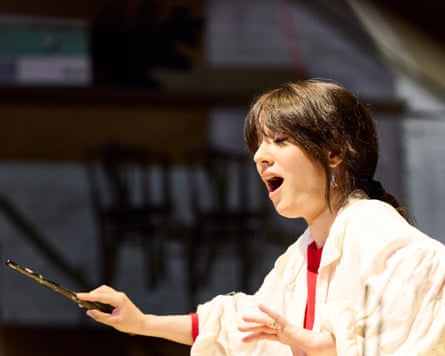
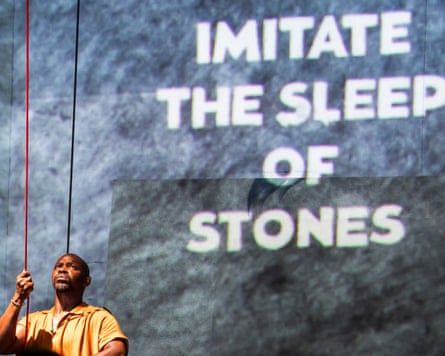
Monteverdi called his work – composed for performance at the ducal court of Mantua, a “favola in musica – legend in music”. “Monteverdi was a genius,” says conductor Jonathan Cohen. “The piece is about the world’s most famous musician. He begins with a prologue where he has the allegorical character of La Musica [Music, here sung by Francesca Aspromonte, who also sings Eurydice in this production], who says ‘I am music, and I have the power to stop the birds singing, the power over nature.’ And of course Orfeo, the musician, has the power to control even the rocks, the trees, the animals and effect human emotions.”
This is the first time Glyndebourne has ever staged the work.
-
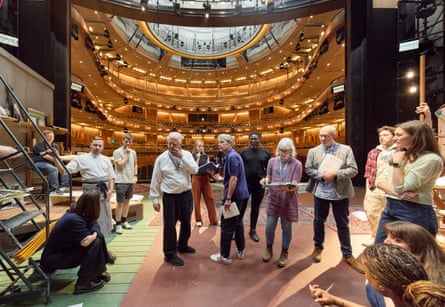
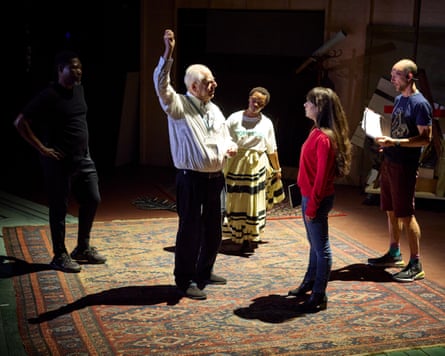
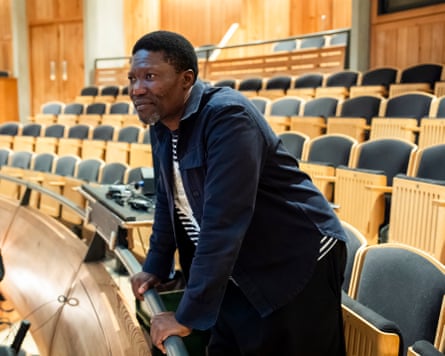
William Kentridge (centre) during rehearsals, above, and, below, Kentridge talks with Francesca Aspromonte (La Musica/Euridice) and Roseline Wilkens (Euridice)
-
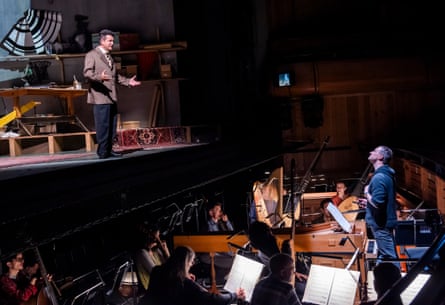
Krystian Adam (Orfeo) talks to conductor Jonathan Cohen
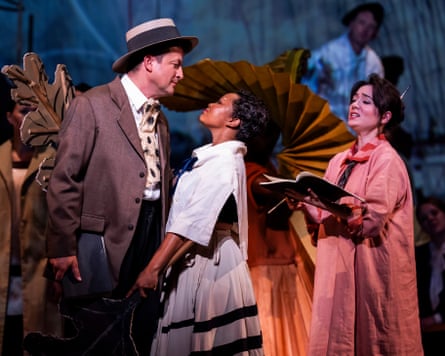
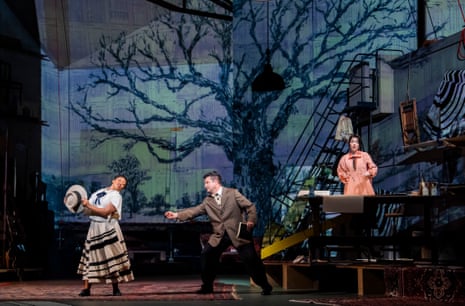
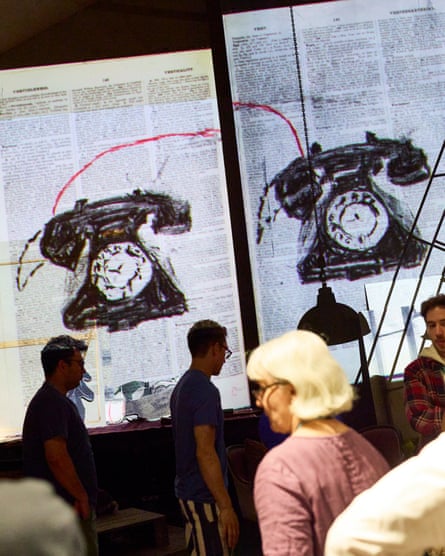
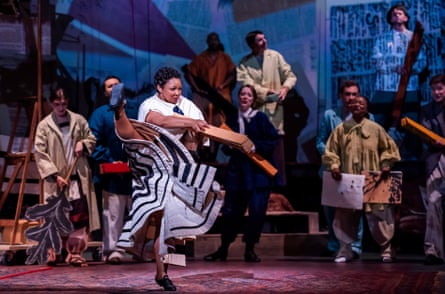
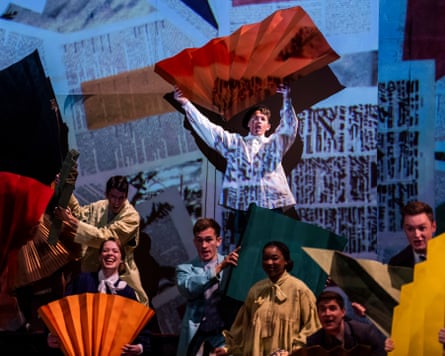
Kentridge’s staging centres on the creative figure of La Musica. “La Musica leads the prologue, and, as it were, conjures the whole opera into being. The production proposes the idea of La Musica as the power of art, she is in the guise of an artist in their studio, who paints the sets, paints the thoughts as they are happening. The visual language of both the scenography, an artist studio, but also the images in the projections are part of what the artist is drawing. The trees, the landscape, the underworld, which I’ve done largely as charcoal drawings, either in a notebook or on larger sheets of paper.”
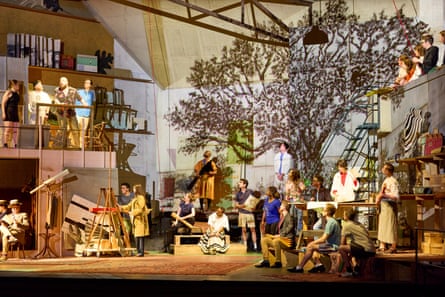
The artist’s studio set is a mixture of a Bauhaus studio with elements that are in Kentridge’s own studio in Johannesburg – and were shipped over from South Africa. Video projections – all drawn by him – transform the stage into many different spaces.
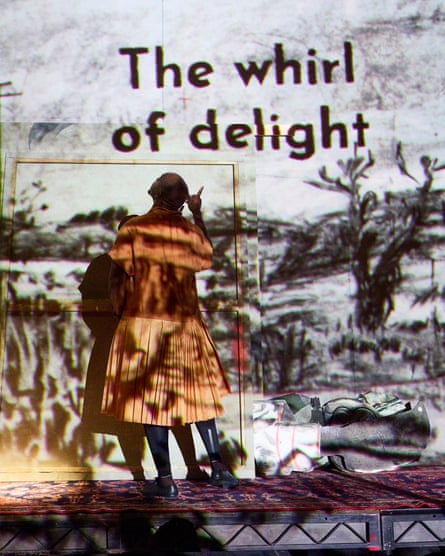
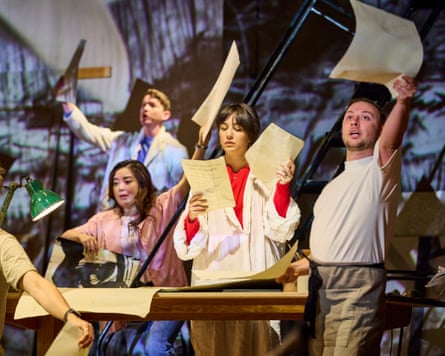
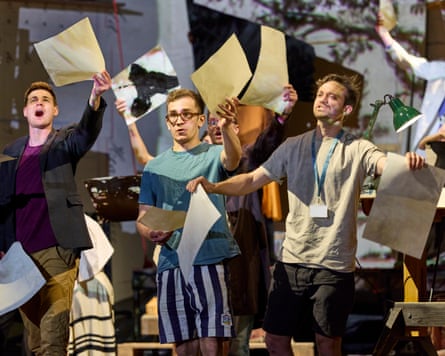
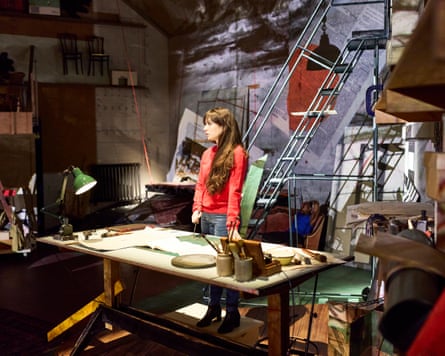
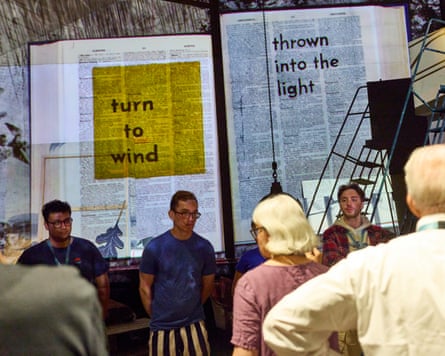
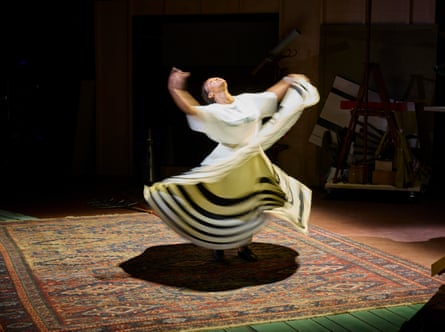
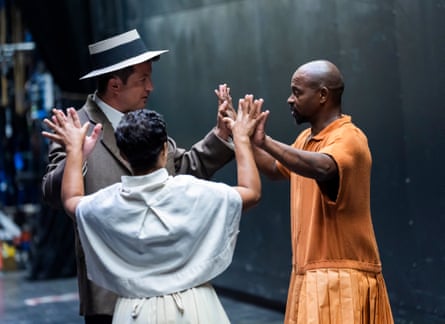
In Monteverdi’s opera, Euridice has only 12 lines to sing. Kentridge’s staging gives her more agency throughout, and even keeps her present at the very end of the opera, trying to find her voice, as it were, or her song. “There were always two songs, not one,” says Kentridge. “There’s Orpheus’ song, but there’s also the unheard song of Eurydice. Which, in her case, is translated into movement.”
-
Dancer Roseline Wilkens (Euridice) in rehearsal. Thulani Chauke (below) is the production’s second dancer, with choreography by Gregory Maqoma
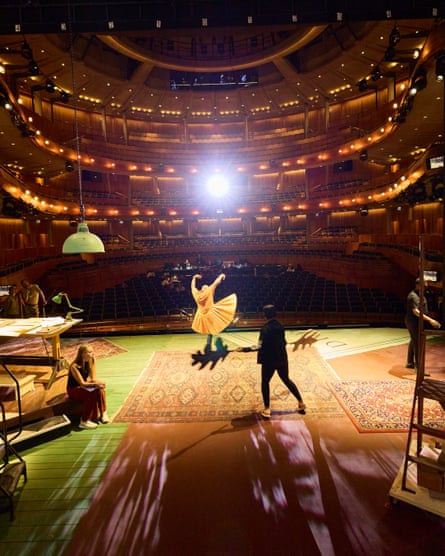
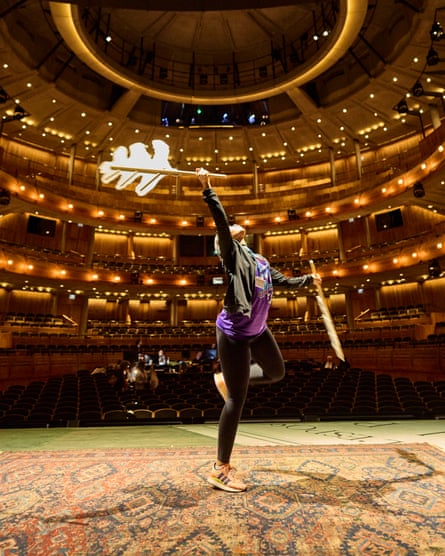
Monteverdi’s Orfeo was adapted from Ovid’s telling of the myth in Metamorphoses. Kentridge has also drawn inspiration from Rilke’s retelling of the Orfeo story, and his staging is set around 1920 – the era that Rilke was writing his Sonnets to Orpheus.
-
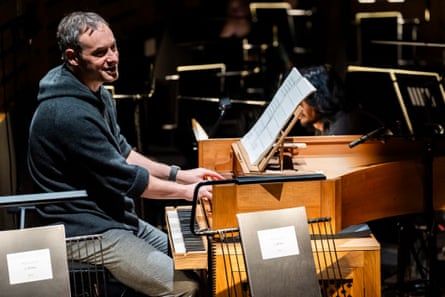
Conductor, Jonathan Cohen; above, Francesca Aspromonte (left) and choreographer Gregory Maqoma (right)
“There is an openness in baroque music,” says Kentridge. “The music has a lot of gaps in which you can have sideways thoughts about the story. So you’re not just doing scenery with the projections, you’re also doing reflections on it. There is a lot of space for the drawings to find their shape.”
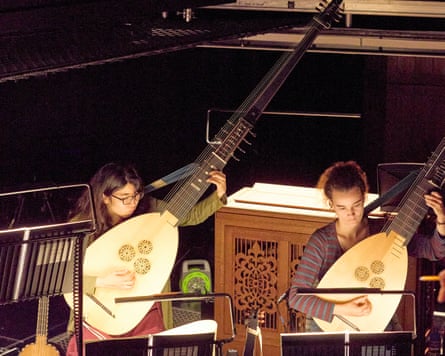
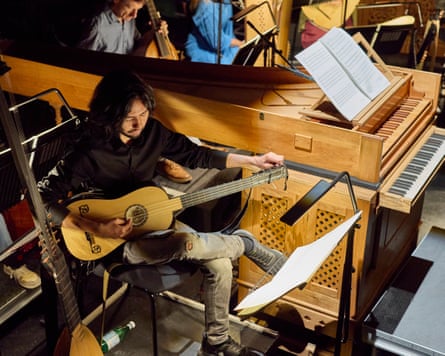
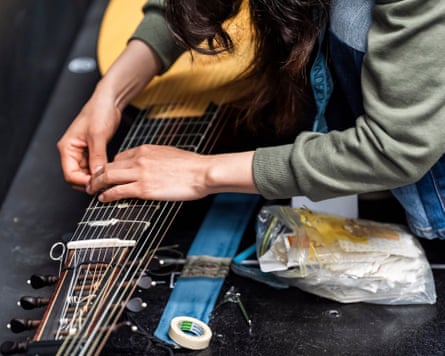
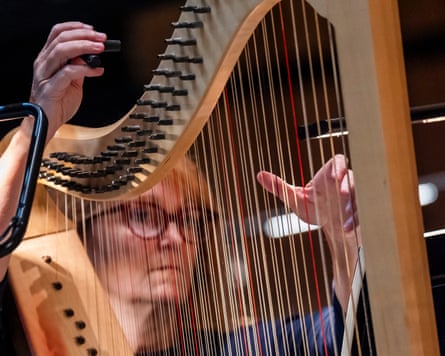
L’Orfeo has survived because – very unusually – it was printed. Monteverdi listed the instruments he was writing for: for its time a large and lavish number. The musicians from the Orchestra of the Age of Enlightenment (conducted by Cohen) play on period instruments, in the Glyndebourne pit there are theorbos (a bass lute, with a very long neck), a lirone, a viol and a bass viol and harps. Cohen plays three keyboards – the harpsichord, an organ underneath and, to his left, a “regal” organ – an organ with reeds.
One of the radical innovations of Monteverdi’s opera was his determination that the music should serve the speech. The music has to accentuate and define the text and convey the emotions.
-
Behind the scenes during rehearsals for L’Orfeo by Monteverdi at Glyndebourne
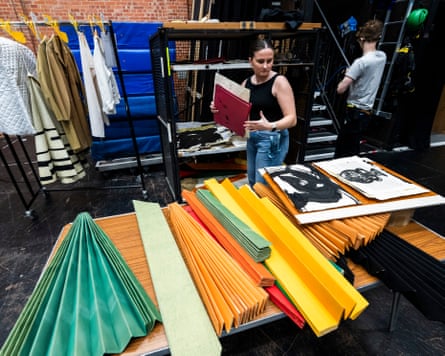
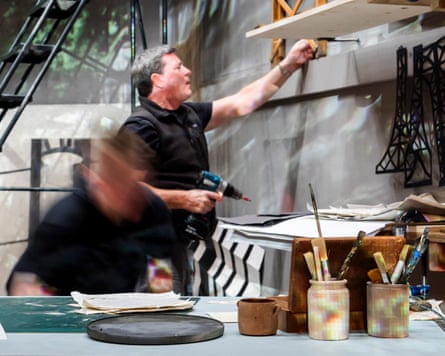
“There are always so many different time zones in opera,” says Kentridge. “You’ve got when the music was written, in this case, 400 years ago. You’ve got the era in which it is set, which in our case is 100 years ago. And then you’ve got the era of the audience watching it, which is 2026. And then here you’ve got an extra layer, which is the Ovid retelling of something 2,000 years older. So, here, you’ve sort of got five stops along the way.”
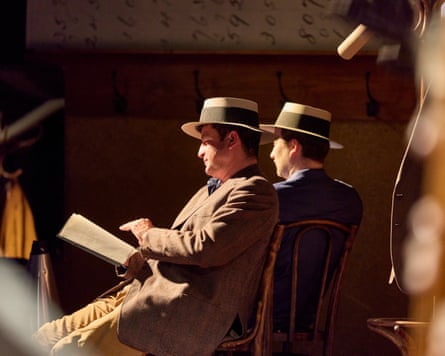
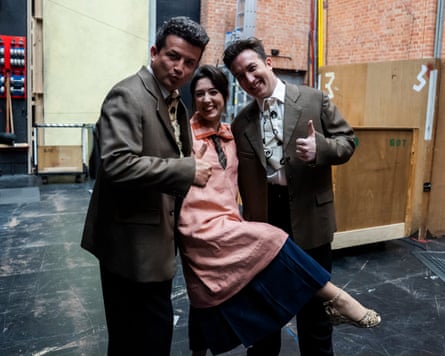
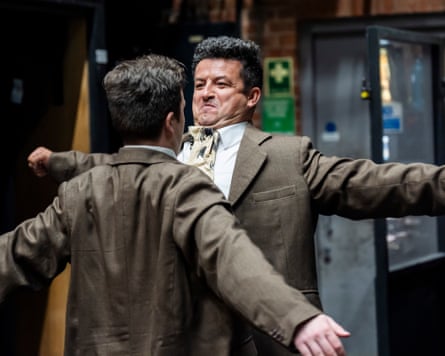
-
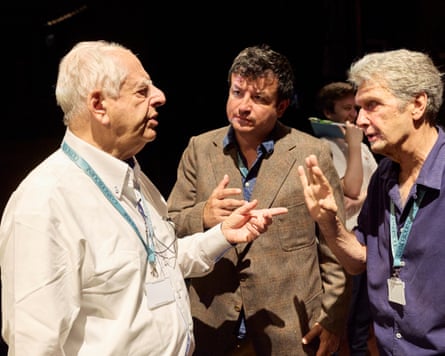
(top left) Director William Kentridge with Krystian Adam and associate director Luc De Wit; (top right) Krystian Adam and Nicholas Frentz on stage during rehearsals; (bottom left) Krystian Adam, Francesca Aspromonte and Nicholas Frentz backstage; (bottom right) Adam and Frentz
“Like all music, you have to put your soul into singing baroque music,” says Krystian Adam. “There are rules, of course, but baroque music also always involved improvisation. In your voice and in your energy, you need to have flexibility to use a lot of different styles. When you listen to the music of Monteverdi, very often you can recognise some jazz parts, even some rock and pop music. My song, “Vi ricorda, o boschi ombrosi” could be a modern pop song. It can go to Eurovision for sure!”
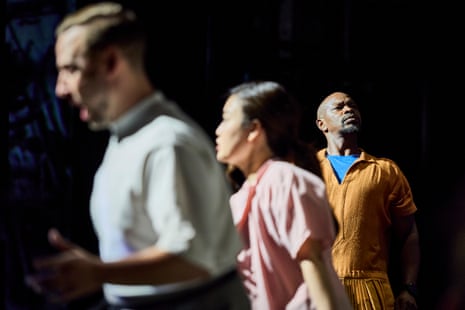
Adam is Polish-born but has lived in Sardinia for 20 years. He drove to Glyndebourne on his motorbike. “I am staying in Eastbourne and every evening I go to the sea … I clear my head.” Does he swim? No it’s too cold – in Sardinia too at the moment! But I look at it and I touch it with my feet.” It’s his, and Francesca Aspromonte’s first time at Glyndebourne. “I love how you have the opportunity to meet the other casts of the other operas, and watch the general rehearsal,” says Aspromonte. “Singers normally stay in their own little lane.”
Both talk about Monteverdi’s “genius”. “It is my favourite opera, because musically it is perfect,” says Adam. “It was the first opera I sang professionally. Its poetry, its beauty – I love it to death,” adds Aspromonte.
“L’Orfeo talks about the power of art and the power of music. It has the power to change people’s lives and can transform even from death to life. And I think that’s why it endures. Not only that, but it’s a great work of genius,” says Cohen.