3 months ago
114
3 months ago
114
On her first day of fourth grade, wearing her magenta spectacles, my daughter Anna arrived to the Big School where she couldn’t reach the drinking fountains. She was small for her age, in terms of stature, though she had big ideas.
I went to pick her up that afternoon, the first day of school, and I looked eagerly at all the young faces streaming out the door, but no Anna. The high schoolers flooded out, then the middle schoolers. Still no Anna. I started to get that mother panic vibration thing in my belly and I called the lower middle school office.
They couldn’t locate Anna. She wasn’t where she was supposed to be. After an hour, a search party of teachers was formed. And they located Anna on the top floor, in the library, reading.
She was exactly where she was supposed to be.
Two Saturdays ago, Anna, now 19, was hiding under the desk in the Brown University library in Providence, Rhode Island. The Rockefeller library is built like a bunker.
But there were swat teams standing at the door, because a man was down the street shooting a gun at innocent students, and he was still at large. (He was not tracked down for another five days.)
And Anna was exactly where she was supposed to be, reading in the library.
While I got updates from Anna on my phone about where she was hiding, I was in rehearsal for a new musical in Boston based on the book Wonder, a book deeply about kindness. And I’m watching these kids sing their hearts out, thinking of my kid hiding under a library desk, I’m checking my texts, and thinking: do we not have enough wars for men to participate in? Is that why there is this blood-thirst for killing the innocents? Is it just the preponderance of guns? Or greed for the money that guns make? The mental health crisis? Loneliness? The gun lobby? A misguided sense of freedom? A Manichean struggle between good and evil in the universe? How to make any sense of it?
But it’s not always men. When I was 13, I was in a lockdown at a junior high school gym. A woman had shot up a second-grade classroom nearby in the suburbs of Chicago. This was before Columbine or Sandy Hook and the hideous more recent acceleration of school shootings in the US until they’ve became almost unsurprising. When I was 13 a school shooting was deeply unfamiliar territory.
I’d taken a summer school class at that elementary school where we got to feed a pet rabbit. The shooter, a woman, Laurie Dann, left Hubbard Woods school, where she’d killed one boy and injured five more. She had a standoff with the police and a hostage, and then shot herself.
When places of safety become unsafe – libraries, movie theaters, synagogues, churches, schools, dance clubs – places for worship, study, and community, when these places of civilian life become war zones, when young people in particular, theoretically more innocent than “grown-ups” are specifically targeted, what is a mother to do?
I wake up the morning after the shooting at Brown University to the news of the massacre on Hanukkah in Sydney, Australia.
Did you watch X González’s six minutes of silence for fellow students who were murdered at Parkland? You heard about it but didn’t watch it? Watch it. You watched the first three minutes? Sit down and watch the whole thing. Please. Watch it now. Turn off your phone and sit with it.
Now that you’ve watched it, I ask you: how Emma González gain the preternatural meditative ability of a bodhisattva, along with the fierce political instincts of a Dolores Huerta, along with the rhetorical and theatrical ability to stage protest? (The Parkland students who became advocates were theater students. They knew how to use the power of language and image.)
But how did they forge that bravery with the silence of grief?
And why am I still writing plays now, instead of packing up my things and following X Gonzalez around the country, and the organization founded by Gonzalez and their friends, March For Our Lives? Are teenagers perhaps better political organizers than mothers?
Teenagers are more impatient. They see injustice very clearly. Mothers have to pull their grief along and take care of the other children. Teenagers may have enough energy to drag their grief along with them and take care of the world.
The week before the Brown shooting I watched the new documentary Prime Minister about Jacinda Ardern, then prime minister of New Zealand, which follows her through several profound crises in her country, including the Christchurch mosque shootings. I got to know Jacinda a little bit when she was a fellow in Cambridge, Massachusetts and I was working there on an opera.
She makes a point of her ordinariness while she is doing extraordinary things; it is a leadership style, and it might also inspire those of us who feel ordinary, who can transform when given a sense of extraordinary mission. Ardern banned assault rifles within six days of the massacre. Less than a week, and New Zealanders were having their guns bought back by the government. The social contract was pierced, so one leader did something about it.
Anna is in the library. She’s safe, I think. I keep texting her. She thinks she might keep working on her essay for school. She hasn’t eaten in nine hours. Then swat teams tell everyone to hide under desks in the room behind the circulation desk. Anna hides. She said later that hiding under desks makes everyone seem the same, the old man, the young woman.
Vulnerable.
An hour later, security teams separate the men from the women, and pat them down. They are put on a bus and evacuated to a parent reunification center at 1am.
The Rhode Island volunteers are extremely kind. I’d arrived from Boston and while I wait for Anna to come out, I talk to other parents waiting to pick up their children. I see a gurney wheeled out and let out a weird guttural sound. A volunteer asks me kindly if I am OK. So many volunteers, so many helpers. What causes one person to volunteer and one another person to isolate themselves and buy a gun?
Two Brown students are now dead, eight are hospitalized. They were targeted while doing an ordinary, hopeful activity – studying. Trying to acquire knowledge. We don’t have that many ways culturally to process grief over school shootings. In the immediate aftermath, people often scatter for safety.
Plays – those ancient vehicles for catharsis – don’t address school shootings all that much. Why? I have a couple theories. First, once a school shooting happens, people want to go back to being numb about the possibility of it happening again, for their own emotional safety. Second, much of playwriting depends on a dramaturgy where things make sense, actions have reason and motivation, and gun violence is often a senseless intrusion into the everyday without a clear reason. There are exceptions. Branden Jacob-Jenkins’ play Gloria, Julia Cho’s play Office Hour, and Lindsey Ferrentino’s play This Flat Earth. And ENOUGH! Plays to End Gun Violence has created a national reading series and competition to fill the void with meaning, purpose and community.
Three years ago, I went back to Illinois, where I’m from, for Fourth of July as I often do with my kids. They like the old-fashioned parades, firetrucks, and egg tosses that take place in Evanston. In fact, years before, Anna and I won our first ever athletic competition when we won the egg toss there. (Or did we come in second? “My egg is a warrior!” Anna shouted with glee, then about seven).
But in 2022, we get the news that the Evanston games and parades are canceled because there is a shooting at the Highland Park parade, 15 minutes away. Seven people are dead. I go to tell my children that the parade is canceled. “Why?” Says William, then around 12, “Was there a school shooting or something?” They weren’t surprised. Take that in. The kids are no longer surprised.
This normalization in America, who is it serving? Why can we not collectively make this not normal again? I didn’t know what else to do that Fourth of July, so I wrote a poem.
WH Auden famously wrote “poetry makes nothing happen…. it survives
In the valley of its making… it survives/A way of happening, a mouth.”
Well, here is my mouth.
Your friendly neighborhood slaughter July 4th, 2022
Without a war
he made one
Like Herod without a kingdom
he slaughtered the innocent
Sound the quiet bell
Melt all the guns into bells –
we’d have such songs of peace
Did he want his blood joined
with the blood of the innocent?
His way to wake was
to make them sleep forever.
Now we only ever feel lucky,
we never feel safe
And if that is freedom
if that is ease
then we are dreaming and
diseased.
Please –
let the killing cease.
-
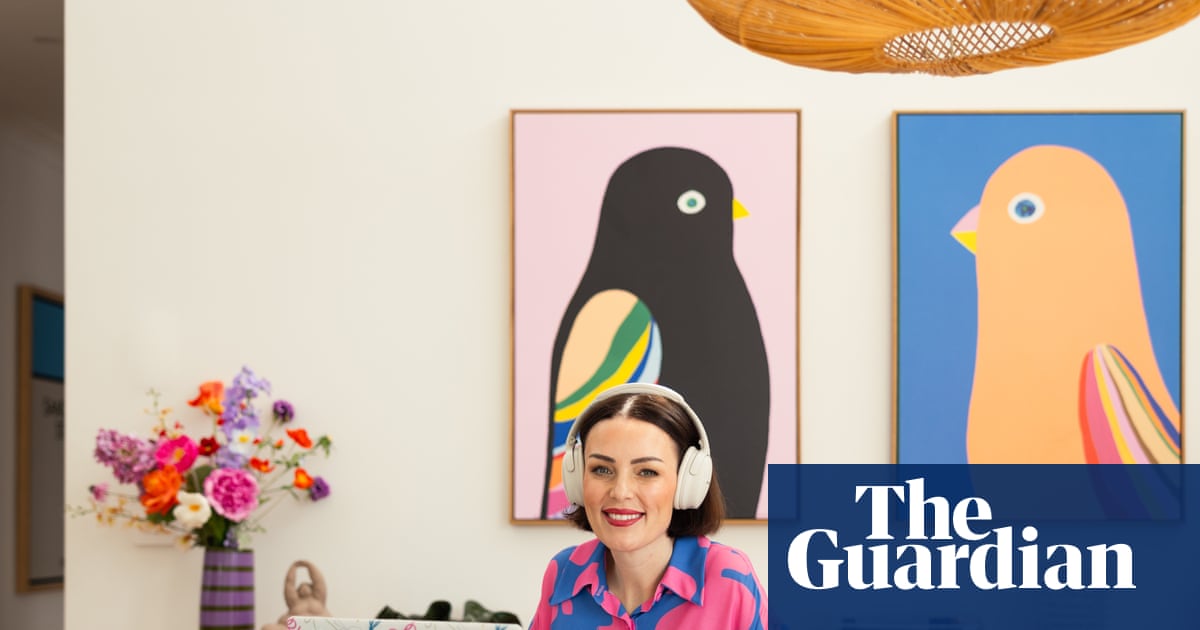
Sarah Ruhl is a playwright, essayist, teacher, mother of three and Brown University graduate. Her most recent book is Lessons from my Teachers, from preschool to the present. Her collaboration with A Great Big World, the musical Wonder, is at American Repertory Theater in Boston through February