3 hours ago
16
3 hours ago
16
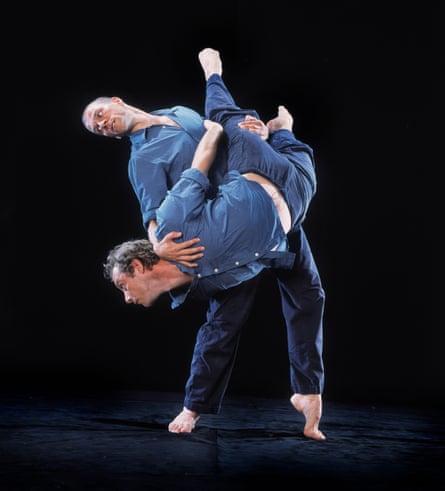
“We always thought BalletBoyz was a really stupid name. We wanted not to be BalletBoyz.” says William Trevitt, founder of the company called, guess what, BalletBoyz. It was the BBC that landed them with that tag, when then-Royal Ballet dancers Trevitt and Michael Nunn made a cheeky and revealing backstage documentary at London’s Royal Opera House. Their knockabout, laddish charm won them fans, and when they went on to found their own company, first the two of them, later expanded to 10 men, the name stuck. It does carry a slight hint of the Chippendales about it. “We had a theatre manager coming and saying: ‘Could you ask the dancers to take their shirts off in the second act?’” remembers Trevitt. Which may say something about the expectations of a group of men dancing.
BalletBoyz is heading out on tour this month to celebrate its 25th anniversary. In those two-and-a-half decades, Nunn and Trevitt have done a lot for the image of men dancing (they have had women in their shows over the years, too, it must be said). It was never their intention to make a statement, it was always just about great dance, but still, here were two straight men who danced together – and later a whole company of young men – and commissioned a new repertoire that wasn’t about romantic partnering, but “two matching energies and exploring the balance between them”, as Trevitt puts it.
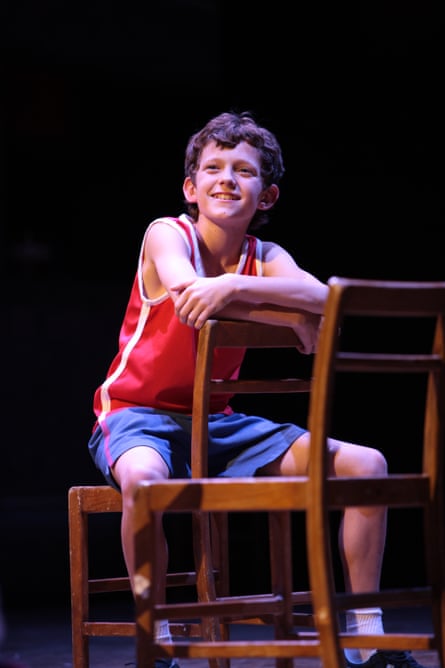
Around the same time Nunn and Trevitt were making their video diaries, another iconic male dancer spun into view. The film Billy Elliot came out in 2000, the story of the miner’s son who wanted to dance, and by the moving final scene was leaping into choreographer Matthew Bourne’s pioneering Swan Lake with its cast of all-male swans. The film was turned into a multi-award-winning musical that’s still going strong, with a new national tour opening this autumn.
It seemed like a moment where the image and profile of male dancers was changing – the so-called “Billy Elliot effect” – with rumours that one year more boys than girls auditioned for the Royal Ballet School. It feels as though in 2026 we’re living in a culturally different time to the turn of the millennium, especially when it comes to expectations of gender, so have attitudes to boys and men dancing completely changed?
“It’s cool to dance now, isn’t it,” says Layton Williams, who was the ninth Billy Elliot on stage, and more recently a runner-up on Strictly with pro partner Nikita Kuzmin. “My nephew is dancing on TikTok with his mates, and he’s a proper lad.”
Peter Darling, who choreographed the Billy Elliot film and musical, has just finished casting for the new tour. He has definitely seen a rise in both numbers and talent. “When we started auditioning for the musical, five years on from the film, we found one ballet dancer,” says Darling. “But cut to 2026 and we were auditioning for the tour, there are boys doing ballet, boys doing contemporary dance.” They used to be looking for potential, now they get trained dancers. “It was jaw-dropping to me when I saw the tapes coming in from the first auditions,” he says. But, as ever, it’s more complicated than that. “I think what hasn’t changed is there’s still a big stigma around men dancing,” says Nunn. “That hasn’t changed at all.”
If you look at the stats, the picture is mixed. At the most literal “Billy Elliot effect” level, ie the number of boys following in Billy’s footsteps and applying to the Royal Ballet’s Lower School, then yes, the numbers have gone up dramatically, a 227% rise from the 1999-2000 intake to a peak just before Covid. But across the same period, the number of girls applying rose even more (349%). The International Dance Teachers Association (IDTA) saw a noticeable boost in boys taking dance exams across all styles in the decade from 2005, but then numbers began to drop – and plummet post-Covid. Of those taking International Society of Teachers of Dancing (ISTD) exams, each year on average 3 to 4% of candidates identify as male.
The Royal Ballet School has also seen a post-Covid drop in terms of younger boys, who most commonly start dancing because they’re being taken along to a studio where their sister is doing classes and they decide to join in. So when classes went online, boys weren’t getting that experience.
The other place boys often encounter dance is in school, where the shift in focus to Stem subjects has led to a sidelining of the arts (the number of entrants for GCSE dance since 2008 is down 60% and has halved at A-level). “We know that boys have always been underrepresented in dance,” says Laura Nicholson from the industry body One Dance UK. “But it’s important to note that the gap widened dramatically in step with the broader collapse of dance education in schools, driven by EBacc and Progress 8 measures over the past 15 years. There’s a persistent misconception that boys aren’t interested in dance, but the reality is that we consistently see strong appetite.” Fewer boys are joining, but those who do are more likely to commit and progress, especially in all-male groups.
BalletBoyz made a point of taking its professional dancers into schools and running workshops. “That definitely does work to get boys into dance,” says Nunn. He himself got into it after a school trip to the ballet aged 14. “I’d never been to the theatre before that point,” he says. “I just thought: I’ll do that.” He kept it a secret from his south London school friends when he started tap classes, resisting ballet at first “because it was seen as effeminate”. But when he tried ballet, he liked how “tremendously challenging” it was, and that was that. BalletBoyz ran a boys’ dance group for many years until Covid. “Fifteen years of going into schools and we thought the ball was rolling,” says Nunn. “It may have stopped rolling,” adds Trevitt.
Kevin Young attended a BalletBoyz workshop at college in Glasgow in the 2000s, and it was a big influence. Young took up dance on the advice of a school guidance counsellor after he said he wanted to be a PE teacher and she suggested dance college instead. “I turned up in my football shorts and basketball top to audition. I didn’t really have any experience. I could just do Michael Jackson really well. I was the only boy in the year. I had to pretend to my friends, and even my family, that I was going to do breakdancing, because that was cool.”
Young now teaches for the Royal Academy of Dance and definitely thinks there’s been a change in climate. “It’s become more socially acceptable to dance,” he says. “Twenty years ago I would have had one boy in my class, now I’ve got six or seven. I’d say the stigma hasn’t completely gone away but it’s a lot quieter than it was.” He teaches mainly contemporary dance. “Last month I started teaching a Bob Fosse piece [the choreographer of Chicago and Cabaret] and I had one boy who said: ‘Nah, I’m not doing this. My dad cannot see me on stage doing this.’ I said: ‘Just because you’re moving in a different way doesn’t make you any less masculine.’ And then he came in the next week and: ‘I’m so sorry for the way I acted. You’re absolutely right. I think I just freaked out.’”
There’s still a sense that certain styles of dance are emasculating. “What is it about a man standing in first position [with his toes turned out] that is threatening?” says Peter Darling. “It’s insane.” BalletBoyz has tried to take the fear out of what can be an opaque art form by making short films to play before its shows, demystifying the dance as well as the dancers; you’d see ordinary people having a laugh in the studio. “They know then that it’s going to be entertaining, it’s not going to be medicine,” says Trevitt.
Dance on TV has done the same. Ashley Banjo and his group Diversity inspired multitudes of boys and men to dance after they won Britain’s Got Talent in 2009. We speak when he’s between gigs on Diversity’s current 60-date tour. Even though street dance has a more traditionally ‘masculine’ image, Banjo says he still got stick for dancing at school “when the other boys were going to play football and rugby. It’s just being different,” he says. “Of course I wanted to fit in but I was never apologetic. I owned it.”
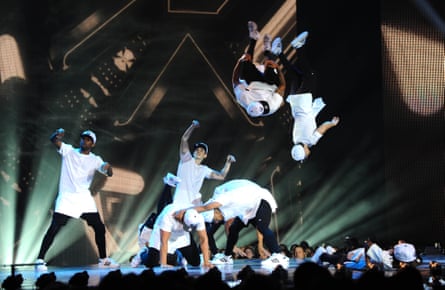
Banjo was a judge on the talent show Got to Dance, which ran from 2009 to 2014, a boom time for dance on TV. But he says everything’s shifted online now. “Some of the biggest TikTok and Instagram creators are dancers,” he say. “I think the public’s relationship with dance has changed, to the point where for the generation coming up, dance is associated more heavily with TikTok than with the Royal Ballet. I think that is what has really opened up the doors and taken away the stigma around boys dancing.”
Banjo warns about success being measured in views and followers, rather than learning the craft, but would never complain about “all sorts of people dancing in a way they would never have done 20 years ago, and feeling free enough to post it”. It’s true that when alpha-sweary Gordon Ramsay is posting dance videos during lockdown that must be the sign of a culture shift. Social media dances are big business, too. “If you can get a viral dance on TikTok it will guarantee your song will be in the Top 10,” says Young.
When talking about male dancers and viral videos, the name Tom Holland crops up more than once. The Spider-Man actor and former on-stage Billy Elliot is lined up to play Fred Astaire in a new biopic, and the internet is full of ardent admirers who love that he’s an action hero who also can be found in a video doing fouettés to impress fiance Zendaya, or dancing to Rihanna’s Umbrella in fishnets.
When Williams did Strictly he wanted to show that being a man dancing could mean lots of different things. “One day you’ll see me in a trackie, the next I’m glammed up. I can put on a cheeky pixie wig, or a suit and be super masculine. There are many ways to be a dancer and be a man.” Williams and Kuzmin dancing together was a big step forward, although Nunn and Trevitt actually commissioned Craig Revel Horwood to make them a tango back in 2007. “He was trying to get us a slot to dance it on Strictly,” says Trevitt, “and they said: ‘We can’t have two men dancing together.’ So that’s a big shift.” Strictly has been a big driver of change, I say, but Nunn jumps in: “Follower!’ he laughs.
Back in the BalletBoyz studio, the current company of dancers are rehearsing with choreographer Russell Maliphant. Dressed in baggy sweats and sports socks, pairs of men lift and manipulate each other’s weight and launch into corkscrewing turns with Zen-like focus. It’s combative and supportive, tender and incredibly strong, and compelling to watch. “The desire to move, it’s just instinctive. It’s so deep within us,” says Peter Darling. “When you’re immersed in dancing it’s complete escapism,” says Williams. “It’s amazing, inspiring, you transcend into another dimension – not to get too corny! And it’s amazing for your physical and mental health.”
Why wouldn’t you dance? Seven-year-old Louie from London is one of four boys in his contemporary and street dance classes. “If I’m down one day and I go dancing it just makes me feel a lot better and forget about my worries,” he says. “The music just gives me a feeling … I feel more energetic, you feel fun.” What would he say to a boy who was interested in dance? “He looks thoughtful for a moment: “We all have equal rights,” says Louie. “They should do it!”
Still Pointless: BalletBoyz at 25 is at Sadler’s Wells, London, 12 to 16 May; touring to 11 July. Billy Elliot the Musical is at the Adelphi theatre, London, to 31 July; touring 4 to 28 November. Diversity: Soul is at Cliffs Pavilion, Southend-on-Sea, 10 May.