1 month ago
79
1 month ago
79
Plaid Cymru has won the Welsh Senedd elections, ending 100 years of Labour dominance in Wales and blocking the momentum of Nigel Farage’s Reform UK.
The leader of the centre-left Welsh nationalist party, Rhun ap Iorwerth, said he stood ready to become first minister and form the next Welsh government, taking over from Welsh Labour, who have governed in Wales since devolution began in 1999.
The Plaid win makes a Welsh independence referendum a future possibility, and means all three of the UK’s Celtic nations will now be controlled by separatist parties.
Reform UK came second, pushing Labour into a distant third place. Plaid won 43 seats, Reform 34, Labour nine, the Conservatives seven, Greens two and Liberal Democrats one.
Speaking in Llandudno, north Wales, ap Iorwerth said: “The people of Wales have today decided on the next steps in Wales’s journey. Plaid Cymru now stands ready to take the necessary steps to form the next government.
“This is a moment 100 years in the making,” he said, referencing the party’s founding in 1925. “We have won because we represent hope over division, credibility over chaos, and progress over stagnation.”
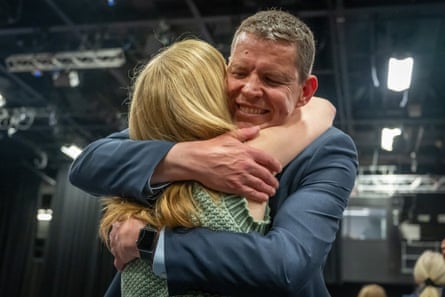
Ap Iorwerth said his name would be put forward to be nominated as the next first minister but – with no overall majority – suggested he would talk to other parties that shared Plaid’s goals to create a fair, compassionate nation, adding: “Plaid Cymru will press ahead with those conversations with urgency.”
Under Wales’s new, more representative electoral system, at least 49 seats are needed for a majority. No party was likely to win that, but Friday’s results mean Plaid Cymru can comfortably form a minority government.
Polls consistently suggested Plaid Cymru and Reform UK were neck and neck in the race to become the biggest party under Wales’s new more proportional voting system. As in last year’s closely watched Caerphilly Senedd by-election, however, the contest was not as close as predicted.
Eluned Morgan, who took over Welsh Labour in 2024, is the first leader of a government in the UK to lose their seat while in office. Speaking at her election count in Llandysul in west Wales, Morgan said she would resign as Welsh Labour leader and took “full responsibility” for the result, but called for the UK Labour government to “change course”.
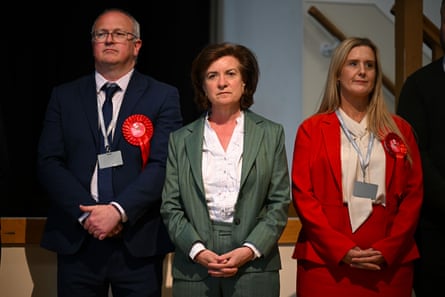
Morgan called Labour’s prospects “catastrophic” in a concession speech. “Today we see the end of over a century of Labour winning in Wales. The party will need to take a look at itself, understand the depth of the challenge, and think carefully about what the public has told us … The age of two party dominance is at an end and we will need to adjust to a world where multiple parties contend for power.”
She added that the vote in Wales had not been about Keir Starmer’s leadership, and she took responsibility for people “rejecting Welsh Labour”.
“We owe it to the people of Wales to listen. To understand. And to rebuild,” she said.
Labour’s rout in Wales is seismic, a once in a century political and cultural shift. The party’s rebrand as “Welsh Labour” after devolution was successful on many fronts, for many years: it cemented the idea that the party was distinct and more progressive than UK Labour, putting “red Welsh water” between Cardiff Bay and Westminster. It also stopped soft nationalist voters from embracing Plaid Cymru, and ingrained devolution as the new normal.
However, support for the party has been ebbing for some years, driven by frustration at Labour’s management of public services, which have fallen behind the other UK nations on many metrics. Observers believe Starmer’s general election win in 2024 sounded the death knell, as it left the Cardiff Bay administration unable to blame a Conservative-led UK government for perceived failings.
Pollsters said Thursday’s Senedd election was very hard to predict owing to the new D’Hondt voting system, which has created 16 super-constituencies, each of which elected six members; in some constituencies, by the time the sixth seat on the list was decided, just a few dozen votes made the difference.
Despite the more proportional system, messaging that the contest was a two-horse race between Plaid Cymru and Reform appeared to have cut through. The last YouGov survey before Thursday’s election found “stop Reform” was the single biggest factor influencing respondents’ votes, at 14%. The second highest was immigration, at 10%.
Even if Reform had won the biggest share of the vote, or the most seats, it was highly unlikely to be able to form a government because most of the other parties had ruled out a coalition. The party still performed better than any Welsh Conservative result on record, however, and increased its vote share from 1% in 2021’s contest to become the official opposition.
Turnout may have been a decisive factor in the vote. For the first time, turnout in a Senedd election is expected to exceed 50%, reflecting the changing of the guard in what was until Thursday Labour’s most unfailingly loyal heartland.