1 month ago
109
1 month ago
109
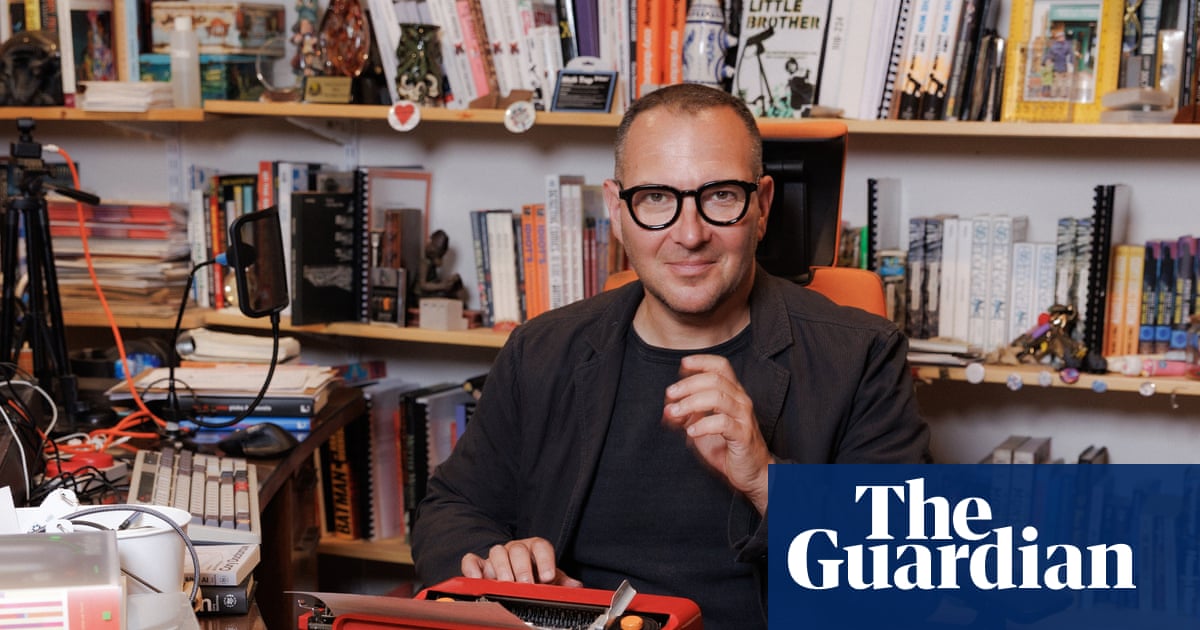
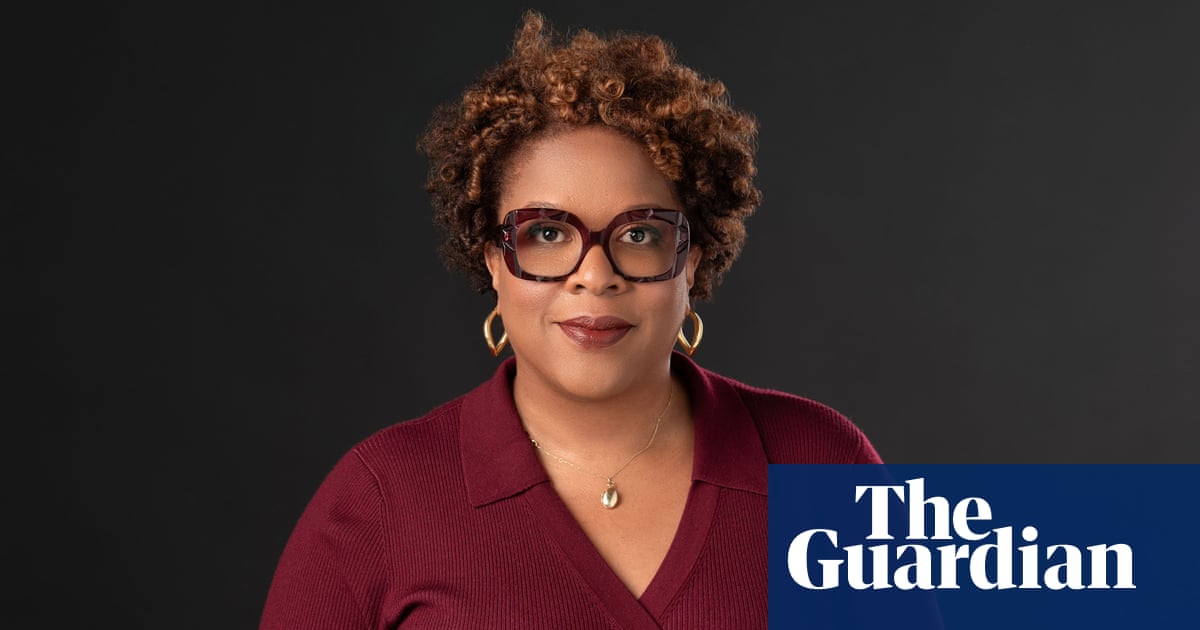
Maia Kobabe wrote Gender Queer as a tender attempt to explain non-binary identity and the journey of sexual discovery to immediate family. “I tried to make it as sensitive and thoughtful as possible, especially given that I knew that my mother would read it,” the author says. “I was trying to build bridges, trying to connect with people, trying to be understood as my full authentic self by my family and my friends and my community.”
But then came culture wars and a concerted effort by reactionary forces to turn back the clock. For three consecutive years, Gender Queer was the most challenged title by would-be book banners. Speaking from Santa Rosa, California, Kobabe, 36, recalls: “Many of the people who challenged my book in the early years, when it was conservative parents speaking up at school in board meetings, would hold it up and say this book is inappropriate or it’s pornography and then they would proudly say: ‘I’ve never read it.’”
Across the US a rising tide of censorship is sweeping through public schools and libraries, fundamentally reshaping what young Americans are permitted to read, learn and think. What might once have been the preserve of an isolated, overly concerned parent writing a polite letter of complaint to a local school board is now in the hands of a carefully orchestrated, well-funded and deeply politicised campaign.
Book bans have exploded since 2021, the year of the January 6 insurrection, ongoing Covid-19 pandemic and intensifying anti-woke and “parental rights” movement on the right. PEN America, a writers and free expression organisation, has counted more than 23,000 book bans over the past five years.
Literature featuring LGBTQ+ themes and people of colour are the primary targets. But a new PEN America report this week also found a doubling of censorship of nonfiction on subjects from history and health to general knowledge, including biographies and memoirs. The findings underscore “an embrace of anti-intellectualism”, the group said.
Meanwhile the American Library Association (ALA) recently revealed 4,235 unique titles were targeted for censorship in 2025 alone – the second-highest ever documented since the ALA began tracking more than 30 years ago. Nine in 10 challenges arose from activists and government officials, according to the ALA, compared with 72% in 2024.
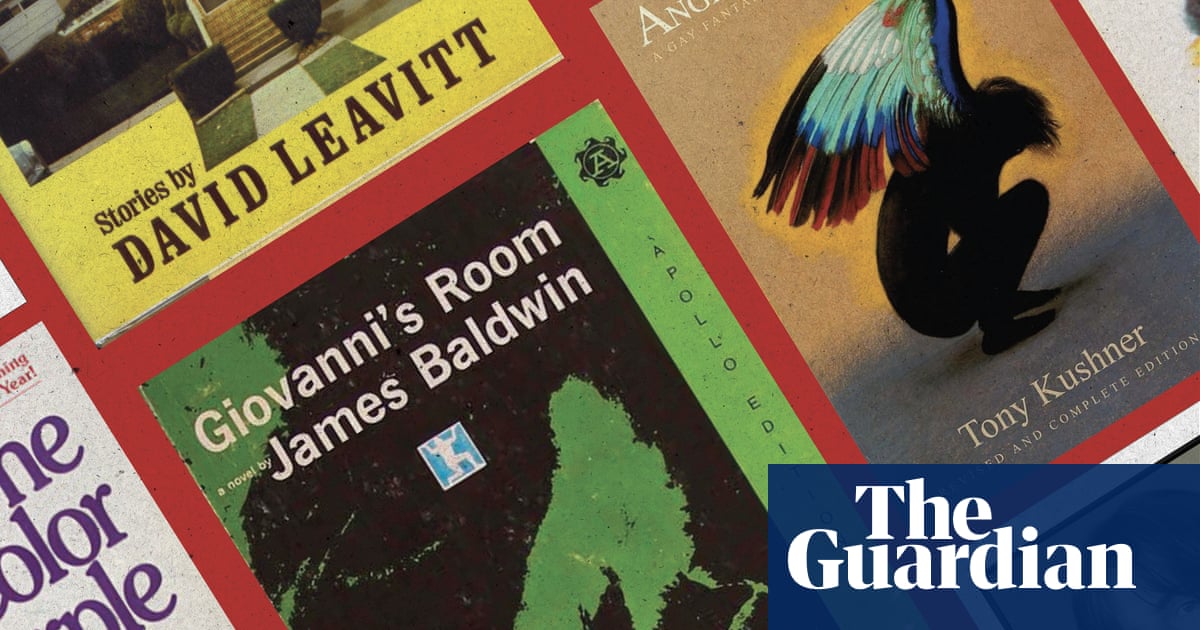
The ALA’s annual list of the books most challenged was led by Patricia McCormick’s Sold, a 2006 novel about sex trafficking in India, followed by Stephen Chbosky’s high school novel The Perks of Being a Wallflower, Kobabe’s Gender Queer and Sarah J Maas’ romantasy Empire of Storms.
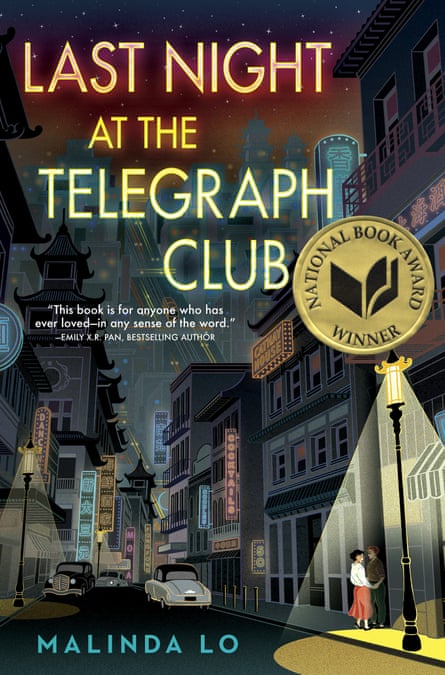
Many in the industry identify 2021 as a turning point. For example, Malinda Lo, an acclaimed 51-year-old author, had been writing young adult literature for more than a decade and found it positively received. But in 2021 she published a coming-of-age novel, Last Night at the Telegraph Club, which tells the story of a 17-year-old Chinese-American girl discovering her identity as a lesbian in the 1950s. The backlash was swift.
Lo says from Cambridge, Massachusetts: “Sexuality is part of her story and leaving it out would be dishonest. I feel that art has a duty to tell the truth so I did so in this novel and I believe that the people who want to ban it are not necessarily reacting to the sexuality directly so much as they are trying to prevent young people from having the opportunity to see that possibilities exist in the world. They’re trying to narrow the worldview of young people today so that is why my book and so many LGBTQ books and books about people of colour are being banned.”
For Lo, who immigrated to the US from China as a child in 1978 to escape a regime that stifled free speech, the current American trajectory is terrifyingly familiar. “America is not China at this point but there have been so many attacks on the first amendment, including book bans, over the past several years it’s quite disturbing to me. I find it extremely alarming and I find it alarming that more people do not find it alarming. I fear that we are well on our way to authoritarianism.”
The worsening climate over the past half decade is no accident but the result of careful coordination in conservative states. What began as localised pressure from groups such as Moms for Liberty, Citizens Defending Freedom and Utah Parents United has morphed into a sophisticated assault.
Lo comments: “The vast majority of book challenges are not by individual parents; they’re by organised groups like Moms for Liberty. It’s not a single parent in a school district saying they don’t want their kid to read a book. It’s an organised group of people who have lists of books that they want to remove and now they are challenging hundreds at a time. That is very disturbing and it’s new: this has not been the way that book challenges have happened in the past.”
The activists have also engaged with state-level politicians to codify book bans. Kasey Meehan, the director of the Freedom to Read programme at PEN America, says: “We’ve seen the way in which those tactics have been adopted by governors and state legislatures and then adopted in language that is signed as state legislation.
“There’s several examples where some of these groups have stood side by side with elected leaders as they’ve proposed bills that would effectively censor certain kinds of books for kids in schools. We’ve seen what was happening locally become increasingly more sophisticated to then begin to influence state policy, state legislation, and then increasingly we see similar language mirrored in president Trump’s executive orders on gender or on patriotism.”
Meehan adds: “We watched the office of civil rights out of the Department of Education declare that book bans are a hoax, which is language that many state leaders have used to refer to their state where there have been book bans. We have seen the way in which it’s jumped in a very coordinated fashion from local efforts to state to now federal.”
PEN America has also observed efforts spread online and across state lines. Meehan adds: “We still see the local organising coordinated from district to district, from state to state, where individuals are sharing, ‘Oh, I found this book in my library,’ and then it deploys a bunch of other people who are on the same Facebook group to go challenge that book in their own library.”
The sheer volume of these challenges hints at their bad-faith nature. Often, the objectors have never even read the books they are trying to destroy but rush to judgment based on excerpts, screenshots or inflammatory quotations circulating on social media.
Ali Velshi, a journalist who hosts the Velshi Banned Book Club on the MS Now network and other platforms, notes how the traditional, thoughtful review process in libraries was hijacked. From 2021 thousands of book challenges all used the same language, he says, because “it was language that was provided to the complainants.
“It all indicated not a thorough reading of a particular book. It all would refer to page 19 where the word ‘penis’ occurs or whatever the case is. In the case of George M Johnson [author of the frequently banned All Boys Aren’t Blue], the objection was to the word ‘dildo’ and, when one of my colleagues interviewed one of the book banners on this, she could certainly tell you about the fact that word ‘dildo’ appeared in the book but, when pressed about the name of the author, she had great difficulty.”
Taking words, phrases or passages out of context means losing the benefit of the book, Velshi continues. “If difficult subject matter in books will be challenging to our children then we should lean into how we address that. That would be a great thing to figure out how best can we teach Shakespeare, Chaucer, Margaret Atwood, George M Johnson, any of these people to our students more effectively and allow them to be critical thinkers. Removing books has never worked in history. A society that has removed reading and books has never succeeded.”
The targets of the censorship campaign are precise. While rightwing groups frequently cloak their objections in the language of “parental rights” or protecting children from “sexually explicit” material, the crusade is heavily focused on erasing LGBTQ+ identities, silencing authors of colour and suppressing honest discussions of America’s racial history.
PEN America’s report says the weaponisation of the term “pornography” to describe literature exploring identity or trauma is a deliberate ploy. During the 2024-25 school year, more than a third of all banned titles featured consensual sexual experiences but PEN America found claims that the books contained “explicit” or “obscene” content a gross mischaracterisation. One in five banned titles contained depictions of sexual violence, in effect silencing stories that could help young survivors understand their own trauma.
Perhaps most alarmingly, the censorship dragnet has expanded aggressively into nonfiction. According to PEN America, 29% of the unique titles banned in public schools last year were nonfiction works, including history, health, biographies and general knowledge. Of those nonfiction titles, a staggering 52% dealt with themes of activism and social movements.
The consequences of this ideological warfare extend far beyond empty library shelves. For writers, particularly younger, queer authors and authors of colour, the book bans are resulting in devastating financial losses. School visits, which once formed a vital pillar of a young adult author’s income, have evaporated overnight.
Lo says: “It’s hard to make living as a writer so this makes it a lot worse. My friends who write for middle grade readers often make a lot of their income through school visits and, since the rise in book bans, school visits have dried up for a lot of writers, especially writers who write about people of colour and queer characters. This is devastating financially for writers. Our incomes are falling because of this.
“Some school districts haven’t been able to purchase new books in the last couple of years because of various state laws. Without that source of income, our royalties fall, publishers’ profits fall. If schools can’t buy books, publishers aren’t making money, they’re not going to be as willing to acquire new titles that might be banned. It’s basic economics. I’m very concerned about this for business and for writers.”
This economic pressure could breed insidious self-censorship. Facing a hostile market, authors and publishers may unconsciously decide to smooth over the rough edges of their stories, omitting queer characters or complex historical truths simply to avoid the political headache and financial ruin of a ban.
For America’s librarians, the culture war has transformed a quiet profession of public service into a daily battleground. Already stretched by providing social services such as food programmes, some are being verbally abused, smeared as “paedophiles” and “groomers” online and even fired for refusing to hide children’s books that feature LGBTQ+ representation. Last month Luanne James, the top librarian in Rutherford county, Tennessee, was fired for refusing to move more than 130 books with LGBTQ+ themes to the system’s adult section.
Sam Helmick, president of the ALA, says: “Libraries were already feeling the grind but now to have them vilified and castigated in terrible terms like this has been incredibly demoralising for two reasons. The first is nobody wants to be attacked for serving the public; nobody deserves to be.
“But the second is we know what’s at stake. This is a culture war but it’s also distracting us from a class war and if libraries fall in the United States, there’s a lot of social infrastructure that will collapse with it. Librarians are uniquely positioned to be thinking about their patrons, their students, their community, and they’re worried for them.”
To the authors and advocates on the frontlines, book banning is not merely a debate about social taboos but a glaring symptom of democratic backsliding. Kobabe says: “This is no longer parents trying to defend the right of what their children can read. This is now large groups trying to implement social control and attack diverse voices and increasingly attack teachers, librarians, library funding and the freedom of public education in our country at a fundamental level.
“I definitely see book bans as he canary in the coalmine of the rise of fascism. Many authoritarian governments attack books, journalism, education and sources of information first because an uneducated and uninformed populace is easier to control.”
Yet, amid the gloom, there is a fierce pushback. More than 5,000 writers have mobilised to form Authors Against Book Bans, drafting and successfully passing legislation to protect libraries and free expression in states including Colorado, Oregon and Rhode Island. Organisations such as the ACLU and PEN America are launching lawsuits against draconian state laws.
According to Velshi’s Banned Book Club, the ultimate act of defiance is not merely fighting the bans in court but actively seeking out and consuming the challenging, provocative literature that authoritarian forces are desperate to hide. Velshi comments: “George M Johnson likes to say this shouldn’t be just about not banning the book. This should be a movement to read and we adopted that motto: we call it ‘reading as resistance’. Actually send the message to authorities that you will not dictate what we consume.”