1 month ago
74
1 month ago
74
Morning opening: Ceasefire that wasn't

Jakub Krupa
Russia and Ukraine are trading accusations of breaking their two very different versions of proposed ceasefire this morning as we get closer to the Victory Day parade in Moscow, with the Kremlin reportedly worrying about a potential Ukrainian strike.
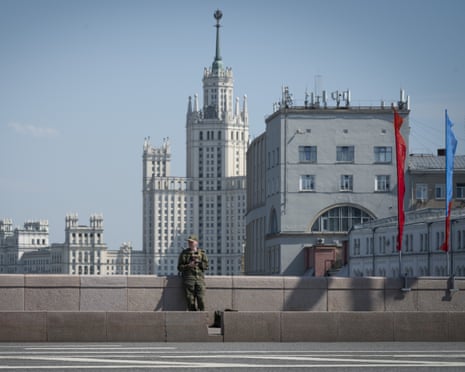
Ukraine suggested an indefinite ceasefire earlier this week, which was repeatedly violated by Russia. After another round of attacks over night, president Volodymyr Zelenskyy said:
“All of this clearly shows that, on the Russian side, there was not even a token attempt to cease fire on the front. As we did over the past 24 hours, Ukraine will respond in kind today as well. We will defend our positions and people’s lives.”
Russia, which wanted a shorter artificial ceasefire to protect the parade to which Kyiv never agreed, said it would be responding to any Ukrainian attacks “symmetrically.”
As my colleague Pjotr Sauer noted earlier this week, Victory Day has been central to Vladimir Putin’s vision of Russian identity throughout his more than 25 years in power. Since the full-scale invasion of Ukraine, the Kremlin has intensified its use of the annual celebration, with Putin deploying the occasion to frame and justify the current war.
Let’s see how the next few hours shape up as we get closer to the celebration. I will also bring you more on the (very short) guest list for the event.
Elsewhere, we will follow US secretary of state Marco Rubio’s meeting with Italy’s prime minister Giorgia Meloni, track the preparations for Péter Magyar’s inauguration in Hungary tomorrow, and see how are things on board of the hantavirus-hit cruise.
It’s Friday, 8 May 2026, it’s Jakub Krupa here, and this is Europe Live.
Good morning.
Key events Show key events only Please turn on JavaScript to use this feature
US secretary of state Rubio set to meet with Italy's Meloni in bid to repair relations strained over Iran
We will also be looking at Italy today, where US secretary of state Marco Rubio is set to meet with the country’s prime minister, Giorgia Meloni.
Earlier today, he met with Italy’s foreign minister Antonio Tajani, as he continues his two-day trip to Italy and the Vatican, after meeting with Pope Leo yesterday.
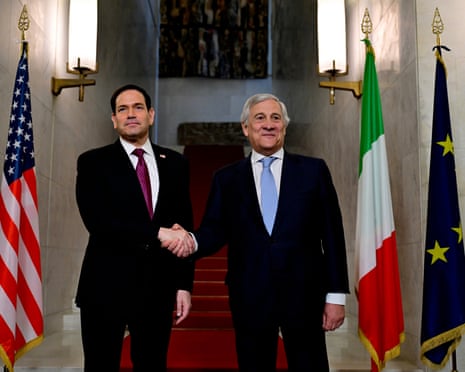
There is no shortage of topics to discuss given growing tensions between Italy and the US in recent months, over Rome’s refusal to join in or support the US war in Iran.
Italy’s Meloni and US Trump had been close allies – with the prime minister even attending his inauguration last year – but as our correspondent Angela Giuffrida noted, that relationship, rooted in shared nationalistic rhetoric, is now unravelling as quickly as it formed.
Trump turned on her telling the Italian newspaper Corriere della Sera recently that she “lacked courage” for failing to join the US-Israeli war on Iran.
The rebuke came after Meloni described Trump’s attack on Pope Leo – who has emerged as a vocal critic of the Iran war – as “unacceptable”.
“She is the one who is unacceptable,” Trump snapped, “because she doesn’t care if Iran has a nuclear weapon and would blow up Italy in two minutes if it had the chance.”
Rumen Radev confirmed as Bulgaria's new prime minister
Meanwhile, former president Rumen Radev has just been confirmed as Bulgaria’s new prime minister.
During today’s vote in the Bulgarian parliament, all 124 MPs from his party voted in favour, while 70 MPs were against, and 36 abstained.
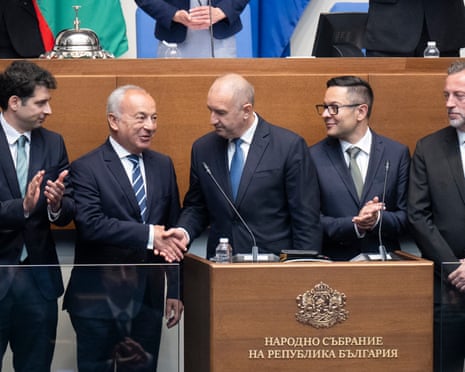
In last month’s elections – Bulgaria’s eighth since 2021 – Radev’s Progressive Bulgaria won a majority of seats in the parliament, the first such case from 1997.
The former president rode a wave of voter anger at entrenched corruption and the veteran parties that have allowed it.
But there are some questions ofer the new prime minister’s stance on Russia. Radev, 62, who stepped down from the largely ceremonial role of president in January to campaign on an anti-graft ticket, has criticised a recent defence agreement signed between Bulgaria and Ukraine and opposed Sofia sending arms to Kyiv.
AFP noted that Kyiv said Moscow ignored a Ukrainian call to halt fighting earlier this week that Ukrainian president Volodymyr Zelenskyy cast as a test of whether the Kremlin was serious about providing a brief respite in the four-year war.
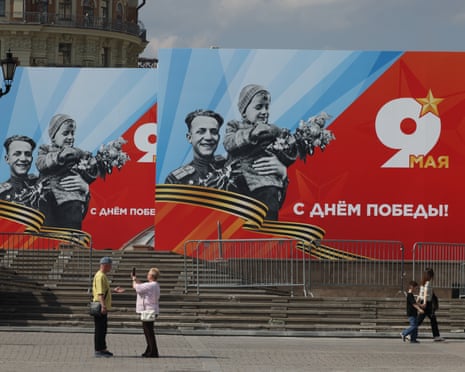
Russia has threatened a massive strike on the heart of Kyiv if Ukraine disrupts the Victory Day parade on Saturday, repeatedly urging foreign diplomats to evacuate the Ukrainian capital ahead of time.
Morning opening: Ceasefire that wasn't
Jakub Krupa
Russia and Ukraine are trading accusations of breaking their two very different versions of proposed ceasefire this morning as we get closer to the Victory Day parade in Moscow, with the Kremlin reportedly worrying about a potential Ukrainian strike.
Ukraine suggested an indefinite ceasefire earlier this week, which was repeatedly violated by Russia. After another round of attacks over night, president Volodymyr Zelenskyy said:
“All of this clearly shows that, on the Russian side, there was not even a token attempt to cease fire on the front. As we did over the past 24 hours, Ukraine will respond in kind today as well. We will defend our positions and people’s lives.”
Russia, which wanted a shorter artificial ceasefire to protect the parade to which Kyiv never agreed, said it would be responding to any Ukrainian attacks “symmetrically.”
As my colleague Pjotr Sauer noted earlier this week, Victory Day has been central to Vladimir Putin’s vision of Russian identity throughout his more than 25 years in power. Since the full-scale invasion of Ukraine, the Kremlin has intensified its use of the annual celebration, with Putin deploying the occasion to frame and justify the current war.
Let’s see how the next few hours shape up as we get closer to the celebration. I will also bring you more on the (very short) guest list for the event.
Elsewhere, we will follow US secretary of state Marco Rubio’s meeting with Italy’s prime minister Giorgia Meloni, track the preparations for Péter Magyar’s inauguration in Hungary tomorrow, and see how are things on board of the hantavirus-hit cruise.
It’s Friday, 8 May 2026, it’s Jakub Krupa here, and this is Europe Live.
Good morning.